For most of the 1990s, Brad Pitt was treated as a problem to be solved. Studios saw a face that sold tickets and magazines, and the critics who noticed the face often missed the actor behind it. Pitt spent the next three decades dismantling that assumption one role at a time. He chased the odd parts, took supporting roles that bruised his image, and built a second career behind the camera that has put him on stage at the Oscars more often as a producer than as a performer.
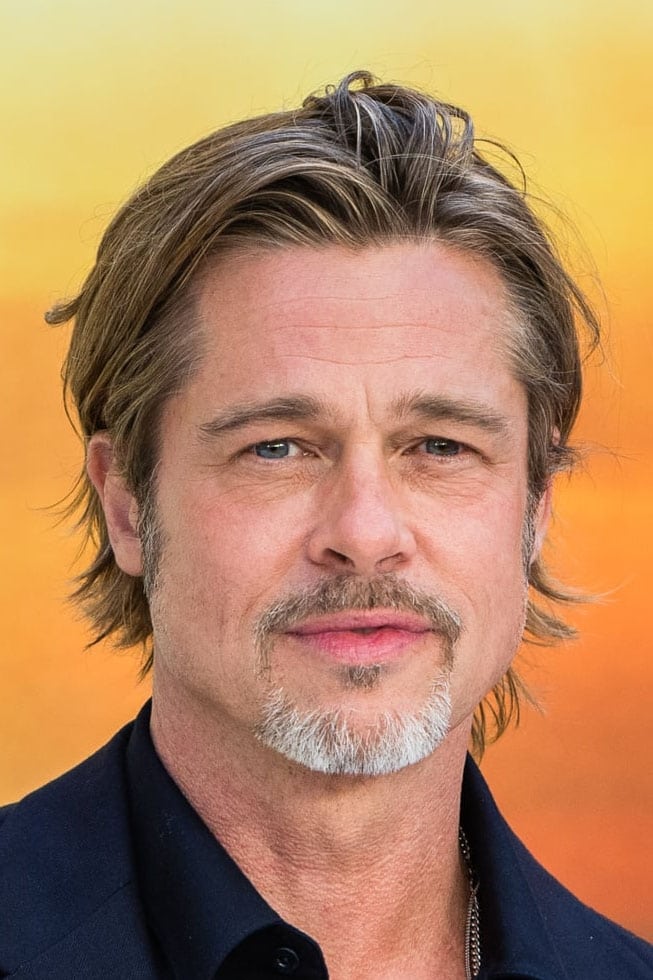
The result is a career that looks accidental from a distance and deliberate up close. At 62, he has an Academy Award for acting, another for producing, a Palme d’Or on his production résumé and, with F1, the biggest box office hit of his career. Here is how the work is built, where it turned and which films actually carry the weight.
The mechanics of a Pitt performance
Using the face as an obstacle
The central trick of Pitt’s career is that his best performances treat his own good looks as something to be worked against. Casting directors still reach for the face, but the performances that last are the ones where the character is trying to hide, spoil or outrun it.
The clearest early example is 12 Monkeys (1995), in which he plays Jeffrey Goines, an inmate at a psychiatric hospital and a loud critic of consumerism. Director Terry Gilliam initially thought Pitt was wrong for the part, and the casting director had to talk him around. Pitt, then comparatively unknown and paid accordingly, prepared by spending weeks on the psychiatric ward at Temple University’s hospital in Philadelphia before filming. What reached the screen was a twitchy, over-caffeinated performance that is almost all rhythm: sentences that start in one place and end in another, a body that never settles. It won him the Golden Globe for Best Supporting Actor and his first Oscar nomination, and it established the pattern he would repeat for thirty years. When Pitt looks least like Pitt, he is usually at his best.
Comedy as a loosening agent
Pitt is a better comic actor than his dramatic reputation suggests, and he tends to deploy comedy in service of vanity deflation. In Snatch (2000) he plays an Irish Traveller bare-knuckle boxer whose accent is intentionally close to unintelligible. In Burn After Reading (2008), his first collaboration with the Coen brothers, he plays a gym employee whose cheerful stupidity is the engine of the plot, a performance that earned him a BAFTA nomination for Best Supporting Actor. In Inglourious Basterds (2009), he plays Aldo Raine as a Tennessee backwoodsman in the middle of a war film, with a drawl and a jutting jaw that turn a Nazi-hunting commander into something between a cartoon and a folk hero.
The common thread is that Pitt commits to the joke without winking. He plays the stupidity or the swagger as sincere, and the audience laughs because the character does not know why.
Stillness and economy
The other side of the comic Pitt is the minimalist. In The Assassination of Jesse James by the Coward Robert Ford (2007), his performance earned him the Volpi Cup for Best Actor at Venice. In Moneyball (2011), as Oakland A’s general manager Billy Beane, he earned an Oscar nomination for a performance built from small physical choices: eating, driving, listening, walking away from a conversation. In Once Upon a Time in Hollywood (2019), as stuntman Cliff Booth, he won the Oscar, Golden Globe, BAFTA and SAG Award for Best Supporting Actor with a performance that rarely raises its voice.
What these roles share is economy. Pitt has learned that an audience will lean toward an actor who does less, and he increasingly lets the camera come to him. Booth, a World War II veteran who lives in a trailer with his pit bull and serves as stunt double, assistant and best friend to a fading star, is the purest version. The character is defined almost entirely by how little he needs.
Ensemble generosity
Pitt is also one of the more generous ensemble actors of his generation. In the Ocean’s trilogy (2001, 2004, 2007), he plays Rusty Ryan, the co-pilot to George Clooney’s Danny Ocean, and the performance is built on reaction, the half-smile and the raised eyebrow of a man who is always in on the plan. In The Big Short (2015), which he also produced, he takes a smaller part as a retired banker turned conspiracy-minded outsider and brings a weary, wary presence to the film. In Wolfs (2024), he pairs again with Clooney as rival fixers, a film that is essentially a two-hander built on their chemistry.
This is a quieter skill than the awards-friendly roles, and it is part of why directors keep calling. Pitt rarely tries to win a scene at a colleague’s expense.
Age as a tool
The final piece of the mechanism is that Pitt has used his own aging as material. The Curious Case of Benjamin Button (2008), in which his character ages backwards, earned him Oscar, Golden Globe, BAFTA and SAG nominations. Ad Astra (2019), James Gray’s space drama, is a study in withdrawal that many critics called among his best work. And in F1 (2025), he plays Sonny Hayes, a veteran driver who returns to Formula One decades after leaving the sport to rescue a struggling team. The character is a man outrunning the idea of being finished, and Pitt plays it with a mix of bravado and fatigue that fits the actor’s real age.
Turning point one: 1991 to 1992, from Thelma & Louise to A River Runs Through It
Pitt arrived in Los Angeles after leaving the University of Missouri two weeks short of a journalism degree. His early credits were uncredited bit parts in 1987’s No Way Out, No Man’s Land and Less than Zero, plus guest spots on television. His first leading role, in 1988’s The Dark Side of the Sun, was shelved and not released until 1997.
Thelma & Louise (1991) changed everything. As J.D., the charming drifter who sleeps with Geena Davis’s character and robs her, he had only a few scenes, but the scene with Davis made him a sex symbol almost overnight. It was exactly the kind of attention that can freeze a career in place.
What followed was the first of his deliberate pivots. In A River Runs Through It (1992), directed by Robert Redford, he played the wild younger brother in a quiet, elegiac family drama. The film is widely regarded as his breakout dramatic performance, and it gave him credibility before the industry could settle on a single image. Within a year, he was playing a killer in Kalifornia and a small role in True Romance, a contrast that suggested the pin-up would not be the whole story.
Turning point two: 1995, Se7en and 12 Monkeys
If there is one year that rebuilt Pitt’s reputation, it is 1995. Se7en, David Fincher’s dark thriller, paired him with Morgan Freeman and Kevin Spacey and was critically well received. He plays Detective Mills, the hot-headed younger partner, and the film’s famous ending depends on the audience believing in his rage. It is a performance in which Pitt is willing to be unlikable, which was new at the time.
The same year brought 12 Monkeys, the Golden Globe and the Oscar nomination at the 68th Academy Awards, where he lost to Kevin Spacey for The Usual Suspects. A year earlier, Legends of the Fall had earned him his first Golden Globe nomination, for Best Actor in a Drama, and Interview with the Vampire (1994) had won him two MTV Movie Awards even as some critics were hard on his performance. Together these films gave him two identities at once: the romantic lead and the character actor. The audience got to know the first, and the industry started to respect the second.
Turning point three: 1999 to 2001, Fight Club and Plan B
Fight Club (1999) is the film that most clearly shows how Pitt’s reputation shifted after the fact. As Tyler Durden in Fincher’s adaptation, he plays a charismatic anarchist who recruits an insomniac narrator into an underground fighting club. The film became a cult classic after its release on DVD, and Pitt’s performance, loose, seductive and quick to turn menacing, became one of the defining roles of his generation.
Two years later, he made the move that would define his second career. In November 2001, Pitt co-founded Plan B Entertainment with Brad Grey, Kristin Hahn and Jennifer Aniston, initially with a deal at Warner Bros. The company’s first decade was modest, but the strategy was clear: use his star power to finance films that studios might not otherwise make.
Turning point four: 2007 to 2008, after the blockbusters
By the mid-2000s, Pitt had become a full-fledged movie star. Troy (2004) cast him as Achilles, and Mr. & Mrs. Smith (2005), opposite Angelina Jolie, grossed $478 million. Those were the commercial high points, but the more interesting work was happening elsewhere.
Between 2006 and 2008, he took a supporting part in Babel, which earned him a Golden Globe nomination and a place in an ensemble that won Best Motion Picture, Drama. He played the title outlaw in The Assassination of Jesse James, winning the Volpi Cup. He worked with the Coens on Burn After Reading. And he anchored The Curious Case of Benjamin Button, earning his second Oscar nomination. In three years, he built a body of work that was almost entirely at odds with the pin-up image he had been trying to leave behind.
Turning point five: 2011 to 2014, the producer takes the stage
The decisive shift came in the early 2010s, when Pitt’s producing career overtook his acting as a source of prestige. In 2011, he starred in and produced Moneyball, which earned a Best Picture nomination as well as his own Best Actor nomination. The same year, he produced and appeared in Terrence Malick’s The Tree of Life, which won the Palme d’Or at Cannes.
In 2013, Pitt had his biggest commercial hit to that point with World War Z, which grossed $540 million. But the more important film that year was 12 Years a Slave, which he produced and appeared in as a small supporting character. It won the Academy Award for Best Picture, giving Pitt his first Oscar. Plan B would go on to produce two more Best Picture winners, The Departed and Moonlight, and a long list of nominees including The Big Short, Minari, Selma, Vice and Women Talking. Pitt now serves as the company’s chairman and CEO, and since December 2022, Mediawan has owned a 60 percent stake in the studio, while Plan B holds a stake in Mediawan.
Turning point six: 2019, the long-overdue Oscar
Pitt’s acting Oscar arrived for Once Upon a Time in Hollywood (2019), Quentin Tarantino’s story of a faded television actor, his stunt double and Los Angeles in 1969. Leonardo DiCaprio played Rick Dalton, and Pitt’s Cliff Booth was the calm center of the film. The Guardian’s Peter Bradshaw praised the two performances in a review that called the film “Tarantino’s dazzling LA redemption song.”
The win was notable because it recognized a particular kind of Pitt performance, the unshowy, physical, funny and slightly menacing supporting turn, rather than the lead role in an awards-season drama. In the same period he collected the Golden Globe, the BAFTA and the SAG Award for the performance, a sweep that confirmed his place among Hollywood’s veteran stars.
Turning point seven: F1 and the late-career blockbuster
The latest and most surprising pivot is the one that put Pitt back at the top of the box office. F1 (2025), directed by Joseph Kosinski, who also made Top Gun: Maverick, grossed about $631.5 million worldwide on a budget reported to be close to $300 million. It is Apple Studios’ biggest movie to date, and it surpassed World War Z as the highest-grossing film of Pitt’s career. It reached the top of Apple TV’s movie chart after its streaming debut, and talk of a sequel has been gaining momentum. The film also earned four Oscar nominations at the 98th Academy Awards, including Best Picture, along with sound, cinematography and visual effects.
The success matters because it proved that Pitt could still carry a big theatrical release at an age when many stars are moving to streaming or supporting roles. Pitt’s role as a producer on the film completed the circle, linking his acting and producing careers in a single mainstream hit.
He has stayed busy. Heart of the Beast, directed by David Ayer, who previously directed him in Fury (2014), opened in September 2026. Pitt plays James Belmont, a former Special Forces officer stranded in the Alaskan wilderness after a plane crash with his retired combat dog, with J.K. Simmons and Anna Lambe in the cast. The film opened modestly at the domestic box office but has drawn positive word of mouth.
Filmography weight: what actually counts
Not every credit carries the same load. Sorted by what each film did for his career rather than by box office alone, Pitt’s record looks like this.
| Film | Year | Role | Why it matters |
|---|---|---|---|
| A River Runs Through It | 1992 | Paul Maclean | Breakout dramatic role under Robert Redford |
| Se7en | 1995 | Detective Mills | Showed he could be unlikable on screen |
| 12 Monkeys | 1995 | Jeffrey Goines | Golden Globe win and first Oscar nomination |
| Fight Club | 1999 | Tyler Durden | Defining cult performance |
| Ocean’s Eleven | 2001 | Rusty Ryan | Ensemble template for his star persona |
| Mr. & Mrs. Smith | 2005 | John Smith | $478 million worldwide with Angelina Jolie |
| The Assassination of Jesse James | 2007 | Jesse James | Volpi Cup for Best Actor at Venice |
| The Curious Case of Benjamin Button | 2008 | Benjamin Button | Oscar nomination for Best Actor |
| Inglourious Basterds | 2009 | Aldo Raine | Comic star turn in a Tarantino ensemble |
| Moneyball | 2011 | Billy Beane | Oscar nomination as actor and producer |
| 12 Years a Slave | 2013 | Producer, supporting role | Best Picture win as producer |
| Once Upon a Time in Hollywood | 2019 | Cliff Booth | Oscar win for Best Supporting Actor |
| F1 | 2025 | Sonny Hayes | Career-best box office, Best Picture nominee |
Selected credits. Awards and grosses as reported in the sources listed below.
The heavy hitters
Three groups of films carry the most weight. The first is the 1995 pairing of Se7en and 12 Monkeys, which turned a pin-up into an actor in the industry’s eyes. The second is the awards run of 2008 to 2019, from Benjamin Button through Moneyball to Once Upon a Time in Hollywood. The third is the producing slate, led by 12 Years a Slave, which gave him a seat at the Oscars that did not depend on his own performance.
The underrated middle
Several of Pitt’s best performances sit outside the awards conversation. Killing Them Softly (2012), in which he plays a hitman named Jackie Cogan, is a cold, funny crime film that deserved a wider audience. Ad Astra, in which he plays an astronaut searching for his father, is one of his most inward performances and one many critics place among his best. Fury, in which he leads a tank crew in the last months of World War II, shows him as an authority figure in a role that leans heavily on weariness. And Allied (2016), a romantic thriller directed by Robert Zemeckis, pairs him with Marion Cotillard in an old-fashioned studio picture.
The lighter entries
A long career includes lighter and less successful entries, too. Bullet Train (2022), directed by David Leitch, is a broad action comedy, and Babylon (2022), directed by Damien Chazelle, is a sprawling, divisive portrait of Hollywood’s silent-to-sound transition that earned him a Golden Globe nomination. Interview with the Vampire drew mixed reviews for his performance. What stands out is how little any of these damaged his standing. His reputation for taking chances has become part of the brand.
The verdict
Pitt’s legacy is not built on one iconic role. It is built on range: the romantic lead who became a character actor, the star who became a producer and the producer who became, at 62, the face of the biggest hit of his career. Each of those identities strengthened the others. His acting won him the access to make the films, and the films gave him the freedom to take the parts.
The mechanics are consistent across the work. He uses his looks as a problem to be solved, comedy as a way to puncture them, stillness as a way to deepen them and age as a way to complicate them. The turning points, from 1995 to Plan B to F1, show a performer who understood early that a long career depends on owning the means of production as well as the performance.
With Heart of the Beast in theaters and Plan B still one of the most active production companies in the business, the next phase looks less like a victory lap than another quiet redirect. For an actor who spent his twenties fighting a pin-up image, that is a satisfying place to land.
LATEST ON EVERY MOVIE PLUG
) Latest on Every Movie Plug
When Movie Villains Were Right
Ten antagonists who lost on screen but won part of the argument.
Read the article →
 Latest on Every Movie Plug
10 Actors Who Turned Down Roles That Became Legendary
Hollywood history turns on sliding-door moments. These are the casting rejections that reshaped blockbuster cinema and handed other stars their defining parts.
Read the article →
 Latest on Every Movie Plug
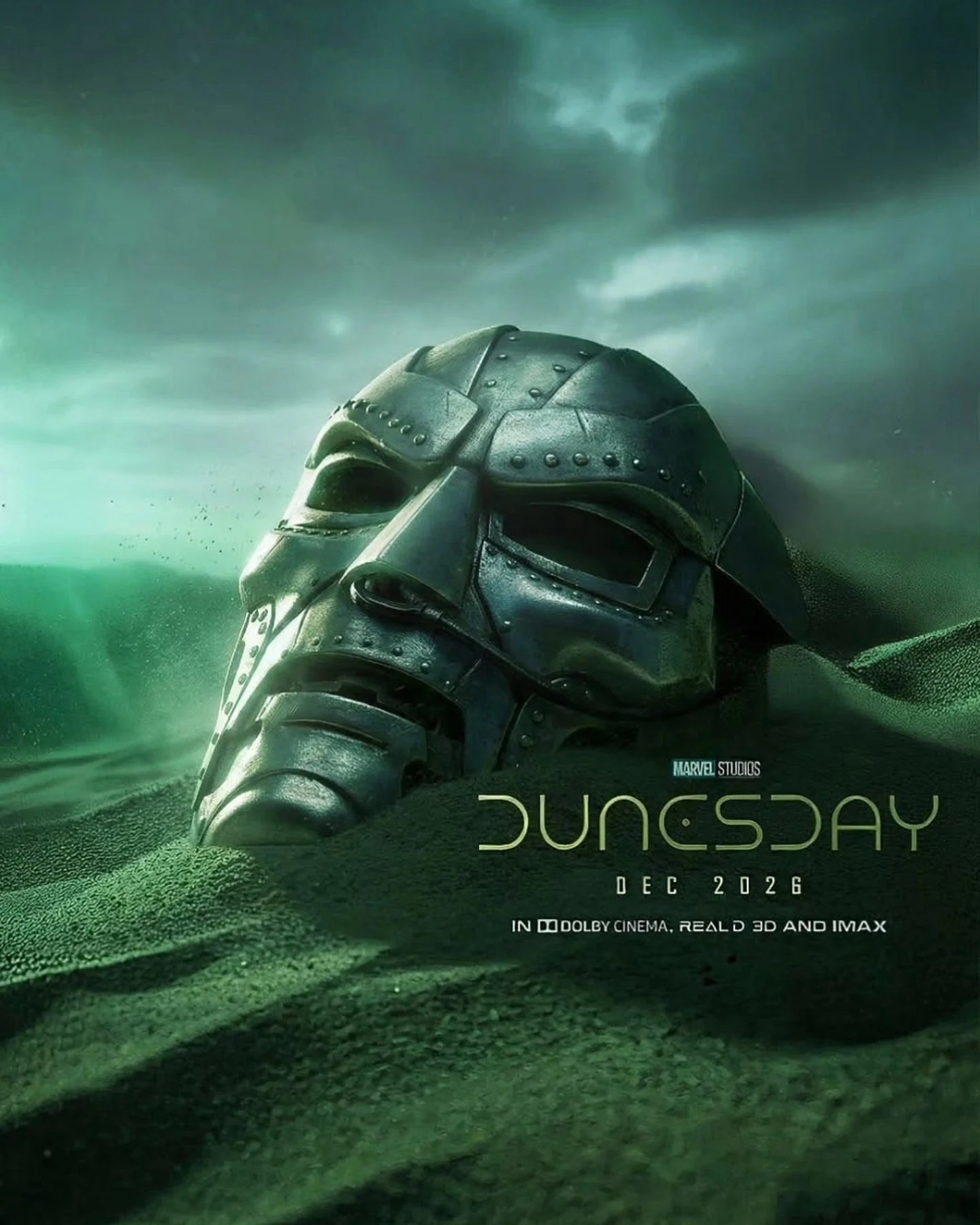
Dune Part Three Vs Avengers Doomsday Dunesday Which To Watch First
Two of the biggest films of the year open on the same Friday. Here is how to plan the weekend, where to sit, and which one deserves your first ticket.
Read the article →
- Wikipedia: Brad Pitt
- Wikipedia: List of awards and nominations received by Brad Pitt
- Wikipedia: Plan B Entertainment
- Wikipedia: 12 Monkeys
- Wikipedia: Once Upon a Time in Hollywood
- Wikipedia: Heart of the Beast
- F1 Chronicle: F1 races to No. 1 on Apple TV after $631M box office run
- Motor Sport Magazine: F1 movie secures four Oscar nominations including best picture