For nearly three decades, Matt Damon has been the safe pair of hands in American cinema: the reliable lead who can carry a thriller, anchor an ensemble or vanish into a supporting part without making a fuss about it. That reputation is accurate but incomplete, because it hides how deliberately he built it. Damon’s career is less a straight climb than a series of calculated pivots. He was a screenwriter who became a movie star, a movie star who became a franchise engine, a franchise engine who became an ensemble specialist and, more recently, a producer who treats the business of getting films made as part of the craft.
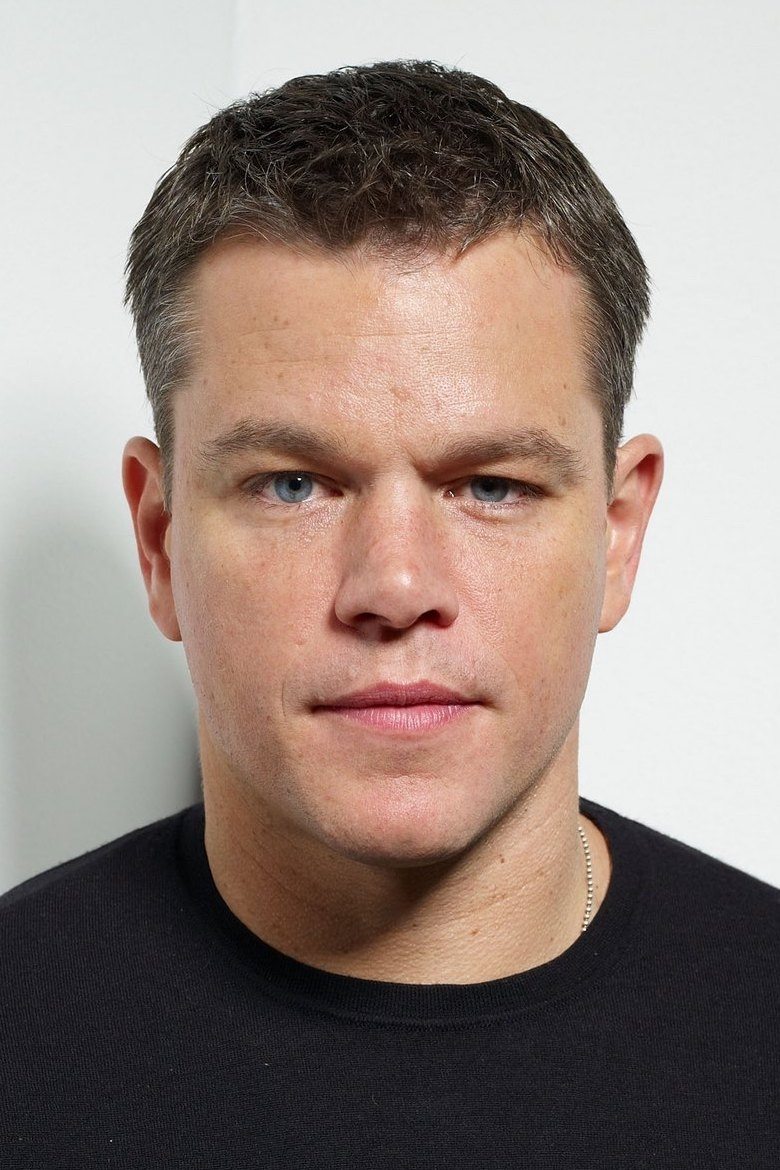
Understanding that career means looking at how his performances are built, the handful of moments that redirected him and which of his films actually carried weight.
The mechanics of a Damon performance
Restraint as a default setting
The first thing to understand about Damon is that he almost never pushes. Where many leading men signal emotion outward, Damon pulls it inward and lets the camera come to him. His best scenes are built on small delays: a beat before an answer, a glance held half a second too long, a smile that arrives a moment after it should. It is a style that rewards close-ups, which is exactly why directors from Paul Greengrass to Christopher Nolan keep putting the lens on his face and letting the audience do the work.
That restraint is also why he plays intelligence so convincingly. Damon rarely announces that a character is smart. He lets you watch the character think, whether it is Will Hunting sizing up a room, Jason Bourne reading an exit route in a crowded train station or Mark Watney talking himself through a problem that could kill him in about four minutes. The audience reads cognition as charisma, and Damon has built a career on that exchange.
The everyman with a fracture
Damon’s screen persona sits on a very specific foundation: the likeable, slightly rumpled American who seems like he could be your neighbor. The interesting work happens when he cracks that surface. In The Talented Mr. Ripley, the friendliness is the weapon. Tom Ripley is eager, polite and soft-spoken, and the horror comes from how little the performance changes while the character’s morality collapses. In The Departed, Colin Sullivan’s confidence is a costume he wears so well that the audience, like his colleagues, forgets to check what is under it.
The trick is consistent across his darker roles. Damon keeps the warmth on the surface and lets the audience discover the damage on their own. It is a harder register than playing a villain outright, and it explains why he is so effective as a morally compromised character. We trust him, and the film uses that trust against us.
Physical credibility without bodybuilding
Damon is not a hulking action star, and that has been an asset. The Bourne films work in part because his physicality looks efficient rather than theatrical. Bourne fights like someone solving a problem, using the nearest object, the shortest route and the least movement. Damon trained heavily for the part, but the choreography was designed to read as improvised and economical, and his compact build sells the idea of a man who has been trained to never waste energy.
His body also changes for characters in ways that serve the story. He lost roughly 40 pounds for Courage Under Fire, then regained most of it for The Rainmaker, and dropped about 25 pounds to play the gaunt Tom Ripley. Each shift is functional rather than showy, a tool for building a character before he has said a word.
Voice, accent and place
Damon is underrated as a dialect performer. His native Boston cadence is the backbone of Good Will Hunting and The Departed, but he has repeatedly gone elsewhere: the clipped Afrikaner accent of rugby captain Francois Pienaar in Invictus, the Texas drawl of Carroll Shelby in Ford v Ferrari, the Oklahoma flatness of Bill Baker in Stillwater. None of these turns rely on caricature. He tends to choose an accent that fits the character’s emotional temperature, quiet and reserved, so that the voice supports the performance instead of competing with it.
Comic timing as a hidden skill
It is easy to forget how funny Damon can be. The Ocean’s films, Stuck on You, his scene-stealing cameos and the comic overtones of The Martian all lean on a dry, low-key sense of timing. He is at his best when the joke is something the character does not know is a joke. That sensibility is a quiet reason his dramatic work lands: audiences already believe he is a real person with a sense of humor, which makes the serious moments feel earned.
Turning point one: Good Will Hunting (1997)
Every career has a hinge, and Damon’s is unusually clear. Good Will Hunting began as a project written by two friends, Damon and Ben Affleck, with the story tracing back to a class assignment at Harvard. It became a film directed by Gus Van Sant, and it handed Damon three things at once: a defining role, a screenwriting Oscar shared with Affleck and an Academy Award nomination for Best Actor at 27.
The film gave him a particular kind of power. Many actors become stars because someone casts them. Damon became a star in part because he wrote the part he played. That authorship shaped everything after it. He understood story structure from the inside, he had a producer’s instinct for what a scene needed and he never fully became dependent on the studio system to hand him material. The film also established the persona the industry would spend years trying to reuse: a brilliant, wounded, working-class intelligence with a sense of humor.
Good Will Hunting also set a risk. A debut this strong can trap a performer in a single note. What happened next is the more telling story.
Turning point two: the 1998 and 1999 gamble
Damon’s response to sudden stardom was to refuse the obvious follow-up. Within about two years he played a poker prodigy in Rounders, a fallen angel in Kevin Smith’s Dogma and, most importantly, the title role in The Talented Mr. Ripley. In between he took a notable supporting part in Steven Spielberg’s Saving Private Ryan as Private James Ryan.
The Ryan role is a masterclass in leverage. The film’s entire premise is that a squad risks their lives to bring one man home, so the character has to be worth the cost. Damon appears late and for a relatively short stretch, but the performance has to justify what came before it. He plays Ryan as bewildered and stubborn, a man who does not understand why he should be saved and refuses to abandon the soldiers beside him. It is a small amount of screen time with enormous structural weight, and it taught Hollywood that Damon could work inside a large ensemble without needing to dominate it.
Ripley, meanwhile, proved the opposite: that he could carry an uncomfortable, ambiguous lead in a prestige thriller directed by Anthony Minghella. The film is often discussed for its supporting cast, but Damon is the engine. He had to make a liar sympathetic, a murderer vulnerable and a social climber heartbreaking, all while keeping the audience just slightly off balance. It remains one of the most technically demanding things he has done.
Turning point three: Bourne and the action reinvention
If Good Will Hunting made Damon a name, The Bourne Identity (2002) made him a franchise. Directed by Doug Liman, the first film recast the spy movie as an identity thriller, centered on a man who does not know who he is but knows exactly how to hurt people. Casting Damon was a risk at the time, because he was not an obvious action lead. That mismatch became the point.
The sequels, The Bourne Supremacy (2004) and The Bourne Ultimatum (2007), were directed by Paul Greengrass, whose handheld, documentary-style approach turned Damon’s contained performance into a kind of kinetic intimacy. Bourne barely speaks in these films, which is the most interesting formal decision of the series. Damon communicates through attention: where his eyes go, how his body angles toward a threat and how little he reacts when most people would panic. The series reshaped blockbuster action cinema for a decade, and The Bourne Ultimatum went on to win three Academy Awards in technical categories.
The reunion with Greengrass on Green Zone and Jason Bourne showed how strongly the partnership shaped his later persona. After 2002, studios no longer saw him as only a dramatic actor. He was a bankable lead who could open a major film, and that status bought him freedom for everything that followed.
The ensemble years: Ocean’s, The Departed, Invictus
With leading-man status secured, Damon made a choice that separates him from many peers: he began taking supporting roles in big ensembles. In Ocean’s Eleven (2001) and its sequels, he played Linus Caldwell, the eager young pickpocket in a crew of movie stars, and he fit perfectly inside Steven Soderbergh’s loose, playful rhythm.
Then came The Departed (2006), Martin Scorsese’s crime drama, in which Damon played the mole inside the Massachusetts State Police. In a cast that included Leonardo DiCaprio, Jack Nicholson and Mark Wahlberg, he held his ground by doing the opposite of what the film’s noise demanded, playing Sullivan with measured ease. The movie won the Academy Award for Best Picture, and it gave Damon one of the strongest pieces of evidence in his filmography that he could hold a scene against anyone.
Invictus (2009) completed the pattern. Directed by Clint Eastwood and starring Morgan Freeman as Nelson Mandela, the film positioned Damon as the secondary figure, Pienaar, whose arc is a quiet study in reluctant leadership. The role earned him an Oscar nomination for Best Supporting Actor, proving that deferring to a bigger star can be its own kind of authority.
The Martian and the peak of solo performance
Few modern performances put a single actor under as much pressure as The Martian (2015). Ridley Scott’s survival story leaves Damon alone on screen for long stretches, talking to a camera, solving equations and improvising repairs. The film depends on one question: can an audience stay with one man for two hours without losing interest?
Damon’s answer is a performance built on rhythm. Watney’s video logs mix gallows humor with real technical focus, and Damon shifts between them without effort. He lets the character panic only briefly, then moves straight back into problem-solving. That choice keeps the movie optimistic without making it flippant. The performance won him the Golden Globe for Best Actor in a Musical or Comedy, a classification that became a talking point, and an Academy Award nomination for Best Actor.
Around this stretch he also appeared in Interstellar (2014), where he played Dr. Mann in a late, startling turn. It is a textbook example of using a movie star’s goodwill as a plot device. Damon’s presence makes the audience lower its guard, and the film exploits that instinct.
The producer’s turn
Parallel to his acting work, Damon has steadily built a second identity as a producer and writer. He and Affleck have been long-term collaborators, and the pairing resulted in The Last Duel (2021), a medieval drama directed by Ridley Scott. Damon co-wrote the script with Affleck and Nicole Holofcener, and he plays Jean de Carrouges in a story told from three conflicting perspectives. It is a smart showcase of his range: the same character, seen through different eyes, requires different shades of stubbornness and pride.
He was also a producer on Manchester by the Sea (2016), the Kenneth Lonergan drama that earned a Best Picture nomination at the Oscars. Later, he and Affleck launched the production company Artists Equity, and their Air (2023) became a clean example of the strategy. Affleck directed, Damon starred as Nike executive Sonny Vaccaro, and the film turned a corporate negotiation into a compelling drama through dialogue and pacing alone.
The significance of this phase is that Damon increasingly shapes the material rather than waiting for it. That gives his later career a coherence that many contemporaries lack.
The late style: Oppenheimer and The Odyssey
Damon’s most recent work shows a performer who has fully embraced character acting at star level. In Oppenheimer (2023), he played General Leslie Groves, the Army officer overseeing the Manhattan Project. It is a supporting performance, but a revealing one: Groves is blunt, practical and impatient, and Damon plays him with a prickly authority that contrasts perfectly with Cillian Murphy’s tortured physicist. The film won Best Picture and became the highest-grossing movie of Damon’s career, and his contribution is a good example of how a supporting actor can shape the tone of a three-hour film.
More recently, he stepped into the lead of Christopher Nolan’s The Odyssey, which opened in July 2026, playing Odysseus. The role is a notable full-circle moment. Casting an actor best known for grounded, contemporary figures in an ancient epic is exactly the kind of risk his career has been built around. In January, he reunited with Affleck for Joe Carnahan’s Netflix crime thriller The Rip, a reminder that their partnership remains one of the most durable in Hollywood.
Filmography weight: what actually counts
Not every credit carries the same load. Sorted by what each film did for his career, rather than by box office alone, Damon’s record looks like this.
| Film | Year | Role | Why it matters |
|---|---|---|---|
| Good Will Hunting | 1997 | Will Hunting | Career origin point, Oscar for writing |
| Saving Private Ryan | 1998 | James Ryan | Proof he could anchor a prestige ensemble |
| The Talented Mr. Ripley | 1999 | Tom Ripley | His most psychologically complex lead |
| The Bourne Identity | 2002 | Jason Bourne | Reinvented him as an action star |
| The Departed | 2006 | Colin Sullivan | Best Picture winner, scene-level mastery |
| The Bourne Ultimatum | 2007 | Jason Bourne | Franchise peak, technical Oscar winner |
| Invictus | 2009 | Francois Pienaar | Oscar nomination, supporting craft |
| Contagion | 2011 | Mitch Emhoff | Grounded everyman in an ensemble thriller |
| The Martian | 2015 | Mark Watney | Solo performance peak, Oscar nomination |
| Ford v Ferrari | 2019 | Carroll Shelby | Mature star power in a crowd-pleaser |
| The Last Duel | 2021 | Jean de Carrouges | Writer, producer and actor in one project |
| Oppenheimer | 2023 | Leslie Groves | Late-career supporting standout |
| The Odyssey | 2026 | Odysseus | Epic-scale leading role under Nolan |
Selected credits.
The heavy hitters
Three groups of films carry the most weight. The first is the early foundation: Good Will Hunting, Saving Private Ryan and Ripley, which together established his range before he turned 30. The second is the Bourne run, which gave him commercial power and a signature physical language. The third is the collaboration with major directors, including Scorsese, Eastwood, Nolan, Scott and Soderbergh, which made him one of the few actors who can move between auteurs without losing identity.
The underrated middle
Several of his best performances sit just outside the top tier. Behind the Candelabra (2013), in which he plays Scott Thorson opposite Michael Douglas as Liberace, is a delicate, vulnerable piece of work that deserves more attention. The Informant! (2009) is a strange, funny and quietly unsettling portrait of a corporate whistleblower who cannot stop lying. Contagion lets him play ordinary fear with remarkable precision. These are not marquee entries, but they are where his technical skill is easiest to see.
The misfires
Like any long career, Damon’s contains uneven stretches. Downsizing (2017) had an ambitious premise that never fully came together, and The Great Wall (2016) is often cited as a high-profile miss. Suburbicon and parts of his mid-2010s output show a star occasionally choosing scale over strong material. What stands out, however, is how rarely these films damaged his standing. His reputation for reliability proved stronger than any single failure.
The verdict
Matt Damon’s legacy is not built on a single iconic role or a dramatic reinvention. It is built on consistency: a long run of performances that are thoughtful, controlled and often quietly funny. He is a rare star who has succeeded as a writer, producer, franchise lead and character actor, and each of those identities strengthens the others.
The pattern holds across the work. He uses restraint to make intelligence visible, familiarity to disguise darker material and ensemble humility to elevate everyone around him. The turning points, from Good Will Hunting to Bourne to the move into producing, show a performer who understood early that longevity requires control over the work, not just the performance.
With The Odyssey now behind him and his partnership with Affleck still active, the next phase looks less like a victory lap than another pivot. For an actor whose career has been defined by quiet, calculated reinvention, that seems exactly right.
Latest on Every Movie Plug
ARTICLES
 Latest on Every Movie Plug
10 Actors Who Turned Down Roles That Became Legendary
Hollywood history turns on sliding-door moments. These are the casting rejections that reshaped blockbuster cinema and handed other stars their defining parts.
Read more →
 Latest on Every Movie Plug
Today In Cinema November 2 American Gangster
A film that was cancelled, recast and rebuilt before it ever reached theaters became Ridley Scott’s biggest hit and one of the most argued-over true-crime movies of its decade.
Read more →
- Wikipedia: Matt Damon
- Wikipedia: List of awards and nominations received by Matt Damon
- The Playlist: Three Oscar Awards Begats A Fourth Bourne Film
- Slashfilm: The Rip Review
- Boston.com: The Rip movie review
- Moviefone: Weekend Box Office: The Odyssey Opens Huge
- Syfy Wire: The Odyssey first look at Matt Damon as Odysseus