Capcom’s iconic fighting franchise is stepping back into the live-action arena with Street Fighter, scheduled to arrive in theaters worldwide on October 16. Distributed through a joint partnership between Paramount Pictures and Legendary Entertainment, the big-budget adaptation looks to shake off the infamous legacy of prior film versions and deliver a sharp, high-octane homage to the arcade golden age.
Why This Is “Round Three”
The film arrives as the third major attempt to bring the franchise to live-action cinema, following the 1994 movie starring Jean-Claude Van Damme and the 2009 release Street Fighter: The Legend of Chun-Li. Both films have long been regarded as disappointments, and both have remained a reference point whenever a new adaptation is announced. That history is part of the challenge facing this release, which must win over audiences who remember the earlier attempts as cautionary tales for video game movies.
The production appears to understand the task. Rather than positioning the film as a reinvention, its marketing leans on affection for the games themselves and on the period in which they became a phenomenon.
Setting the Stage in 1993
Rather than attempting to modernize the material or ground it in gritty realism, the production embraces retro nostalgia by setting its core narrative in 1993, the exact peak era when Street Fighter II dominated arcades and pizza parlors globally.
The choice matters for several reasons. It places the story in the same cultural moment that made the characters famous, when players lined up with coins at arcade cabinets and learned moves from one another rather than from online guides. It also gives the filmmakers a visual language to work with, from bright colors to the physical atmosphere of an arcade, and it avoids the need to explain modern technology within the story.
The Story: Rivals, an Investigator and a Criminal Network
The plot centers on estranged martial arts rivals Ryu and Ken Masters, whose paths cross again when Interpol investigator Chun-Li recruits them to enter the secretive World Warrior Tournament. Behind the glittering lights of the international competition lies the shadowy criminal network Shadowlaw, led by M. Bison, forcing the fighters to settle old rivalries while taking down a global threat.
The premise brings together elements that fans of the games will recognize: the friendship and rivalry between Ryu and Ken, Chun-Li’s role as an investigator and a villain whose organization stands behind a tournament that appears to be a simple contest. Combining a tournament structure with a criminal conspiracy gives the film a reason to introduce its large roster of fighters while keeping a central storyline moving.
An Unconventional Ensemble Under Kitao Sakurai
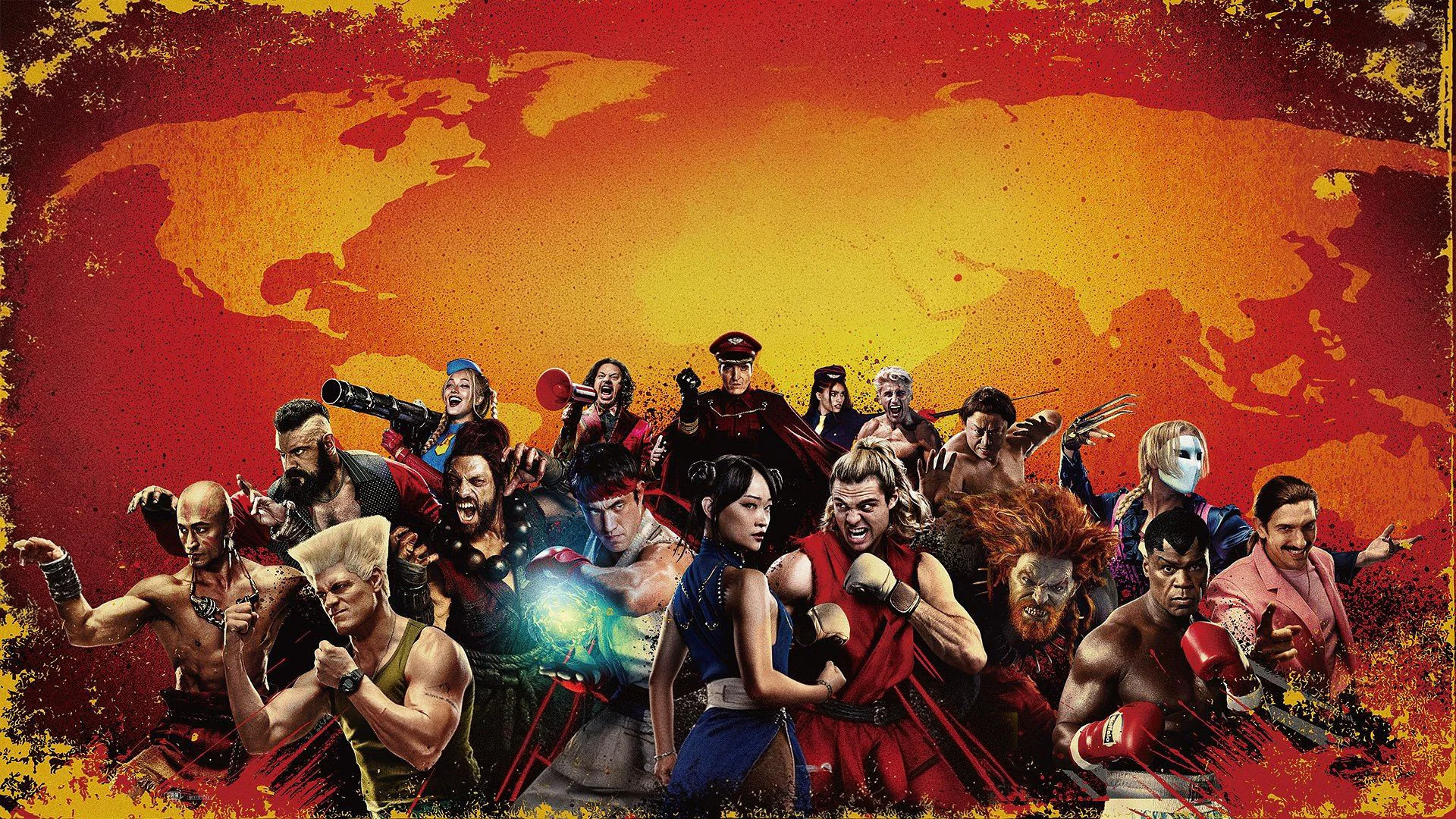
Directed by Kitao Sakurai, best known for directing The Eric Andre Show and Bad Trip, the film blends legit martial arts choreography with an irreverent tone. The creative team assembled an eclectic cast spanning action stars, professional wrestlers, stand-up comedians, and fan favorites:
- Andrew Koji as Ryu
- Noah Centineo as Ken Masters
- Callina Liang as Chun-Li
- David Dastmalchian as M. Bison
- Jason Momoa as Blanka
- Joe "Roman Reigns" Anoa'i as Akuma
- Cody Rhodes as Guile
- Curtis "50 Cent" Jackson as Balrog
- Vidyut Jammwal as Dhalsim
- Orville Peck as Vega
- Andrew Schulz as Dan Hibiki
The selection of a director with a comedy background points to a deliberate tone. Sakurai’s earlier work is known for chaotic humor, and pairing that sensibility with martial arts action suggests a film that intends to be playful rather than solemn. The cast supports that reading: professional wrestlers such as Roman Reigns and Cody Rhodes bring physical presence to Akuma and Guile, while a stand-up comedian in the role of Dan Hibiki fits a character known in the games for comic relief.
The casting of musicians and performers from outside traditional action filmmaking, including 50 Cent as Balrog and Orville Peck as Vega, adds to the sense of an ensemble built for personality as much as pedigree. The range of backgrounds is wide, and it will be tested by whether the actors can function as a unit.
Nods to the Fighting Game Community
The movie also incorporates special appearances tailored directly to competitive gaming history, featuring cameos from fighting game community figures including Justin Wong, IFC Yipes, and Maximilian Dood.
These cameos signal respect for the players who kept the series alive through tournaments and online communities long after the arcade era ended. Including recognizable names from that world offers a gesture of authenticity, and it gives dedicated fans something to watch for beyond the main cast.
A Franchise Built on Characters
Part of what makes Street Fighter both appealing and difficult to adapt is the size of its roster. The series introduced a memorable lineup of fighters from different countries, each with a distinctive look, style and personality, and fans tend to hold strong opinions about which characters belong in any version of the story. Street Fighter II, first released in arcades in 1991, helped define the competitive fighting genre and turned its cast into recognizable pop culture figures.
A film must balance those expectations against the need to tell a coherent story. Including so many fighters offers plenty of fan service, but it also requires careful pacing so that each character feels purposeful. The decision to build the plot around a tournament, with its natural reasons for a gathering of fighters, is one way of addressing that problem.
Premium Theater Experience
Designed around kinetic camera work and stylized combat sequences, Street Fighter is slated for a wide release across standard screens along with premium formats including IMAX, 4DX, and ScreenX. Moviegoers can check local listings and pre-order tickets ahead of its October 16 premiere.
Premium formats suit a film built around movement and impact. Large screens help showcase fight choreography, while motion-seat and multi-screen formats are designed to make action sequences feel more physical. For viewers deciding how to see the film, the options range from a standard showing to an enhanced experience, depending on preference and availability.
What to Expect When the Bell Rings
With its release only days away, the film stands as a bet that the franchise can finally succeed on screen by embracing what made it popular: bold characters, a clear sense of time and place, and action built around one-on-one combat. Whether the combination of nostalgia and irreverent humor satisfies critics and audiences will become clear once it reaches theaters on October 16.