The last minute of The Graduate is one of the most copied sequences in movie history and one of the most misunderstood. A young man crashes a wedding, pounds on a pane of glass, wins the girl and runs off with her in a bridal gown. It has every ingredient of a romantic triumph. And then Mike Nichols does something almost no studio comedy of 1967 would have dared to do: he keeps the camera running and lets the triumph drain out of the frame.

Nearly six decades later, audiences are still arguing about what those last seconds mean. Are Benjamin Braddock and Elaine Robinson in love, or are they simply in motion? Did they win, or did they merely escape? This guide walks through what happens in the finale, how it was made, what the people behind it said about it, and why it still feels unsettled every time it plays.
What happens in the final sequence
The ending begins when Benjamin learns that Elaine is being married to Carl, a medical student, in Santa Barbara, and that her father has forced her to leave Berkeley to go through with it. Benjamin drives more than three hundred miles in his Alfa Romeo Spider, but the car runs out of gas a short distance from the church, so he finishes the trip on foot. He arrives just as the ceremony is ending.
From a glass-walled gallery above the pews, he cannot be heard until he pounds on the window and screams Elaine’s name. The wedding guests turn. Mrs. Robinson tells her daughter that it is too late, and Elaine answers that it is not too late for her. Benjamin fights off Mr. Robinson and the crowd, then pulls a large wooden cross from the wall and swings it to keep the congregation back. He wedges it through the door handles to lock everyone inside, and the two run out into the street.
A city bus pulls up, and they climb aboard, laughing and breathless, Elaine still in her wedding dress, the other passengers staring. They drop into the back seat. For a few seconds the picture is a celebration. Then the laughter fades, the smiles flatten and both of them look straight ahead. Simon and Garfunkel’s “The Sound of Silence” rises on the soundtrack, and the film ends before anyone says anything.
The shot that Nichols refused to cut
What turns a rescue into a question is duration. Nichols holds the final shot long after a conventional comedy would have cut away, and the characters’ faces do the rest. The pacing is the point. A joke needs a punchline and a love story needs a kiss, but this ending gives the audience neither.
The best-known account of how it happened comes from Dustin Hoffman and Katharine Ross themselves. On the audio commentary recorded for the film’s 40th anniversary DVD in 2007, Hoffman recalled that the two ran out of things to do and say while the camera continued to roll, and that Nichols said nothing for a long time. The change in their expressions was not planned in the way a scripted beat would be. It came from two young actors left alone with the moment and slowly realizing what they had done.
Nichols never claimed that he had choreographed the fading smiles. What is clear is that he recognized something truthful in the footage and chose to keep it. StudioBinder’s breakdown of the scene notes that the novel and early drafts of the screenplay would have closed on a more conventional note, with the couple still elated, and that Nichols’s decision to hold the shot is what gave the film its famous double meaning.
Why the smiles fade
The simplest reading of the final shot is that the adrenaline wears off. For the length of a chase, Benjamin has had a purpose, and for the first time in the film he has done something decisive. He spends the early part of the story drifting, floating in his parents’ pool, letting other people tell him what his future should be, and his affair with Mrs. Robinson is an extension of that passivity. The race to the church is the first thing he has chosen for himself. When it works, he has nothing left to chase.
Elaine’s position is different, and the film is more honest about it than it is often given credit for. She has just walked away from a wedding, from her mother and from the life that was arranged for her. She has also done it for a man she barely knows, one who has not asked what she wants. Her smile fades because she is realizing what she has given up, and the realization is shared. Reviewers over the years have observed that she is trying to avoid repeating her mother’s story, in which an unplanned pregnancy led to a marriage that curdled. The escape works as a refusal of that fate, but it does not tell her what comes next.
That is the heart of the ending: the film grants its hero freedom and then shows how little he knows what to do with it. The bus is the opposite of the grand gesture. It is slow, public and ordinary, filled with strangers who have no idea they are sharing a ride with a runaway bride.
The cross, the glass and a film full of barriers
Look closely at the imagery and the final sequence feels less like a surprise than the culmination of everything before it. Benjamin spends much of the film behind glass or water. He stares from inside a diving suit at his own birthday party. He is framed through a fish tank. He lies on a raft in a pool while the adults talk about his future. When he finally reaches the church, a pane of glass still separates him from the people he needs to reach, and he has to break through it with his voice and his hands.
Then there is the cross. Using a religious object as a bar across a door is both funny and unsettling, and Nichols plays it for both. Benjamin is not defending faith; he is using it as a tool to lock the community that built the expectations around him inside the building. The image works as a revolt against the respectable world of the Braddocks and the Robinsons, and also as a hint that revolt alone is not a plan. He has barricaded the old life without building a new one.
The setting adds another layer. The church used for the wedding scene was the United Methodist Church in La Verne, California, standing in for Santa Barbara. Hoffman recalled on the commentary that the minister had watched the filming with obvious disapproval, which added to the discomfort of the scene in which he beats on the glass. The wedding-crash structure itself has a history. It echoes the finale of the 1924 Harold Lloyd comedy Girl Shy, and Lloyd reportedly served as an adviser on the sequence.
The music and the silence
The soundtrack does as much work as the images. Nichols and his editor, Sam O’Steen, originally used existing Simon and Garfunkel recordings as temporary pacing devices for the cut, and when Nichols realized that replacing them would weaken the film, he made the unusual decision to keep them. “The Sound of Silence” opens the film over Benjamin’s arrival at the airport and returns at the end, which turns the whole story into a loop. The same song that introduced a drifting young man now plays over two people who may be drifting together.
The famous “Mrs. Robinson” has a separate history. Paul Simon had promised new songs for the film but had only written fragments by the time editing was almost complete. When Simon mentioned a work in progress about “Mrs. Roosevelt,” Nichols suggested the lyric could just as easily be about Mrs. Robinson. The final bus scene, though, belongs to the earlier song, and its title is hard to ignore. The last thing viewers hear is a song about the failure to communicate, over a shot of two people who have no words.
What Nichols and the cast said happened next
Over the years, the people closest to the film have offered answers that range from romantic to bleak. Hoffman recalled on that same commentary that when Nichols was asked what becomes of the couple, his reply was cynical: they turn into their parents. For a story about a man terrified of becoming the adults around him, it is a harsh verdict, and it reframes the ending as a trap that closes slowly.
Charles Webb, the author of the 1963 novel, eventually answered the question in print. He wrote a sequel titled Home School, which follows the couple years later with a family of their own. The book was long held back because of a contract Webb signed when he sold the film rights, and extracts appeared in The Times in 2006 before it was published in Britain in 2007. The paper’s coverage described it as a not-so-happy sequel, which suggests that Webb’s view of the couple was not far from Nichols’s.
Hoffman himself later returned to the scene in a 2004 Audi commercial, playing an older man who stops his daughter’s wedding and drives her away, telling her she is just like her mother. The joke implies that Benjamin and Elaine stayed together long enough to have a daughter, and that the family tension came full circle.
Three ways to read the final shot
Viewers tend to settle into one of three camps, and the film supports all of them.
The first is the romantic reading. Benjamin and Elaine have chosen each other against enormous pressure, and the quiet on the bus is simply what happens when two people stop performing. The smiles fade because there is nothing left to prove. This view holds that the ending is hopeful because it is realistic: love does not arrive with a fanfare.
The second is the cynical reading, the one Nichols is reported to have favoured. The couple has acted on impulse, and the silence is the first sign that impulse is not enough. They do not know each other, they have no plan and they have just burned the only structures they had. In this version, the film is a warning about mistaking rebellion for direction.
The third is the existential reading, which treats the ending as an open question rather than a verdict. The film’s final image is of two people at the edge of adulthood, finally free and suddenly responsible for deciding what to do with the freedom. The uncertainty is not a prediction of failure but an honest picture of what it feels like to step out of a script that someone else wrote.
Critics have always been divided about whether the film fully understands this tension. Richard Schickel argued in Life that it began as a satire of alienated youth and ended up selling out to the same spirit it set out to mock, while Pauline Kael questioned whether a film that sells innocence is not itself a very commercial product. Roger Ebert revised his own response over time, admitting on the 30th anniversary that he had come to feel more sympathy for Mrs. Robinson than for Benjamin. Those arguments are part of what keeps the ending alive: each generation of viewers finds a different hero and a different villain.
The ending’s long afterlife
The finale has been quoted so often that it is almost a genre of its own. The Simpsons, Family Guy, The Office, Archer, New Girl and Wayne’s World 2 have all staged versions of the church scene, and music videos and commercials have borrowed its images. The wedding crash has become a shorthand for romantic urgency, which is its own irony, since the original scene ends with the urgency draining away.
One of the sharpest uses of the film comes in (500) Days of Summer, in which the lead character watches The Graduate with a girlfriend and appears to misread the ending, a detail that reveals how naive his picture of love is. The joke works because the real ending refuses the easy reading.
The film’s standing has remained high. The Graduate was the highest-grossing movie of 1967 in North America, earning about $104.9 million on a budget of roughly $3 million, and it received seven Academy Award nominations, with Nichols winning Best Director. It was selected for the National Film Registry in 1996, and the American Film Institute placed it seventh on its list of the greatest American films in 1998 before moving it to 17th in the 2007 update. Its screenplay ranks 13th on the Writers Guild of America’s list of the 101 greatest screenplays.
Why it still works
The ending endures because it commits to ambiguity without being coy. A different film would have cut away at the kiss, and another would have added a title card about the couple’s future. The Graduate simply stays on their faces and trusts the audience to feel the discomfort. That choice has become a template for later films that end on a held look rather than a resolution, from character studies to romantic comedies that decline to promise forever.
It also remains a film about a specific moment: the point at which the structures of childhood stop providing direction and nothing else has taken their place. Benjamin’s panic is not about a woman; it is about the absence of a plan. That is why people who first saw the film at twenty and people who return to it at fifty often disagree about whether the ending is a victory. The film does not change, but the viewer does.
For more on the films and filmmakers shaping conversations about cinema, browse Every Movie Plug’s articles section and keep up with the latest film news, where new features and announcements appear as they happen.
Frequently asked questions
Do Benjamin and Elaine stay together?
The film never says. Mike Nichols reportedly joked that they turn into their parents, and Charles Webb’s sequel novel Home School shows the couple years later in a less than idyllic light.
Was the final bus shot scripted?
The scene was written as an escape, but the long, quiet stretch in which their expressions change came from the camera continuing to roll. Hoffman has said the actors ran out of dialogue and Nichols let the film keep running.
Where was the church scene filmed?
The wedding sequence was shot at the United Methodist Church in La Verne, California, which stood in for a church in Santa Barbara.
What song plays over the ending?
Simon and Garfunkel’s “The Sound of Silence,” the same song that opens the film.
What does the cross symbolize?
It is both a weapon and a symbol. Benjamin uses it to lock the wedding guests inside the church, a gesture that rebels against the respectable world around him without offering an alternative.
WHERE TO WATCH ▶️
LATEST ON EVERY MOVIE PLUG
 Latest on Every Movie Plug · Casting News
Jeremy Allen White as the Next Wolverine? What the Marvel Report Says
A new report says the Bear star has met with Marvel about a role in the X-Men reboot, but nothing has been confirmed.
Read the story →
 Latest on Every Movie Plug · Film News
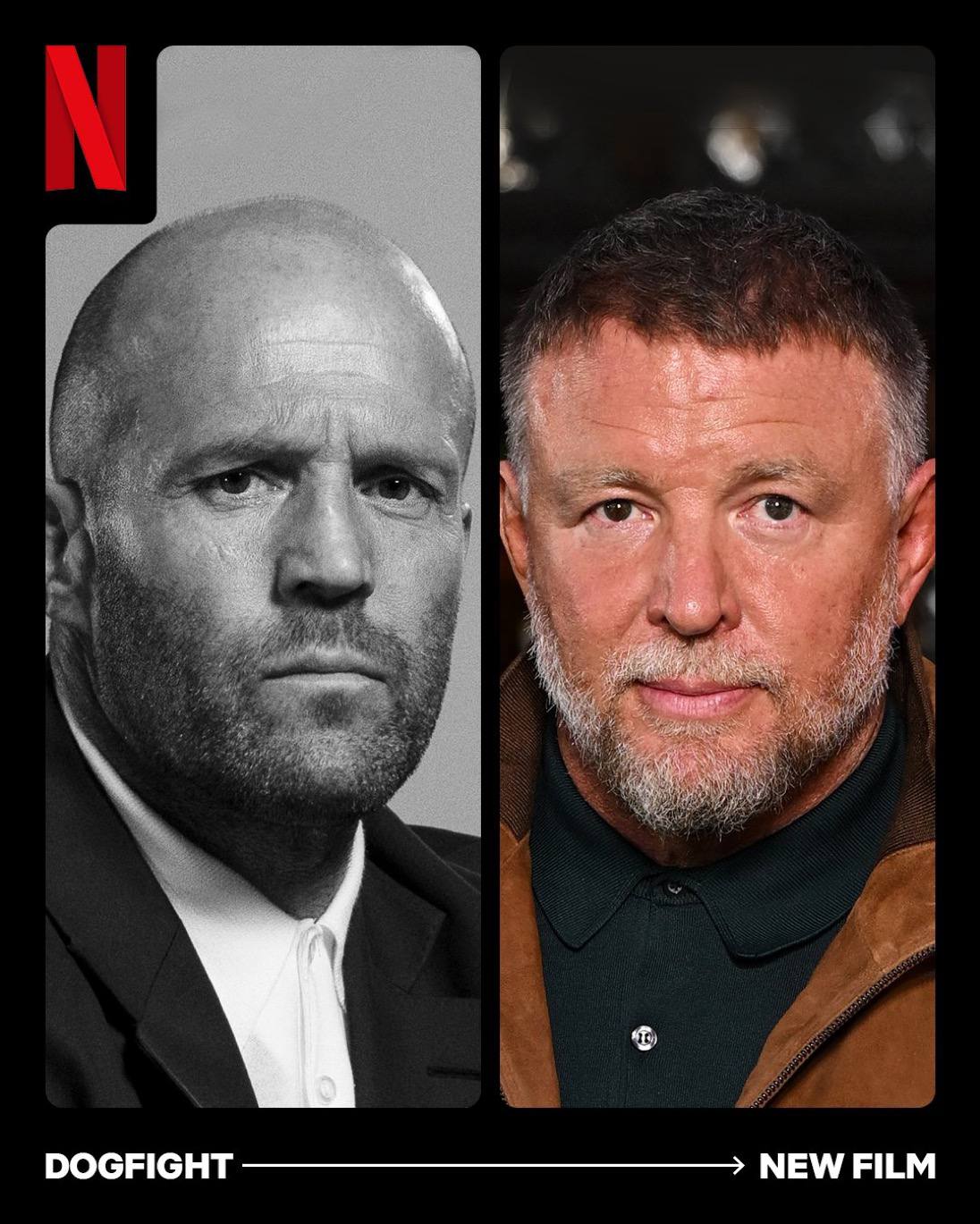
Jason Statham and Guy Ritchie Reunite for Netflix Revenge Thriller Dogfight
Netflix has announced the seventh collaboration between Statham and Ritchie, with filming set for early 2027.
Read the story →
 Latest on Every Movie Plug · Article
Actor Spotlight Brad Pitt
An analytical deep-dive into the performance mechanics, career turning points and filmography weight of a star who built his second career behind the camera.
Read the article →
 Latest on Every Movie Plug · Article
Today In Cinema November 5 The Matrix Revolutions 2003
Six months after Reloaded, the Wachowskis closed their trilogy with a record-setting global opening, a record-setting drop and an ending that critics and fans have argued about for 23 years.
Read the article →