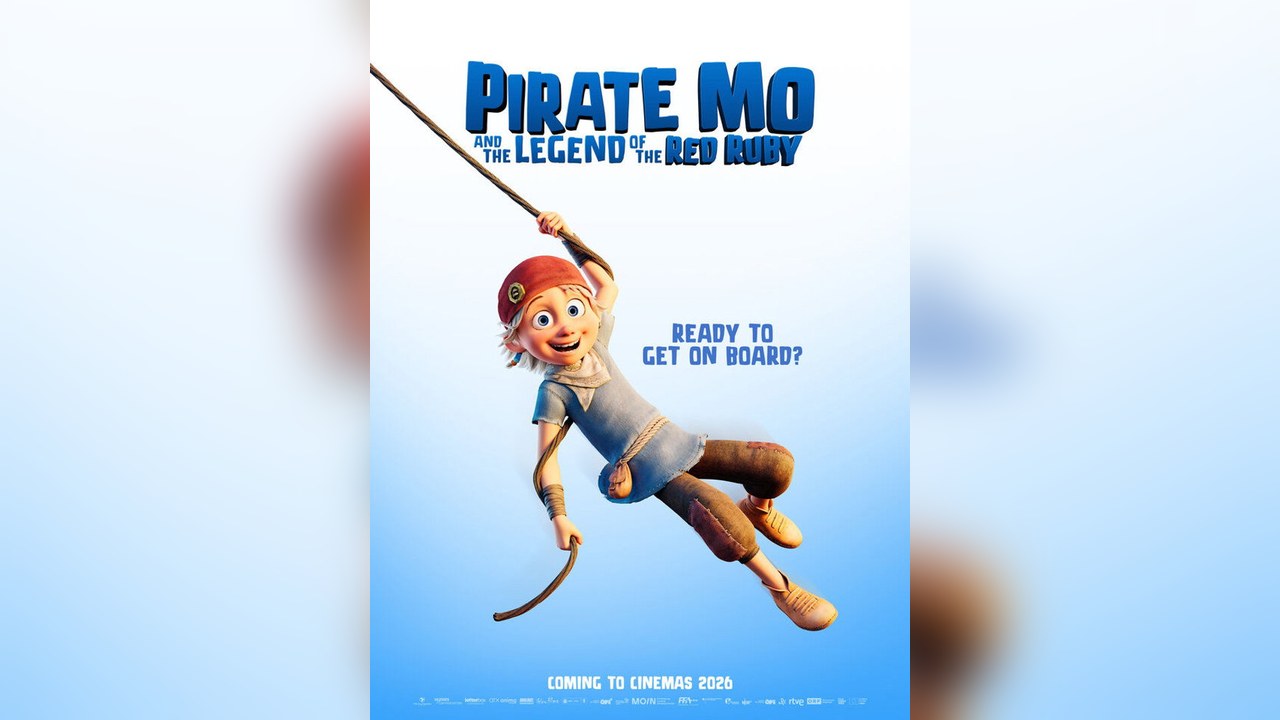
Pirate Mo and the Legend of the Red Ruby, an animated family adventure directed by Florian Westermann, has been acquired by independent distributor Viva Kids, which has added it to its upcoming release calendar. Specific release dates have not been announced.
The Deal and the Film Behind It
The 80-minute film is adapted from Kirsten Boie’s children’s book Seeräubermoses, with a script by Richie Conroy. Westermann previously co-directed The Amazing Maurice, the 2022 animated adaptation of Terry Pratchett’s novel about a talking cat and a band of clever rats. Viva Kids picked up the title alongside two other animated films, Treasure Trekkers and Space Cadet.
Bundling three animated titles in a single announcement is a common approach for distributors that specialize in family programming. It lets a company present a varied slate, from pirates to treasure hunts to space, to exhibitors and platforms at once. No release plans have been attached to any of the three films in the reporting available, so the acquisition is best understood as an early step.
A Girl, a Goat and a Crew of Seadogs
The story begins aboard a ragtag ship, where a child named Moses, called Mo, grows up among a crew of seadogs and the ship’s pet goat. Raised by the kindly Captain Claas, Mo is in fact a girl who arrived among the sailors as an infant, wrapped in mysterious rags. As she grows into a brave and boisterous young pirate, she struggles with her father’s life of piracy and searches for answers about her birth.
The setup combines two durable ideas from children’s fiction: the foundling who does not know where she comes from, and the found family that raised her. A heroine who has been living under a misunderstanding about her own identity also gives the film a personal question to answer alongside the swashbuckling.
The Villain, the Cabin Boy and the Prophecy
Captured by the wicked pirate Peg Leg Olle, Mo meets a resourceful cabin boy named Hannes and his pet bird. Together with Claas, his crew and their animal companions, she sets out to stop Olle and fulfil a childhood prophecy by finding the Blood Red Ruby, which is said to hold the power to restore peace and harmony to the land.
The treasure at the center of the plot is not simple loot. It is tied to a prophecy and to the idea of restoring harmony, which points to a story in which the gem matters for what it can do rather than what it is worth. That framing is typical of family adventures that want the quest to carry a message about cooperation and courage, though how the film handles it can only be judged once it is released.
A Three-Country Production
The film is produced by Emely Christians and Sonja Matthes at Ulysses Films, in co-production with Letterbox Filmproduktion, arx anima and Arxlight, across Germany, Austria and Spain. Sales agency The Playmaker Munich sold the film to multiple international buyers at the Cannes Film Market.
European animated features are frequently financed through co-productions of this kind, in which studios in several countries share the work and the funding. That structure can spread animation duties across different facilities and open the door to regional distribution deals. Sales at a market such as Cannes also indicate that buyers in several territories had an interest in the film before any public release date was set, which is often the first sign that a title will find an audience abroad.
What the Teaser Shows
A German-language teaser has also been released, with Dunja Bernatzky, Fanny Stapf and Otto Jaus credited in the cast. Because that teaser is in German, English-speaking viewers will have to wait for a dubbed or subtitled version, and the sources do not say which language versions are planned for each territory.
The cast credit is worth noting for another reason. Voice casting for animated films often changes between language editions, so the names attached to the German version should not be assumed to carry over to releases in other countries.
Pirates Have a Long History in Animation
Pirate stories have been a recurring subject for animators for decades, from Disney’s space-faring Treasure Planet in 2002 to Aardman’s stop-motion comedy The Pirates! In an Adventure with Scientists! in 2012. The genre offers colorful ships, exotic locations and a clear division between heroes and villains, all of which suit a young audience.
Pirate Mo and the Legend of the Red Ruby enters that tradition with a European literary source and a young female lead. It is a smaller-scale project than the big-studio releases that usually dominate the family market, which makes distributor interest all the more relevant for independent animation.
From the Page to the Screen
Kirsten Boie is a German author whose children’s books have long been popular with young readers, and Seeräubermoses is the source for this film. Adapting a book that readers already know gives a production a built-in point of familiarity, particularly in German-speaking markets where the title has an established readership. At the same time, an 80-minute running time means the screenplay has to condense the plot, so the film will likely focus on the central quest instead of every episode in the book.
Conroy’s script and Westermann’s direction are the main creative influences on how that condensing is done. Westermann’s earlier work on The Amazing Maurice involved a similar task, bringing a well-loved literary property to animation for a family audience, which makes him a logical choice for this project.
Why Independent Distributors Matter
Independent distributors such as Viva Kids give smaller animated films a route to audiences that might otherwise be dominated by the largest studios. They tend to build their calendars around titles that offer something different in style or origin, and a European adaptation fits that approach. For the filmmakers, the acquisition means the finished film has a partner responsible for getting it in front of families, which is often as important as the production itself.
What Comes Next
The key unanswered question is when families will actually be able to see the film. Viva Kids has not announced dates, and the sources used for this report do not specify whether the release will be theatrical, on a streaming service or a mix of both. Updates on release plans, additional cast announcements and international trailers are the developments to watch.
For now, the film’s path is clear in outline: a book adaptation with a recognizable director, a three-country production team, international sales completed and an independent distributor on board. The remaining steps are the ones that audiences will notice most.
- Viva Kids Acquires Three New Animated Films as Upcoming Releases
- Variety via AOL: Animated Movie 'Pirate Mo and the Legend of the Red Ruby' Sells to Numerous Distributors
- The Film Catalogue: Pirate Mo and the Legend of the Red Ruby
- Ulysses Films: Pirate Mo and the Legend of the Red Ruby
- KinoCheck: Pirate Mo and the Legend of the Red Ruby Teaser Trailer