Every Christmas movie is about getting home. Home Alone is about the first hour of not being there, when a boy discovers that his family has vanished and the house, for a few thrilling minutes, belongs entirely to him.
It opened in the United States on November 16, 1990, and it is 36 years old today. By the time it left theaters it had spent twelve straight weekends at number one, earned $476.7 million on an $18 million budget and made a child star of Macaulay Culkin. It is also a film that has taken on a new weight this year. Catherine O’Hara, who played Kevin’s frantic mother, Kate, died on January 30, 2026, at 71, and the film that taught audiences to cheer for her sprint across an airport now plays as something closer to a farewell.

The best way to understand how this one was built is the way Kevin McCallister learns his own house: one room at a time.
The Front Door: A Packing List
John Hughes found the idea while getting ready for a vacation. He was making a list of everything he did not want to forget, and he thought, as the story goes, that he had better not forget his kids. Then came the question that powers the whole film: what would a ten-year-old do if he were left behind? Hughes turned eight pages of notes into a screenplay, and he decided that the thing children fear most is a robber.
“I’d better not forget my kids”
The money was the first hurdle. Hughes had promised Warner Bros. he could make the film for under $10 million, a modest figure even then, and he was nervous enough about it that he arranged a secret meeting with 20th Century Fox. According to executive producer Scott Rosenfelt, a copy of the script was delivered to Fox without the studio’s formal knowledge, since Warner’s rights ran until the project was formally in turnaround. Early in production the budget rose to $14.7 million, Warner demanded a $1.2 million cut, the producers answered with a memo explaining why that was impossible, and Warner shut the film down the next day. Fox accepted Hughes’s offer almost immediately. The final cost was $18 million.
It is a classic story of a small movie nearly being strangled by its own budget, and the practical lessons in it are the subject of Every Movie Plug’s How to Film, Direct and Produce Your Own Movie, which covers how to plan a first film so that the money lasts.
The Director’s Chair: A Man Who Left Christmas Vacation
Hughes first asked Patrick Read Johnson to direct, but Johnson was committed to another film. He turned to Chris Columbus, who had been attached to National Lampoon’s Christmas Vacation and left before shooting because of a personality clash with its star, Chevy Chase. Hughes handed him two scripts, Reach the Rock and Home Alone. Columbus chose Home Alone because he found it funnier and liked the Christmas setting.
He also changed it. In an uncredited rewrite, Columbus added Old Man Marley, the feared neighbor who turns out to be a lonely man estranged from his son, because he wanted a more serious layer and a more emotional ending. That decision turned a slapstick fantasy into a film with a heart, and it is the reason the church scene is the one that people remember.
Columbus’s later career built on the same instinct for warm, family-sized spectacle. He went on to direct the first two Harry Potter films, a story told in Every Movie Plug’s Today in Cinema: Harry Potter and the Chamber of Secrets and in The Harry Potter Films Changed Hollywood, and We Still Haven’t Left Hogwarts.
The Attic: Finding Kevin
Hughes suggested Macaulay Culkin, who had nearly stolen Uncle Buck from John Candy the year before. Columbus, who felt it was his directorial responsibility, met 200 other actors before agreeing. Culkin was nine years old during filming, and the film’s famous poster image, a child with his hands pressed to his cheeks in a scream, has been credited to his own instinct for the shot. For all of it he was paid $110,000. For the 1992 sequel his fee was $4.5 million.
The rest of the casting had its own near-misses. Robert De Niro and Jon Lovitz turned down the role of Harry before Joe Pesci accepted it. Uncle Frank was written for Kelsey Grammer, who was unavailable. Daniel Stern left the film before shooting over pay for an extended schedule, Daniel Roebuck replaced him, and after two days of rehearsal Columbus decided there was no chemistry with Pesci and brought Stern back. Casting stories like these are a staple of film history, and Every Movie Plug collects more of them in 10 Actors Who Turned Down Roles That Became Legendary.

The Staircase: A Real House and a Fake One
The McCallister home is a real three-story house at 671 Lincoln Avenue in Winnetka, Illinois, in the North Shore suburbs of Chicago, the same village where Hughes had shot The Breakfast Club, Ferris Bueller’s Day Off, Sixteen Candles, Planes, Trains and Automobiles and Uncle Buck. Only a few of its interiors were used. The staircase, basement, attic and most of the first-floor landing were filmed on location, while everything else was rebuilt on a sound stage in the gym and empty swimming pool of the former New Trier High School, where Hughes’s company already had its offices.
Principal photography ran from February to May 1990. The treehouse was built for the film and dismantled afterward, and Kevin’s run from Marley takes place in Hubbard Woods Park. The church exteriors were shot in Wilmette and the interiors in Oak Park. It was, in other words, a very local production, and part of its warmth comes from that.
Working with a child star imposed its own limits. Culkin could not work later than 10 p.m., which squeezed a lot of night shooting into a short window. Pesci, meanwhile, resented the early call times because they kept him from his morning golf, and after he took an assistant director by the collar to make the point, calls were moved from 7 to 9 a.m. The two criminals also had trouble keeping their language clean on a set with a nine-year-old, and the only swear word that made the final cut was an accidental one from Stern when his shoe fell through a doggy door.
The Basement: Traps, Stunts and a Real Tarantula
The film’s reputation rests on its booby traps, and the traps were not funny to the people who had to film them. Columbus has said that every time the stunt performers did one of the stunts, he would watch and pray they were alive. The stunts had been prepared with safety harnesses, but because the harnesses were visible on camera, the final versions were performed without them. A rehearsal injury during the scene in which Harry tries to bite Kevin’s finger reportedly left Culkin with a scar, and the tarantula that crawls across Stern’s face was real.
Critics split on the slapstick. Roger Ebert gave the film two and a half stars out of four and compared the traps to Rube Goldberg machines, observing that any eight-year-old could build them if he had a budget in the tens of thousands of dollars and a crew of special-effects people. Owen Gleiberman of Entertainment Weekly gave it a D and called it a sadistic festival of adult-bashing. Others were more generous: Peter Bradshaw of The Guardian gave it three stars out of five and praised Culkin as almost incandescent with confidence, and Hal Hinson of The Washington Post admired both Columbus’s direction and Culkin’s performance.
The Church: The Man Next Door
If the basement is where the film is loud, the church is where it is tender. Kevin, afraid of Old Man Marley, who is rumored to have murdered his own family, finds him sitting alone as a choir sings, and the two have a quiet conversation. Marley points out his granddaughter in the choir, whom he has never been allowed to meet because of a rift with his son, and Kevin tells him he should make peace. Writers have called it one of the most touching scenes in the film.
It is also the scene that most clearly shows what Columbus added. The slapstick would have worked without it, but the ending, in which Marley embraces his family and exchanges a wave with Kevin across the snow, would not. That wave is the film’s real last image, and it is quieter than anything the traps deliver. A film in which a child learns to forgive an adult, and the adult is changed by it, belongs in the same conversation as the stories of grief and acceptance that Every Movie Plug has covered recently, including Seven Ways Black Panther: Wakanda Forever Honors Chadwick Boseman.

The Airport: Kate’s Journey Home
The other half of the film is a road movie. In Paris, Kate realizes that Kevin was left behind and sets off for home, and Catherine O’Hara plays the journey as a woman running on pure guilt. She gets as far as Scranton, Pennsylvania, where every flight is booked, until a polka band led by Gus Polinski, played by John Candy, offers her a seat in its moving van. Candy was available for one day, and his scenes took 23 hours to shoot. He was paid $414, having done the film as a favor to Hughes, and he was the only actor Hughes allowed to improvise, which is why all of his dialogue is improvised.
The chase through O’Hare International Airport took several days and thousands of extras, choreographed to run at full speed through an American Airlines terminal. Senta Moses, who played the cousin Tracy, later recalled that the cast sometimes bumped into one another like a multi-car pileup on an expressway and could not stop laughing.
What audiences remember, though, is the end. Kate walks in on Christmas Day, calls Kevin’s name, and the two reconcile. It is the film’s emotional payoff, and it rests entirely on the credibility of O’Hara’s performance.
The Porch: Saying Goodbye to Kate
O’Hara died at home in Los Angeles on January 30, 2026, after a brief illness. She was 71, and her career had run from After Hours and Beetlejuice through Schitt’s Creek to her 2025 Emmy nominations, for The Studio and The Last of Us. Culkin, who always called her his mama, paid his own tribute on Instagram, pairing a picture from the 1990 set with a photo from his Hollywood Walk of Fame ceremony in December 2023, where the two had re-enacted their reunion scene.
“Mama. I thought we had time.”
At that ceremony, O’Hara had told the crowd that families around the world cannot let a year go by without watching Home Alone together, and that the reason was Culkin. In September, at the 2026 Emmy Awards, Culkin returned the tribute alongside her Schitt’s Creek co-stars Dan Levy and Annie Murphy, urging viewers to call their own mothers. Chicago’s O’Hare airport marked her death with a photo of her, Culkin and John Heard running through the terminal in Home Alone 2.
The cast is now a gallery of people who are missed. Hughes died in 2009, Candy in 1994, Roberts Blossom, who played Marley, in 2011, John Heard in 2017 and now O’Hara. Hollywood is in a season of remembrance, with the industry paying tribute to another beloved performer in Every Movie Plug’s Hollywood Remembers Sir Patrick Stewart. It adds a layer of feeling to a film about a family finding its way back to one another.
The Living Room: Angels With Filthy Souls
The film’s best joke is also its most elaborate. Kevin scares off unwelcome visitors by playing a clip from a fictional gangster picture called Angels with Filthy Souls, a parody of the 1938 film Angels with Dirty Faces. It was shot in a single day, the final test day before principal photography, on black-and-white negative film with 1940s props, and filmed from low, wide angles that, as one writer put it, capture the action as if a child were perceiving it. The actor Ralph Foody played the mobster Johnny, and returned for a sequel, Angels with Even Filthier Souls, in the next film.
The score is another piece of luck. Columbus first hoped to hire Bruce Broughton, and early posters listed him as the composer, but Broughton was busy with The Rescuers Down Under. Columbus then reached Steven Spielberg, who helped him contact John Williams. The result earned two Academy Award nominations, for the score and for the song “Somewhere in My Memory,” written by Williams with lyricist Leslie Bricusse.
Spielberg is in the news this weekend, honored at MoMA’s film benefit, where he spent his speech crediting everyone else, a story covered in Every Movie Plug’s Spielberg, Honored at MoMA, Says He Has Never Stood Alone on a Set. For a film called Home Alone, the lesson fits: it took a very large number of people to make a movie about one boy by himself.

The Roof: A Box Office That Would Not Come Down
Home Alone opened on November 16, 1990, in 1,202 theaters and earned $17 million, an average of $14,211 per theater, and that was only about 6 percent of its eventual total. It then did something modern releases almost never do. It stayed at number one for twelve consecutive weekends, from November 16 to 18 all the way through February 1 to 3, when Sleeping with the Enemy finally displaced it with a $13 million opening. It peaked at 2,174 screens in its eighth weekend, in early January 1991, and was still in the top ten on the weekend of April 26. By the end of its run it had earned 16 times its opening.
The final tally was $285.8 million in the United States and Canada and $190.9 million abroad, or $476.7 million worldwide against an $18 million budget. It was the top-grossing film of 1990 in North America and, by the time it left theaters, the third-highest-grossing film of all time, behind only Star Wars and E.T. Box Office Mojo estimates that it sold more than 67 million tickets in the United States. It was the highest-grossing live-action comedy ever, according to Guinness World Records, until The Hangover Part II overtook it in 2011, and it remained the highest-grossing Christmas film until The Grinch in 2018. William Goldman noted that it created a Hollywood verb: to be “Home Aloned,” meaning to have a film’s box office crushed by its success.
Then came home video. Fox released it on VHS and LaserDisc on August 22, 1991, as its first video to go straight to sell-through instead of the rental market, and it sold 11 million copies, generating $150 million and tying it with E.T. as the best-selling video of all time to that point.
Runaway hits are a subject Every Movie Plug returns to often. Its Billion-Dollar Club ranking looks at the other end of the scale, and the Dunesday Survival Guide looks at the holiday season ahead.
The Mailbox: A French Santa and Other Complaints
Not everyone loved it. On release the film earned a 67 percent score on Rotten Tomatoes from 57 reviews and 63 out of 100 on Metacritic, though audiences polled by CinemaScore gave it an A. Caryn James of The New York Times thought the first half flat but praised the slapstick of the second and the scenes between Kevin and Marley. Peter Rainer of the Los Angeles Times said it played better as a trailer than as a full-length film.
There was also a legal cloud. The 1989 French film 3615 code Père Noël, in which a young boy left home alone with his grandfather has to fend off a home invader dressed as Santa Claus, bears a striking similarity to the story, and its director, René Manzor, threatened the producers of Home Alone with legal action. The French film was not released in the United States during its original run and did not become widely available there until 2018.
The film nevertheless won the Youth in Film Award for Best Young Actor for Culkin, and earned Golden Globe nominations for Best Motion Picture, Musical or Comedy and for Culkin’s performance, alongside its two Oscar nominations.
The Mantel: One Film, a Franchise and a Lot of Parodies
The success produced a franchise, though not an even one. Only the first sequel kept most of the original cast.
| Title | Year | Notes |
|---|---|---|
| Home Alone | 1990 | Written and produced by John Hughes, directed by Chris Columbus |
| Home Alone 2: Lost in New York | 1992 | The only sequel with most of the original cast; Culkin paid $4.5 million |
| Home Alone 3 | 1997 | New cast and story, with a screenplay by Hughes |
| Home Alone 4: Taking Back the House | 2002 | Made for television, with a new cast |
| Home Alone: The Holiday Heist | 2012 | Premiered on ABC Family and does not follow the McCallisters |
| Home Sweet Home Alone | 2021 | Disney+ reboot with Archie Yates, Ellie Kemper and Rob Delaney |
The film’s influence has been as visible in parody as in sequels. Snoop Dogg’s 1994 video for “Gin and Juice” opens with a gag that reads “Home Boy Alone,” the horror film Better Watch Out (2016) uses the paint-can trap to show how deadly it would be in real life, and in 2018 Culkin and Pesci both returned for a Google Assistant commercial that recreates scenes from the film shot for shot.
The Attic Window: Christmas Day, Again
The film has a remarkable annual life. It returns to television every December, it was released on Ultra HD Blu-ray for its 30th anniversary in 2020, and it is, for millions of families, the film that begins the season. This year it will share Christmas with a franchise Chris Columbus launched: HBO’s new Harry Potter series premieres on Christmas Day, December 25, 2026, as laid out in Every Movie Plug’s Harry Potter Is Starting Over, and the Franchise Is Betting Big.
That is a fitting overlap. Both are stories about a child who discovers how much courage he has once the adults are out of the room. One of them did it with a staircase full of paint cans, and the other with a wand. Thirty-six years after it opened, Home Alone is still the one that people put on first.
- Home Alone, Wikipedia
- Home Alone, Box Office Mojo
- Catherine O’Hara tribute, Rolling Stone
- Macaulay Culkin and Catherine O’Hara, The Daily Beast
- O’Hare Airport tribute, Fox News
- Emmys 2026 tribute, AsiaOne
- Emmys 2026 tribute, India TV News
- Home Alone at 30, JoBlo
- Culkin’s scream, Classic Chicago Magazine
- Home Alone and parental neglect, The Conversation
- Image credit: 20th Century Fox, via TMDB
News
More on Every Movie Plug
 Entertainment Spielberg, Honored at MoMA, Says He Has Never Stood Alone on a Set Steven Spielberg was honored at MoMA’s 18th Film Benefit with Tom Cruise, Martin Scorsese and Bruce Springsteen, and spent his speech crediting everyone else. Read the story →
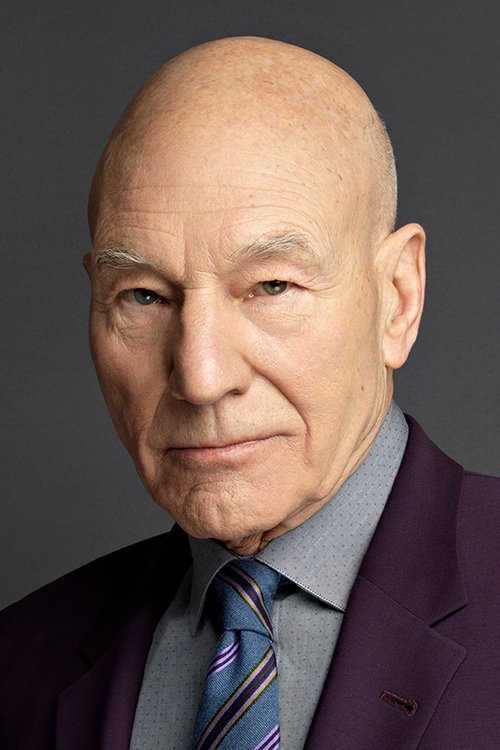 Film News Hollywood Remembers Sir Patrick Stewart: Tributes From Marvel, Star Trek and Co-Stars Sir Patrick Stewart has died at 86. Marvel Studios, the Star Trek family, Hugh Jackman, Seth MacFarlane and the Royal Shakespeare Company are among those paying tribute. Read the story →
 Film News Johnny Depp Says He Would Return for Pirates of the Caribbean 6 to Give Jack Sparrow a Better Send-Off Johnny Depp says he would return as Jack Sparrow in Pirates of the Caribbean 6 to send the franchise off on a better note. Here is where the film stands at Disney. Read the story →
Articles
Related Articles
 Today In Cinema Today in Cinema, November 15: Harry Potter and the Chamber of Secrets Opens in 2002, Told in Ten Numbers Harry Potter and the Chamber of Secrets opened November 15, 2002. Ten numbers explain how it was made, what it earned and why it was the series’ farewell to a king. Read the article →
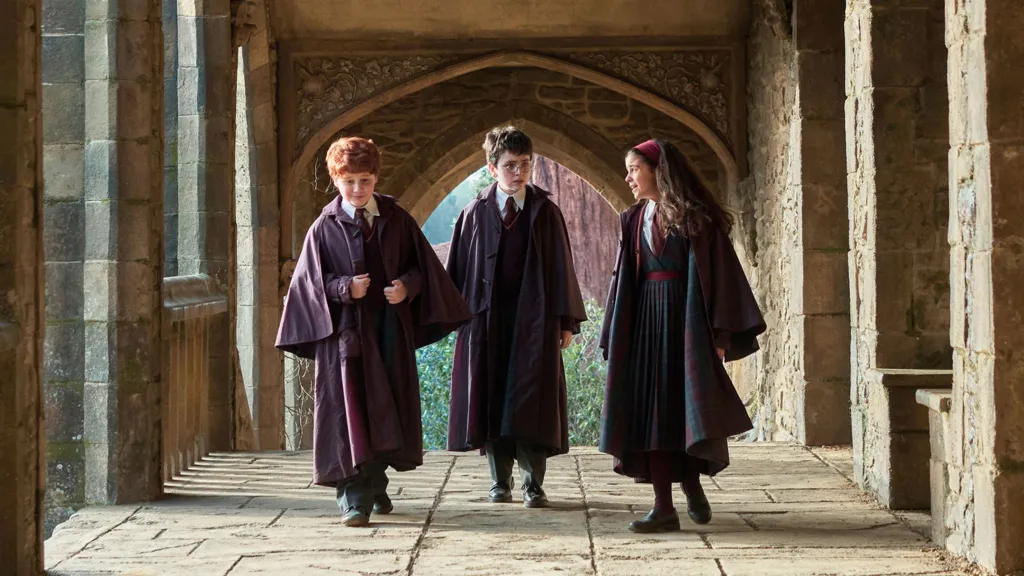 Article Harry Potter Is Starting Over, and the Franchise Is Betting Big From the books to the films to Fantastic Beasts, a look at how the Harry Potter franchise grew, stumbled, and is now rebooting as an HBO series. Read the article →
 Today In Cinema Today in Cinema, November 11: Seven Ways Black Panther: Wakanda Forever Honors Chadwick Boseman Black Panther: Wakanda Forever opened November 11, 2022. Seven ways Ryan Coogler’s film honors Chadwick Boseman, from a silent Marvel logo to Shuri’s final choice. Read the article →