The most carefully guarded object on the set of The Twilight Saga: Breaking Dawn - Part 1 was a dress. Bella Swan’s wedding gown was kept under wraps so tightly that Kristen Stewart was reportedly locked in a room wearing a Volturi cloak over it, a helicopter hovered over the location and off-duty police officers ringed the trees. It was the last scene the cast and crew filmed, and it was shot as if the Secret Service were attending.
All that secrecy was in service of a single image, a young woman in white satin walking toward a vampire at the end of an aisle. When the film opened in the United States on November 18, 2011, it turned that image into $30.25 million in midnight showings, $71.6 million in a single day and $138.1 million over a weekend. It is 15 years old today, and it has a new reason to be talked about this week: its Edward Cullen, Robert Pattinson, was announced on Monday as the next James Bond.
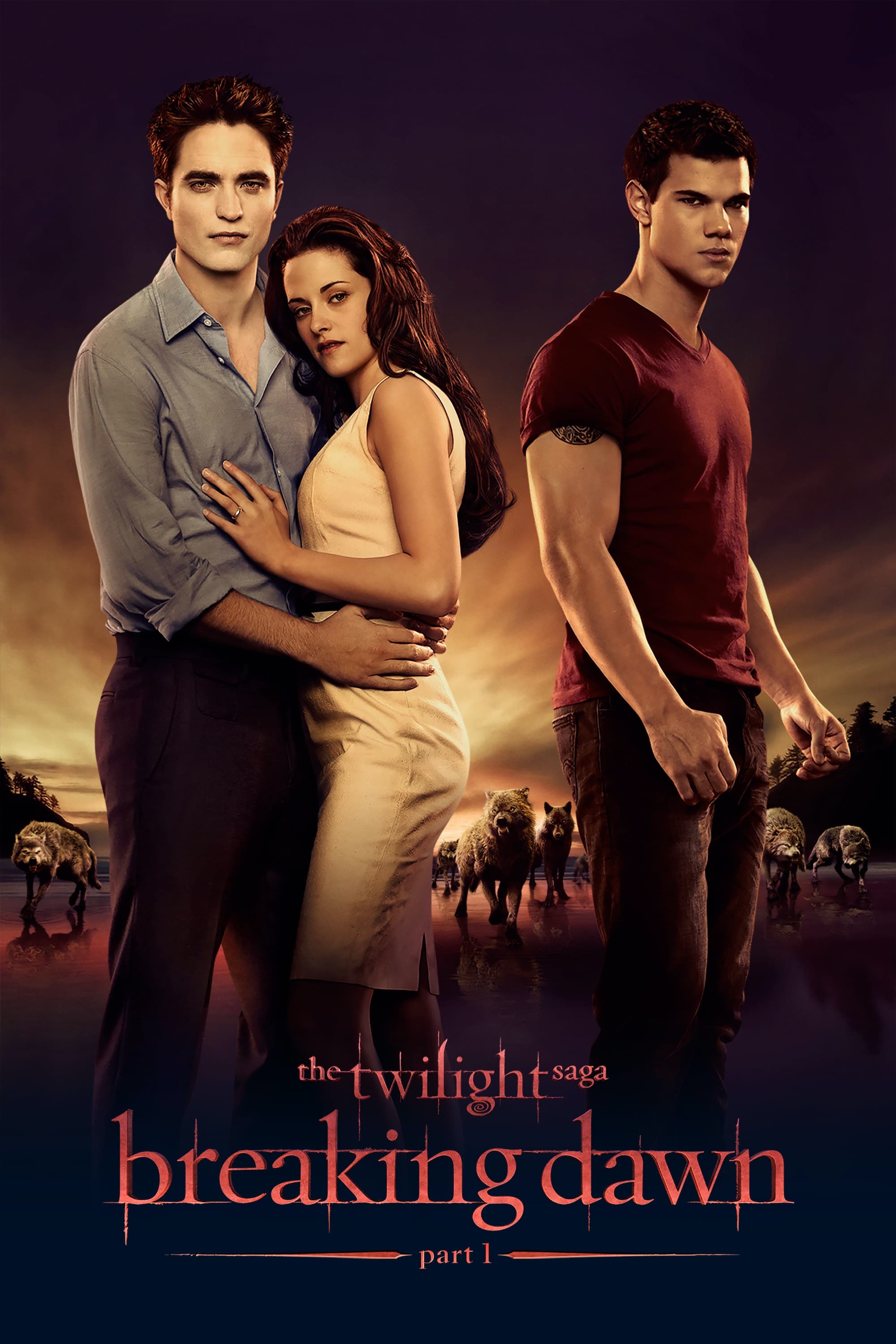
This look back follows the film the way a wedding program would, in the order the guests experienced it. It discusses the full story, including the birth and ending, so spoilers follow.
The Invitation: One Book, Two Films
Stephenie Meyer’s Breaking Dawn ran to 754 pages, and the author herself doubted it could fit in one movie. She said on her own website that if it were ever filmed, it would have to be split in two, and she had her doubts about Renesmee, a baby with complete awareness, being possible to film at all. Summit Entertainment confirmed the two-part plan on June 10, 2010, following the template set by Warner Bros.’ split of Harry Potter and the Deathly Hallows. That strategy, and what it did to the economics of young-adult franchises, is part of the story told in Every Movie Plug’s The Harry Potter Films Changed Hollywood, and We Still Haven’t Left Hogwarts.
There was a practical complication. The three leads, Stewart, Pattinson and Taylor Lautner, were contracted for four films, and a split raised questions about their deals. Producer Wyck Godfrey said all three were signed for the Breaking Dawn films, and both parts were shot back to back as one project, from November 1, 2010 to April 2011.
The Officiant: Why Bill Condon
Summit went looking for an Oscar-nominated director, and the names that circulated included Sofia Coppola and Gus Van Sant. Van Sant has said he auditioned after Pattinson named him as an ideal choice, and that he was so nervous during the pitch that he did little more than say the book should be followed closely. On April 28, 2010, Summit announced Bill Condon, the director of Gods and Monsters and Dreamgirls, with Godfrey, Karen Rosenfelt and Meyer producing.
“I quickly imprinted on the material”
Condon’s choice of word was a joke for the faithful, since “imprinting” is the werewolf phenomenon at the center of the film’s last act. He also said that he wanted to work with Stewart, and that he thought of Part 1 as a companion piece to Catherine Hardwicke’s original Twilight, in which everything set up in that first film is finally resolved.
Screenwriter Melissa Rosenberg, who had written every film in the series, described her job as honoring the emotional journey of Bella’s story above all else. She said openly that she did not expect to satisfy every fan, and in later interviews she explained that she had found a way into the material that did not contradict her own pro-choice beliefs, a point that would become central to how the film was argued over.
The Dress, the Guest List and a Helicopter
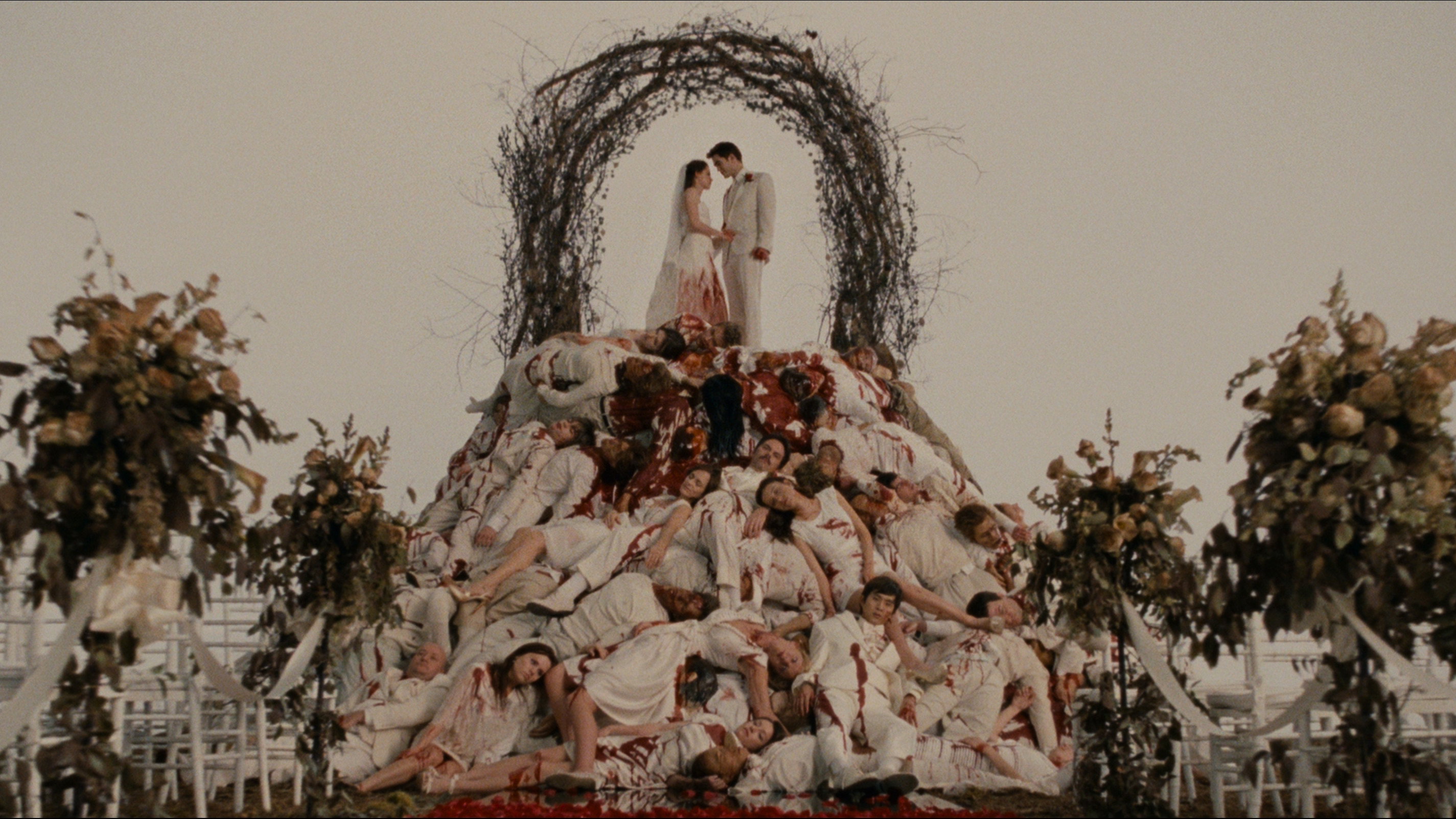
The film’s wedding is its set piece. Costume designer Michael Wilkinson led the film’s wardrobe, but Bella’s gown was designed by Carolina Herrera, whose name Summit announced in April 2011 after rumors had pointed to Zac Posen. The gown was a simple, elegant satin design with long sleeves, and a licensed replica was marketed through the bridal brand Alfred Angelo. The bridesmaids’ corsets were removed during filming because the cast found them hard to dance in.
The shoot itself was the hardest-guarded of the production. It took place around Squamish and Pemberton in British Columbia, with the stars housed at hotels in Whistler. Stewart has described it as “insane,” a Secret Service-style operation in which the crew gave up their phones. She has also said that she wanted to run down the aisle and was pulling away from Billy Burke, who played her father, and that the scene was so volatile and emotional that she felt like a crazy person.
Condon recalled the last shot as the dance between Jacob and Bella. He called “cut” after Jacob left the frame, and Stewart, still in her gown, hiked up her dress and ran into the woods after Lautner’s character shouting for him to come back. Meyer appears in the scene in an uncredited cameo as a guest.
The wedding also contains one of the film’s less obvious visual effects. Stewart had a minor wrist injury and was wearing a brace on the day, so the Montreal-based studio Modus FX built a computer-generated model of her hand and matched its movement to the live action across a 300-frame rotating shot around the couple, with no camera data to guide them.

The Honeymoon: Rain in Paraty
Principal photography began on November 1, 2010 in Brazil. The first night was shot in Rio’s Lapa district, where Summit rented a long city block, paid residents to keep their windows shut against paparazzi and compensated bar and restaurant owners to stay closed for the evening. The honeymoon itself was filmed in Paraty, around the Taquari area, a waterfall and Mamanguá Bay, and, in a detail that tells you something about island paradises, it rained every day of shooting.
The production’s last day was a little different. On April 22, 2011, the crew shot additional honeymoon scenes on Saint Thomas in the U.S. Virgin Islands. Stewart and Pattinson spent the day in the sea, then watched the sunrise from the beach.
“Every difficult moment just vanished”
The Pregnancy: A PG-13 Problem
The central creative challenge was how to put the novel’s birth on screen. In Meyer’s book, Bella’s pregnancy breaks her body, and the delivery is graphic. Fans on social media demanded an R rating, and Rosenberg’s answer was that it was more interesting not to see it. Godfrey called the idea of an R-rated version a crime against the audience, since the series’ core fans were under 18. The compromise, in Godfrey’s words, was to show only what Bella sees, filtering the experience through her point of view.
Condon framed the rule as a creative advantage. The thing that makes something R, he said, is literally showing it, so the film would not show frontal nudity or splattering blood and would instead make the experience as visceral as possible. The birth sequence took two nights to shoot, after the cast spoke with Meyer, a midwife and a doctor about the mechanics, including where Edward could realistically bite. An animatronic baby stood in for newborn Renesmee.
Stewart wore heavy makeup to look thin and ghostly through the stages of pregnancy in which the baby breaks her bones, and Modus FX created the pregnant belly, with a team of 12 artists spending six weeks matching the camera moves, lighting and film grain so that the baby could appear to kick. The result was a PG-13 rating, and a sequence that nonetheless unsettled some viewers. A week after the film opened, there were reports of moviegoers having photosensitive seizures during the birth scene, which involved pulsating red, white and black flashing lights, and the comic-book artist Jim Lee said his 11-year-old son became ill during it.
The Soundtrack: A Score and a Single
Carter Burwell, who had scored the first Twilight, returned for both Breaking Dawn films. He recorded Part 1 at Abbey Road Studios in London in September 2011, and the composers of the two intervening films, Alexandre Desplat and Howard Shore, happened to be in the city and stopped by the session. The soundtrack album arrived on November 8, 2011 with Bruno Mars’s “It Will Rain” as its lead single, and it was the first in the series without a song by Muse.
The Reception: A Record Midnight and a Record Drop
The opening was enormous. The film grossed $30.25 million from midnight showings, the second-highest midnight total then on record, behind only Harry Potter and the Deathly Hallows - Part 2, and went on to earn $71.6 million on its first day. The weekend finished at $138.1 million from 4,061 theaters, the tenth-highest opening in history at the time, and abroad it set a series record of $152.9 million across 54 markets.
| Measure | Result |
|---|---|
| Midnight showings | $30.25 million |
| Opening day | $71.6 million |
| US opening weekend | $138.1 million |
| Worldwide opening weekend | $291.0 million, a series high |
| Second weekend | Down 70% to $41.9 million, still number one |
| Time to $500 million worldwide | 12 days |
| Final worldwide gross | About $712 million to $732 million |
| Rank among 2011 releases | Fourth-highest worldwide |
Like many fan-driven openings, it was front-loaded. The second weekend dropped 70 percent, and the film spent three weekends at number one before closing in February 2012 with $281.3 million in North America. Its biggest market after the United States was the United Kingdom, Ireland and Malta at $48.8 million, followed by Brazil at $35 million, a figure that carries extra meaning given where the honeymoon was filmed. It was the second-highest-grossing film of the series, behind only Part 2.
Audiences polled by CinemaScore gave it a B-plus, and the crowd was 80 percent female. Among women the grade rose to an A-minus. That gap between the people who bought tickets and the people who reviewed the film is the story of its reception.
The Guest Book: Critics Weigh In
Reviews were harsh. Rotten Tomatoes lists roughly a quarter of critics as positive, with a consensus calling the film slow and joyless but satisfactory to the faithful, and Metacritic gave it 45 out of 100. It was the franchise’s lowest-rated entry.
| Critic or outlet | Verdict |
|---|---|
| The Guardian, Peter Bradshaw | One star out of five; called it the next stage of an “emo-operetta” |
| Rolling Stone, Peter Travers | Called it the worst Twilight movie yet |
| Time, Mary Pols | Named it one of the worst films of 2011, finding it the bloodiest and yet most bloodless |
| Chicago Sun-Times, Roger Ebert | Two and a half stars; praised Stewart’s portrayal of Bella |
| Daily Mirror | Four stars out of five; praised the wedding as beautifully staged |
| E! | Ranked it the tenth-best film of 2011 |
The film received eight Razzie nominations, including Worst Picture, Worst Director and Worst Actress for Stewart, and lost every category to Jack and Jill.
The pregnancy plot also became a debate in its own right. Critics at Ms. and The Atlantic read the story as carrying an anti-abortion message, while a Catholic News Service reviewer praised what it saw as a pro-life one. The academic Will Brooker made a different argument in Times Higher Education, saying the film reverses the conventions of the male gaze, and Rosenberg has said she would not have written it had she not found a way to do so within her own beliefs. It is rare for a romantic fantasy for teenagers to generate that much argument, and rarer for the argument to be about the story rather than the stars.
Something Old, Something New: What Came Next
Part 2 followed on November 16, 2012 and earned $868 million, the highest of the series. Its stars went their own ways, and the most surprising path belongs to Pattinson. After the series, he worked with auteurs and returned to franchises on his own terms, including Matt Reeves’s The Batman, and he is now part of Dune: Part Three, which is the subject of Every Movie Plug’s Dunesday Survival Guide.
On Monday, Amazon MGM Studios announced that Pattinson will play James Bond, with Denis Villeneuve directing from a script by Steven Knight and Amy Pascal and David Heyman producing. Heyman, who produced the Harry Potter films, is the producer behind the franchise that gave Pattinson his first major role as Cedric Diggory, and the announcement closes a loop that began in the Potter films and ran through the Cullens’ living room. Every Movie Plug has followed the story from the beginning, with Robert Pattinson Reportedly Screen-Tested for James Bond, Robert Pattinson Is the New James Bond, Amazon MGM Announces and an analysis of what comes next in James Bond vs John Wick: Which Franchise Is Stronger Now?.
His next screen appearance is already scheduled. Netflix has set a January 15 release for The Take, the heist thriller from Fernando Meirelles that pairs Pattinson with Denzel Washington, which Every Movie Plug covered in Netflix Unveils The Take First Look With Denzel Washington and Robert Pattinson. It is a long way from a wedding in the woods, and it makes the 2011 film a useful marker of how far its cast has traveled.
Stewart has made a similar journey. Her work since includes an Oscar nomination for Spencer, and Condon has gone on to direct larger studio films. The sense that the actors outgrew the franchise has become a standard part of the Twilight conversation, and Breaking Dawn - Part 1 is where its tension is most visible: a film built around the most conventional possible romantic milestones, played by performers who were already looking elsewhere.

The Recessional
The film opens with a wedding and closes on a pair of red eyes, and between those images it asks an audience to take a great deal on faith. It asks them to believe that marriage is a trial, that pregnancy is a threat, that a baby can be both and that a werewolf’s loyalty can transfer to a child. That its makers could stage all of this while negotiating a ratings board, a leaked set and a fan base watching every frame is its own kind of achievement.
Fifteen years on, it is easy to see the film’s faults and just as easy to see why it worked. It gave its audience exactly what they came for, at a scale few romances ever receive, and it arrived at the moment when a franchise built on devotion paid its largest dividend. For anyone revisiting it this week, there is now one more thing to watch for: the leading man who is about to become 007.
- The Twilight Saga: Breaking Dawn - Part 1, Wikipedia
- Breaking Dawn - Part 1, Box Office Mojo
- Breaking Dawn, Part 1, The Numbers
- Breaking Dawn - Part 1, IMDb
- 2011 box office number-one films, Wikipedia
- Hits $500 million worldwide in 12 days, The Hollywood Reporter
- Breaking Dawn budget, Vulture
- Robert Pattinson is the new James Bond, Amazon News
- Robert Pattinson Is the New James Bond, TheWrap
- Robert Pattinson named next James Bond, Business Standard
- Robert Pattinson officially cast as James Bond, Bleeding Cool
- Image credit: Summit Entertainment and Temple Hill Entertainment, via TMDB
News
Latest on Every Movie Plug
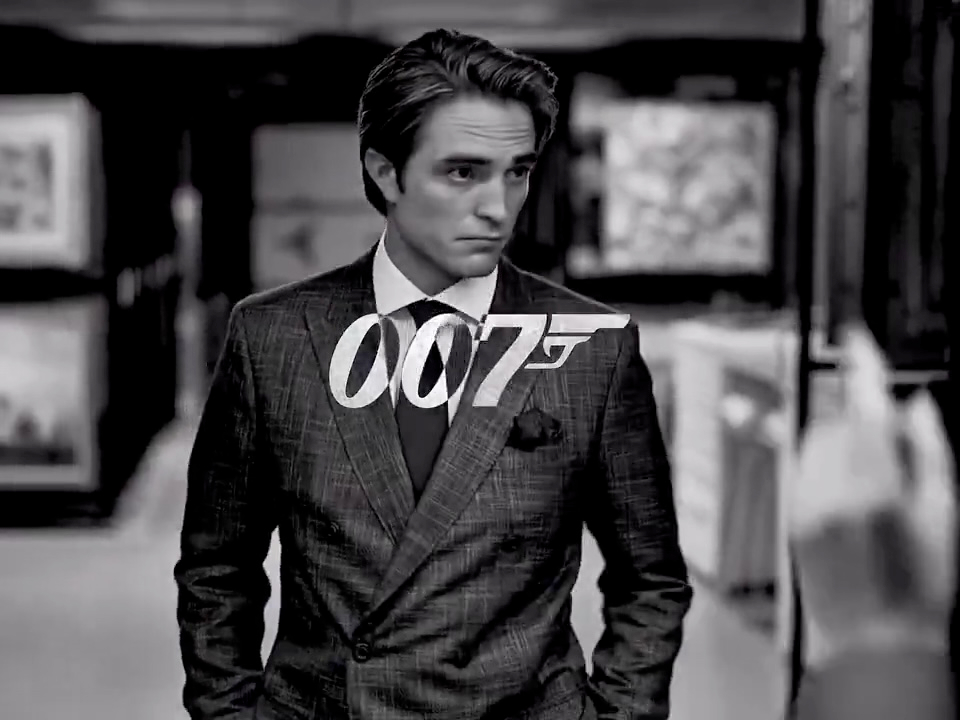 Film News Robert Pattinson Is the New James Bond, Amazon MGM Announces Amazon MGM Studios has named Robert Pattinson as the next James Bond, with Denis Villeneuve directing. What was announced, what it means and what is still unknown. Read the story →
 Film News Netflix Unveils The Take First Look With Denzel Washington and Robert Pattinson, Sets January 15 Release Netflix revealed the first poster and photos for The Take, the Fernando Meirelles heist thriller with Denzel Washington and Robert Pattinson, out January 15. Read the story →
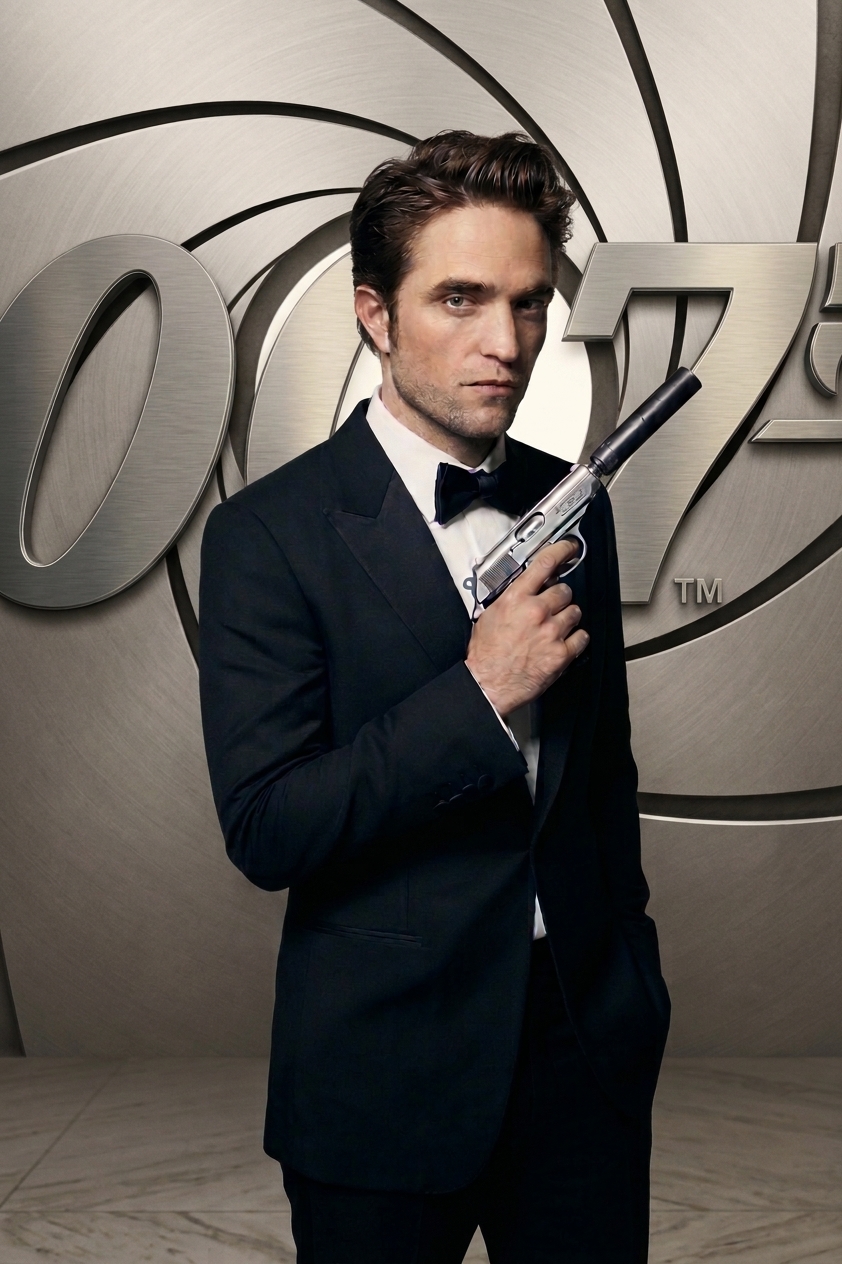 Casting News Robert Pattinson Reportedly Screen-Tested for James Bond as the 007 Casting Race Tightens Robert Pattinson reportedly screen-tested for James Bond in London, joining Callum Turner, Jack Lowden and Josh O’Connor in Amazon MGM’s 007 search. Read the story →
Articles
Latest on Every Movie Plug
 Industry Analysis James Bond vs John Wick: Which Franchise Is Stronger Now? James Bond and John Wick compared: box office, stars, ownership, spin-offs and tone, as Robert Pattinson takes over 007 and Caine heads for 2027. Read the article →
 Article Dunesday Survival Guide: How to Watch Dune: Part Three and Avengers: Doomsday, and Which to See First Two of the biggest films of the year open on the same Friday. Here is how to plan the weekend, where to sit, and which one deserves your first ticket. Read the article →
 Article The Harry Potter Films Changed Hollywood, and We Still Haven’t Left Hogwarts Ten years, eight films, and one cast that grew up in front of the world. Why the Radcliffe series still matters as a new generation prepares to meet Hogwarts. Read the article →