The most consequential decision of Sylvester Stallone’s career was a refusal. Sometime in 1975, with a child on the way and almost nothing in the bank, he was offered more money for a screenplay than he had ever seen, and the only condition was that he stay out of the movie. He said no. It was a reckless thing to do, and it was also the entire plot of Rocky before anyone had shot a frame.
Fifty years ago today, on Sunday, November 21, 1976, that film opened in New York: a modest boxing drama with an unknown in the lead and a budget of about a million dollars. It went on to gross roughly $225 million worldwide, win Best Picture and hand American popular culture a staircase, a theme song and a shorthand for hope. The anniversary arrives in unusually good company, with a restored 4K run in theaters earlier this month, a concert tour built around composer Bill Conti, and a new Peter Farrelly biopic, I Play Rocky, that has just widened to roughly 2,000 US screens.

The Night Chuck Wepner Wouldn’t Lie Down
On March 24, 1975, in Richfield, Ohio, Muhammad Ali defended the heavyweight title against a New Jersey liquor salesman and part-time brawler named Chuck Wepner, a fight booked as an easy payday for a challenger nobody gave a chance. Wepner did something no one had planned for: he kept getting up. He put the champion on the canvas in the ninth round and survived into the fifteenth before the fight was stopped. Watching it was Stallone, a 28-year-old actor with a couple of small film credits and, as Sports Illustrated tells the story, $106 in the bank.
He had been losing for years in the way actors lose, slowly and politely, in waiting rooms. His car had died, so he was hitchhiking to auditions. He had been forced to sell his bullmastiff, Butkus, because he could no longer afford to feed him.
“It was either the dog or us.”
What he saw in Wepner, as he has described it, was a man who lost the fight and still won something for everyone who has ever been counted out. Stallone has since drawn a line between the night that lit the fuse and the man who supposedly inspired the character, and Wepner, for his part, later sued and settled. Either way, the idea was in him. He sat down in a closet-sized apartment in the San Fernando Valley with a pen and a spiral notebook and wrote a first draft in about three days. It came out of him, he has said, because it was a metaphor for his own life.
That draft was not the film we know. Adrian was Jewish and modeled on Bette Midler. Mickey, the old trainer, was an abrasive bigot. Apollo Creed was Jamaican. And Rocky threw the fight, then used the money to open a pet shop for the woman he loved. It took rounds of revisions, steered by producers Irwin Winkler and Robert Chartoff, to arrive at the story’s real spine: the hero does not need to win. He only needs to be standing at the end.
The Price of Going Away
Winkler and Chartoff believed in the script enough to carry it to United Artists, and the studio liked it enough to want it. It just did not want Stallone. The names batted around for the lead were James Caan, Ryan O’Neal and Burt Reynolds, all bankable, all wrong in hindsight, and all more famous than the man who had written the part. So United Artists tried to buy him out. By his account the offers began around $20,000 for the script on the condition that he stay away from the cameras, then climbed through six figures until his agent reported something near $340,000. For a struggling actor with a baby coming, it was a life-changing sum.
Stallone has acknowledged that turning it down could easily have looked like pure ego. He did it anyway, and the producers, to their lasting credit, stood with him. They agreed to cut the proposed $2 million budget in half to get a film made with Stallone in it, and signed on to cover any overruns themselves. The final arithmetic is almost comic. A windfall of more than $300,000 became roughly $20,000 for the screenplay plus the union minimum of $350 a week to act in it. He had bet on himself, and nobody was offering odds.
Hollywood has plenty of sliding-door casting stories, and Every Movie Plug has collected some of the best in 10 Actors Who Turned Down Roles That Became Legendary. Rocky is the rarer version, in which the person turning something down was the unknown, and the thing he refused was the money. It is also one of the cleanest cases of anonymity working as an asset, which is why it appears in our look at the great films that succeeded without a famous face.
Twenty-Eight Days of Winter
The director was John G. Avildsen, hired in part because he had a reputation for bringing small pictures in on schedule, and he took half of his usual $100,000 fee to do it. Cameras rolled in Philadelphia in January 1976 on a 28-day schedule, and the production finished about $40,000 under its budget. Nobody was getting rich, and nobody was getting comfortable, which suited the material.
The poverty became the look. Instead of building a gritty neighborhood on a back lot, the crew simply used one: real row houses, real gyms, the Italian Market, streets with the potholes left in. The famous images of the film are mostly images of things the production could not afford to fake, and that is a lesson first-time filmmakers can borrow.
The cast filled in around Stallone with a mix of pedigree and family. Talia Shire, already Connie Corleone in The Godfather, played Adrian as a woman so shy that her courtship with Rocky is mostly two lonely people failing to talk, which is precisely why it works. Burgess Meredith gave the trainer Mickey a face that looked as if it had lost every fight it ever watched. Burt Young gave Paulie his short fuse, and Carl Weathers, a former Oakland Raiders linebacker, gave Apollo Creed his showman’s grin. Stallone’s father, Frank Sr., rang the bell in the final fight, his brother Frank Jr. sang on a street corner, and Butkus, reunited with his owner, got a part as Rocky’s dog. Joe Frazier, a real Philadelphia heavyweight champion, even turned up for a cameo.

The Camera That Ran Up the Stairs
The film’s quiet technical miracle was a harness-and-spring contraption called the Steadicam, invented by a Philadelphian named Garrett Brown. Rocky was only the third feature to use it, after Bound for Glory and Marathon Man, and it changed what a sports movie could feel like. By most accounts, the museum steps entered the picture because of a demo reel in which Brown ran his then-girlfriend, Ellen, up and down them with the camera strapped to his chest. Avildsen watched it and reportedly asked where those steps were and whether Brown wanted a job.
Brown wove through the frozen meat locker, floated around the ring, and sprinted up the stairs alongside Stallone. For the climactic fight, shot at the Los Angeles Sports Arena, the production hand-carried the rig through the chaos. The audience was no longer watching a boxer from the cheap seats. It was inside the motion.
The training itself left marks. Stallone punched slabs of beef until his knuckles were permanently flattened, a detail fans still pass around like scripture. His first idea for the staircase scene was to carry Butkus up the 72 steps, an idea that presumably did not survive contact with a bullmastiff weighing well over a hundred pounds. Actors still pay for roles with their bodies, and the bill is easy to see in modern transformations like Dave Bautista’s bulk-up for God of War or the five hours of daily prosthetics Dwayne Johnson endures in Lizard Music, a film released through the very United Artists banner that once took a chance on a boxing movie. Johnson, who played a fighter in the MMA drama The Smashing Machine, is working in a sports-drama lineage that Rocky helped set.
A Song Meant to Be Filler
Bill Conti, a young Juilliard graduate, was chosen partly because the budget could not afford anyone grander. The training sequence needed music, and what he wrote was meant to be a functional piece of score. It was Avildsen who suggested that Conti turn the tune into a proper song, and the lyrics, as Avildsen later told it, came together in about five minutes. The montage itself began as roughly 90 seconds and ballooned to nearly three, because the footage kept outrunning the music and Conti kept adding to it.
“Gonna Fly Now” climbed to the top of the Billboard singles chart in 1977 and earned an Oscar nomination for Best Original Song. Today it is hard to hear it without picturing a pair of gray sweatpants, which is the highest compliment a piece of film music can receive.
An Exhausted Country Finds a Hero
Listings differ on exactly how to date the debut. IMDb notes a New York premiere screening on November 20, while TCM, Box Office Mojo and HISTORY all point to November 21 as the day the film opened to the public in Manhattan. It reached the rest of the country on December 3. Either way, it landed during the closing stretch of the Bicentennial year, when America was trying to celebrate itself and mostly feeling tired. Vietnam had ended in defeat, Watergate had driven a president from office and the economy was sputtering.
The plot sat neatly inside that mood. Champion Apollo Creed, searching for a Bicentennial gimmick, picks a nobody from Philadelphia as a sacrificial opponent, a publicity stunt designed to be forgotten. The film starts with a title card dating its opening scene to November 25, 1975, and the big fight is set for New Year’s Day. Everyone in the story treats the bout as a show. The only person who treats it as a chance is Rocky.
Word of mouth did the rest. People who saw the film told their friends. Sports Illustrated’s Chris Nashawaty remembers watching it in a theater where the whole audience rose during the final rounds, as if willing the outcome. Roger Ebert, reviewing it for the Chicago Sun-Times, conceded that the story had been told a hundred times before, then argued that the movie worked because of its hero and compared Stallone to a young Marlon Brando. By the end of its run, Rocky had earned about $117 million in the US and roughly $225 million worldwide, making it the highest-grossing film of 1976.
The irony sat in the producers’ own slate. Winkler and Chartoff were also making Martin Scorsese’s lavish, troubled musical New York, New York, a bigger, more expensive and far more fashionable project, and they had used it to secure the studio against a Rocky flop. The musical lost money. The little boxing picture covered the gap. It also landed between two other pillars of 1970s moviegoing, Jaws in the summer of 1975 and Star Wars in 1977, a reminder that the era’s blockbuster machinery grew from the same decade as its scrappiest hit. Spielberg, honored at MoMA this month, spent his speech insisting that he has never stood alone on a set, and Rocky is its own proof of that idea: a producer’s gamble, a director’s discount, a cameraman’s invention and a composer’s afterthought, all pulling the same direction.

Oscar Night and the Beauty of Losing
When the nominations were announced in February 1977, Rocky had ten, including Best Picture, Best Director, acting nods for Meredith, Young and Shire, and a rare double for Stallone in Best Actor and Best Original Screenplay. The field was brutal. All the President’s Men, Network and Taxi Driver were all in the running for Best Picture, along with Bound for Glory, the other Steadicam film on the list.
On March 28, 1977, the underdog did what underdogs do in the movies. Rocky won Best Picture, Avildsen won Best Director, and Richard Halsey and Scott Conrad won for Film Editing. Stallone lost both of his individual categories, Best Actor to the late Peter Finch for Network and Best Original Screenplay to Paddy Chayefsky for the same film. A movie about a man who loses the fight and wins the night won the big prize while its creator went home without a statuette. It remains the most Rocky outcome imaginable.
The Library of Congress made the verdict official in 2006, selecting the film for preservation in the National Film Registry as culturally, historically and aesthetically significant.
The Afterlife of a Staircase
The sequels arrived in a steady rhythm: Rocky II in 1979, III in 1982, IV in 1985, V in 1990 and Rocky Balboa in 2006. Then came a second life through Creed in 2015, Creed II in 2018 and Creed III in 2023. Guinness World Records counts the whole saga as the most successful sports movie franchise ever made, and credits Rocky IV, at about $300 million, with the highest gross of any boxing film. Stallone’s return as an aging, ailing mentor in the first Creed earned him a Golden Globe and an Oscar nomination for Best Supporting Actor, a late reward for a character he had been writing, in one form or another, for forty years.
Philadelphia absorbed it all. A 12½-foot bronze of Rocky, commissioned for Rocky III, bounced between the museum steps and a South Philly sports complex before settling in 2006 at the bottom of the 72 steps, a little to the right. Tourists run those stairs daily, and the Philadelphia Museum of Art mounted a 2026 exhibition, Rising Up: Rocky and the Making of Monuments, that looks at the character through the lens of public monuments. Journalist Mike Sielski’s new book, Going the Distance: Stallone, Philly, and the Story of Rocky, adds yet another fifty-year retrospective to the shelf.

Rocky also helped establish a template that every sports film since has either followed or defiantly dodged: the training montage, the long-shot hero, the fight that matters less than the person fighting it. That is a heavy legacy for a movie shot in 28 days on a shoestring. For more films that pushed past what everyone said could be done, see our list of 20 movies that were almost impossible to film.
Fifty Years On, a Month of Celebration
This anniversary has been unusually busy. Rocky 50th Anniversary, a remastered 4K presentation from Amazon MGM Studios, Park Circus and Fathom Entertainment, played theaters from November 7 to 11 with a featurette on I Play Rocky attached. A one-night reunion of Stallone and Conti was billed for November 5 in Brooklyn, as part of the touring Rocky in Concert show. A Guinness World Records attempt for the largest gathering of people dressed as Rocky Balboa was scheduled for November 13 on the museum steps.
Update (Nov 21, 2026): I Play Rocky widened to roughly 2,000 US theaters on November 20, after opening November 6 in seven locations.
I Play Rocky, directed by Peter Farrelly from a script by Peter Gamble, is the other half of the celebration. It dramatizes the making of the original film, with Anthony Ippolito as the young Stallone and Kiki Seto as Talia Shire. It premiered at the Toronto International Film Festival on September 12, where Deadline’s review praised Ippolito’s performance as far more than imitation, and it has been building audiences since a limited release in early November. It also shines a light on Garrett Brown, the Steadicam inventor whose original steps footage appears in the new film. The film’s studio, Amazon MGM, now holds the legacy that United Artists once carried.
Why It Still Works
The final bell is the thing. Rocky loses. Apollo Creed takes a split decision, and the film’s last image is not a belt or a trophy but a bruised man pushing through a crowd screaming for the woman he loves. The movie understood something that most of its imitators forget: the audience does not need the hero to win, it needs him to matter. In a bicentennial year full of speeches about greatness, here was a character who wanted only the right to say he had gone the distance.
That is also why the film reads so differently from the polished spectacle that now fills multiplexes. Stallone’s performance is full of hesitations, misfired jokes and the self-consciousness of someone who has been told his whole life that he is not quite enough. It is the kind of lived-in human texture we examined in AI Cannot Act, and no amount of technique can reproduce it from nothing. The film worked because the man in it was risking something real.
Half a century on, the story that surrounds Rocky is the same as the one inside it. A broke actor refused to sell. A pair of producers believed him. A director took a pay cut, a cameraman strapped on a machine, a composer wrote a tune for the montage and a country that needed a lift got one. Somewhere in a theater tonight, a crowd will still be on its feet in round fifteen, and for a couple of minutes, nobody will mind who wins.
Rocky is available on home video and across streaming and rental services, so check current listings for your region.
- Sports Illustrated: Fifty Years of Fight: How the Making of ‘Rocky’ Was the Ultimate Underdog Story
- Guinness World Records: Rocky’s record-breaking legacy as ultimate underdog story celebrates 50th anniversary
- NPR: How the Steadicam sprinted up the stairs along with Rocky
- Fathom Entertainment: Tickets Now on Sale for Rocky 50th Anniversary
- BroadwayWorld: Sylvester Stallone and Bill Conti to Reunite for ROCKY 50th Anniversary
- Deadline: I Play Rocky Review, Toronto Film Festival
- Screen Rant: I Play Rocky added to 1,900 theaters
- AFI Catalog: Rocky (1976)
- TCM: Rocky (1976)
- IMDb: Rocky release info
- Box Office Mojo: Rocky (1976)
- HISTORY: Rocky opens in theaters
- HISTORY: Rocky’s pop culture influence
- Wikipedia: Rocky (film)
- Encyclopedia.com: Rocky
- Britannica: Rocky
- Filmsite: Rocky (1976)
- DGA Quarterly: Shot to Remember, Rocky
- The Philadelphia Inquirer: Garrett Brown, who made Rocky’s run up the steps possible
- The Philadelphia Inquirer: The Art Museum’s new Rocky exhibition
- TV Insider: Rocky, reliving the most iconic scenes
- Yahoo Movies: 72 hard-hitting facts about the Rocky movies
- Image credit: United Artists and Chartoff-Winkler Productions, via TMDB
News
Latest on Every Movie Plug
 Entertainment Spielberg, Honored at MoMA, Says He Has Never Stood Alone on a Set Steven Spielberg was honored at MoMA’s 18th Film Benefit with Tom Cruise, Martin Scorsese and Bruce Springsteen, and spent his speech crediting everyone else. Read the story →
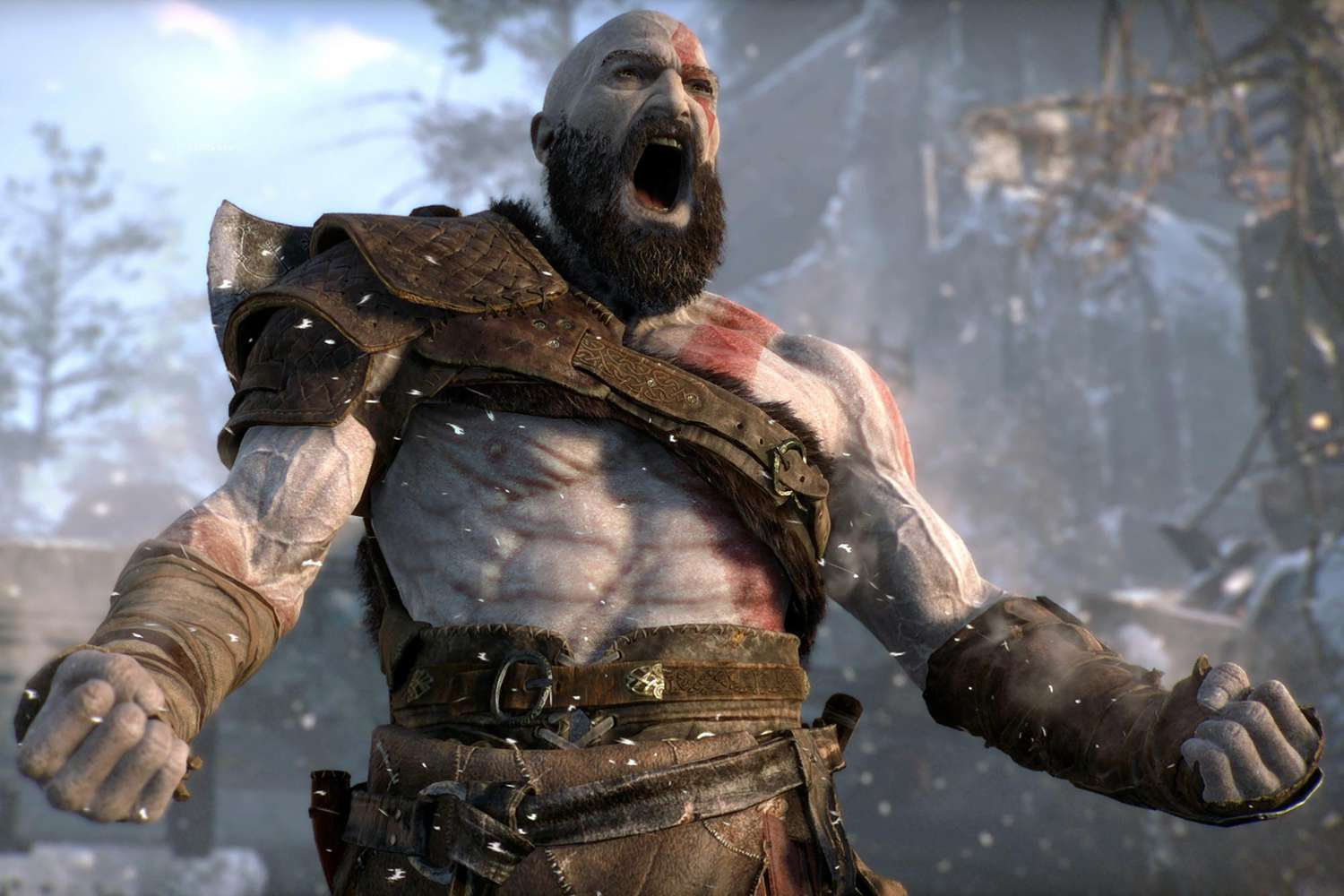 TV News Dave Bautista Shows Off 20-Pound Weight Gain on Instagram as God of War Kratos Prep Hits 250 Dave Bautista posted an Instagram story saying he has gained 20 pounds for Prime Video’s God of War and now weighs 250. Here is where his transformation began and what happens next. Read the story →
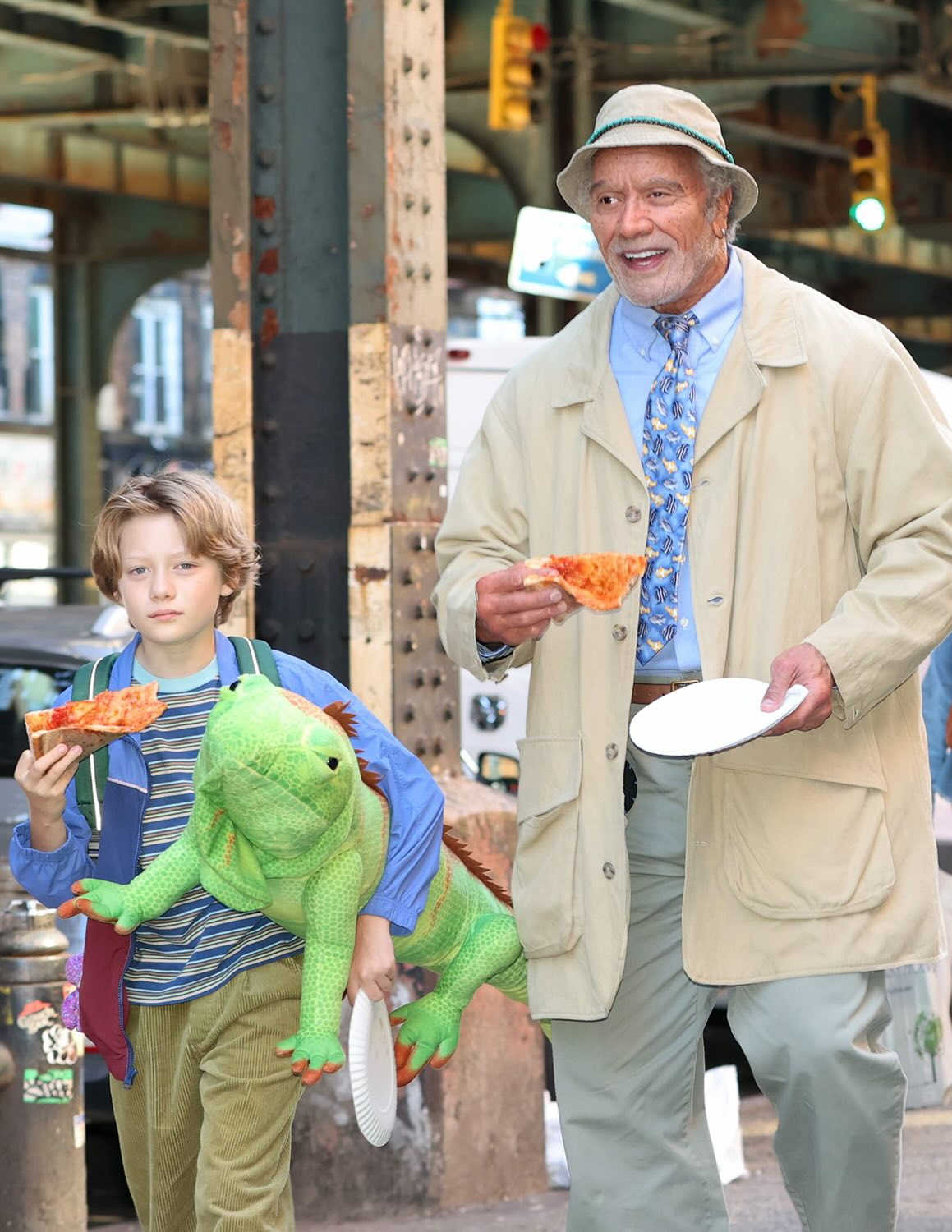 Film News Dwayne Johnson Transforms Into a 70-Year-Old Man for Lizard Music Dwayne Johnson is nearly unrecognizable as 70-year-old Chicken Man in set photos from Benny Safdie’s Lizard Music, due December 25, 2027. Read the story →
Articles
Latest on Every Movie Plug
 Article No Stars, No Problem: The Great Films That Succeeded Without a Famous Face From Apocalypto to Parasite, a look at the great films that succeeded with no major stars, and why the story is often the real headliner. Read the article →
 Article 10 Actors Who Turned Down Roles That Became Legendary Hollywood history turns on sliding-door moments. These are the casting rejections that reshaped blockbuster cinema and handed other stars their defining parts. Read the article →
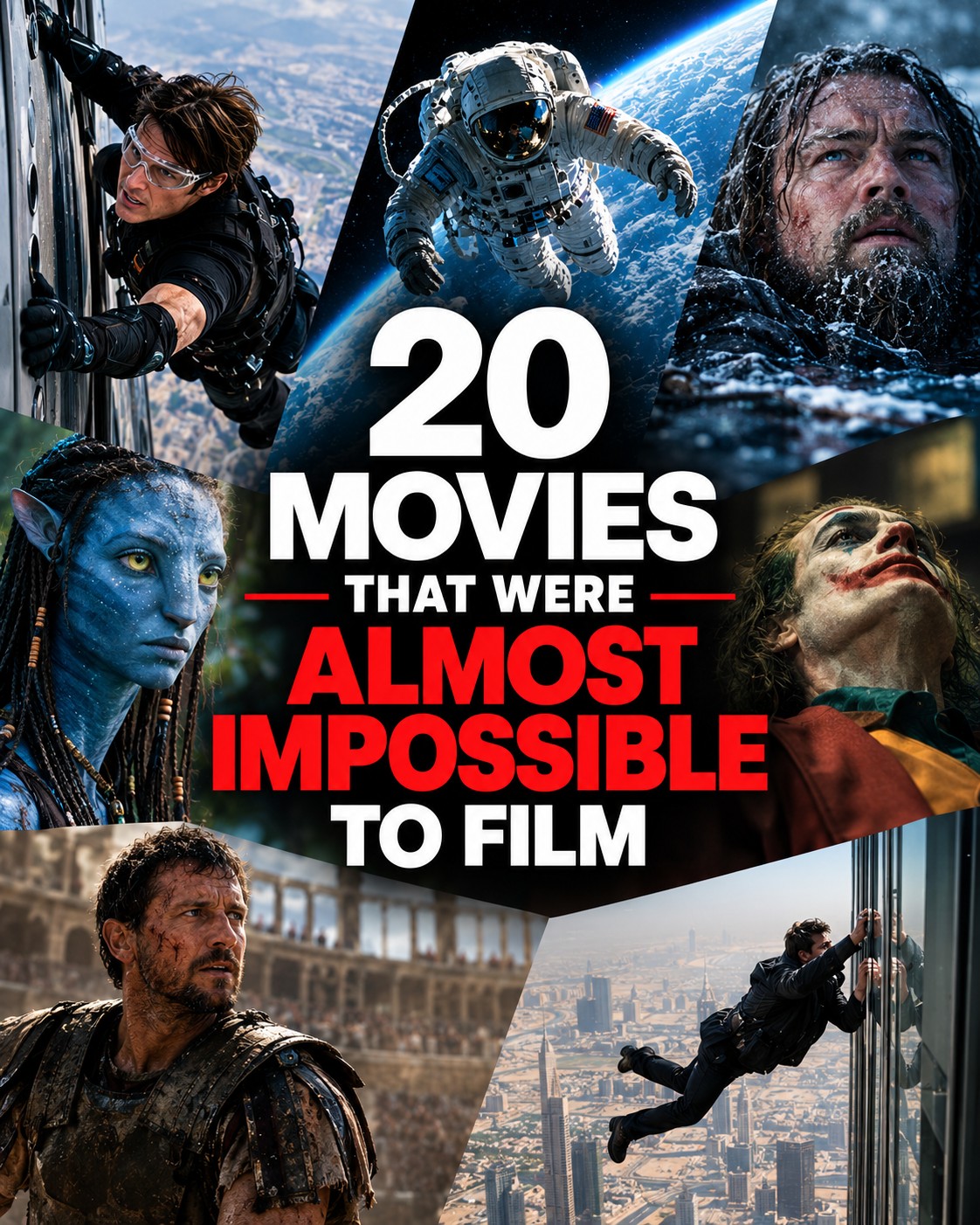 Article 20 Movies That Were Almost Impossible to Film From a twelve-year shoot to a steamship hauled over a mountain, these 20 films pushed filmmaking past what everyone said could be done. Read the article →