Today in Cinema looks at one major film from movie history that reached audiences on this date: how it was made, how it was received and why it still matters.
On November 8, 2002, a drama about a factory worker trying to become a rapper opened in nearly 2,500 American theaters and made $51.2 million in three days. 8 Mile was the first feature film for Eminem, then one of the most famous and most controversial musicians in the world, and the industry expected it to be either a cash-in or a disaster. It turned out to be neither. The film earned $242.9 million worldwide on a $41 million budget, drew generally positive reviews and produced a song that went on to win an Academy Award.
Twenty-four years later, 8 Mile stands as one of the rare pop-star vehicles that holds up as a film. Its plot is simple and familiar: a young man with talent and no money gets one night to prove himself. What makes it work is the specificity of the setting, the discipline of its director and a final rap battle that has become one of the most quoted sequences of its era. This edition of Today in Cinema looks at how the film came together, who nearly made it, what happened on release weekend and why the Oscar for “Lose Yourself” mattered.
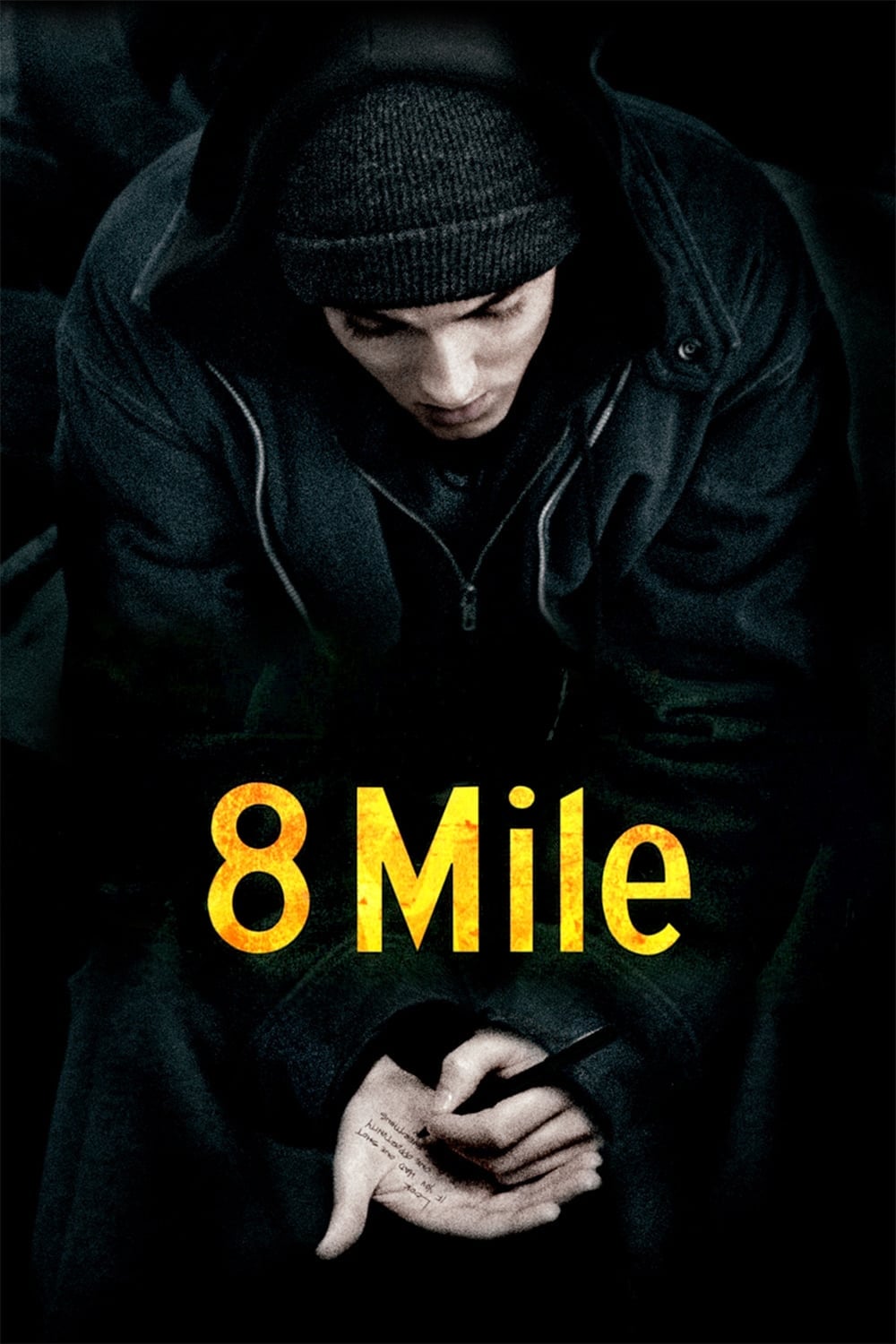
8 Mile (2002) at a Glance
| US release | November 8, 2002 |
|---|---|
| Director | Curtis Hanson |
| Screenplay | Scott Silver |
| Producers | Curtis Hanson, Brian Grazer and Jimmy Iovine |
| Starring | Eminem, Kim Basinger, Brittany Murphy, Mekhi Phifer, Michael Shannon, Anthony Mackie, Evan Jones, Taryn Manning |
| Cinematography | Rodrigo Prieto |
| Editors | Jay Rabinowitz and Craig Kitson |
| Studio | Universal Pictures and Imagine Entertainment |
| Running time | 110 minutes |
| Rating | R |
| Budget | $41 million |
| Worldwide gross | $242.9 million |
| Oscar | Best Original Song, “Lose Yourself” (Eminem, Jeff Bass, Luis Resto) |
The Idea Started With Saturday Night Fever and an MTV Screen
The film began with producer Brian Grazer, who wanted to make a hip-hop movie that would put audiences inside a world the way Saturday Night Fever had done for disco. By his own account, the idea took shape when he happened to see Eminem on MTV. Production was under way by 2000, and writer Scott Silver developed the screenplay with Eminem in mind.
The early drafts did not look much like the finished film. They lacked a strong connection to Detroit, and the main character was a hotel bellboy. Director Curtis Hanson reworked the script to ground it in the city’s identity, moving the character to an automotive stamping plant, setting the story in 1995, and adding elements such as the local radio station and the arson scenes that were emblematic of Detroit’s struggles. The title comes from 8 Mile Road, which separates the largely Black city of Detroit from the largely white suburbs to the north, the area where Eminem originally lived.
Why the Director Was Curtis Hanson and Not Tarantino or Boyle
Eminem’s manager, Paul Rosenberg, has said that both Quentin Tarantino and Danny Boyle were considered to direct. Boyle came close, but Eminem felt he had a better connection with Hanson, whose earlier films The Hand That Rocks the Cradle and L.A. Confidential he admired. Hanson has recalled that Eminem did not want a vanity project and was seeking to be part of a meaningful film.
Hanson was initially cautious. He worried that Eminem’s reputation could be a liability, and he remembered a remark from Russell Crowe, who had worked with him on L.A. Confidential, wondering who would be cast as the lead in a film about Eminem. What won him over was the performer’s natural charisma, in particular his expressive eyes, a quality Hanson described as essential for carrying a story. The choice of a veteran craftsman rather than a flashy stylist shaped the film’s plain, observational look. Directors with a strong visual signature are a recurring subject at Every Movie Plug, and Five Directors, Five Visions: The Signature Styles of Hollywood’s Defining Filmmakers, which includes Tarantino, shows what a very different version of this project might have looked like.

Shooting in Highland Park, With Detroit Locals
Filming began in September 2001 in Highland Park, Michigan, within Detroit’s orbit. Hanson set out to portray the city as authentically as possible and filled the cast with Detroit locals, most of whom were new to film. During rehearsals, the group that forms Jimmy’s circle of friends came up with the name 3 1/3, a reference to Detroit’s 313 area code and to a broader idea of unity and identity. Hanson worked closely with Eminem during rehearsals, especially on the rap battles, discussing what each battle meant to the story while Eminem wrote the lyrics.
The film’s emphasis on place is what separates it from a typical star vehicle. The trailer park, the stamping plant, the late-night radio station and the club called the Shelter are all drawn as working parts of a city under strain, not as backdrops. That attention to environment is part of why the film is still discussed as a Detroit story rather than only an Eminem story.
The Cast: Roles Eminem Passed On and Names That Almost Appeared
Eminem reportedly turned down roles in both Training Day and The Fast and the Furious in order to star in the film. Around him, the production assembled a mix of established and rising actors. Kim Basinger played Jimmy’s mother, Stephanie, a role that, according to producer Damizza, Eminem first offered to Mariah Carey, who declined. Mekhi Phifer was initially reluctant to play David Porter, who goes by Future, because he felt the part did not suit him and suspected the concept was designed to cash in on Eminem’s popularity, but he accepted after reading the script.
Brittany Murphy played Alex, Anthony Mackie made his film debut as Papa Doc, Michael Shannon played the abusive Greg, Evan Jones played Cheddar Bob, and Taryn Manning, Omar Benson Miller, De’Angelo Wilson and Eugene Byrd filled out Jimmy’s world. Seth Rogen and Jason Segel both auditioned for Cheddar Bob. Casting stories like these are part of the fascination with how movies are made, and Every Movie Plug collects more of them in 10 Actors Who Turned Down Roles That Became Legendary.
One Night at the Shelter: The Story, Spoilers Included
The film is set in 1995. Jimmy Smith Jr., who performs as B-Rabbit, works at a car factory and has moved back to a Detroit trailer home with his alcoholic mother, Stephanie, and his younger sister, Lily. At a rap battle hosted by his best friend Future at the Shelter, he freezes with stage fright and leaves the stage humiliated.
Over the next stretch, Jimmy struggles with money, with his mother’s eviction notice, with a hostile crew called the Leaders of the Free World and with a friend, Wink, who is promoting those rivals. A freestyle he delivers at work to defend a co-worker restores his confidence. After a series of confrontations, including a beating outside the trailer, he reconciles with his mother, and Future persuades him to return to the Shelter.
In the final sequence, Jimmy wins two rounds easily and then faces the Free World leader Papa Doc. Going first, he disarms his opponent by admitting his own difficult background, then exposes Papa Doc’s tough-guy image as a fraud by revealing that his real name is Clarence and that he grew up in a comfortable suburb with his married parents. Papa Doc cannot respond. Jimmy turns down an offer to co-host the battles at the Shelter, saying he needs to do his own thing, and walks out to go back to his shift.

The Last Battle
The closing battle is the film’s most admired sequence, and its strength lies in its structure. Jimmy does not win by being the loudest or the cruelest. He wins by taking his opponent’s best material away first, then turning the exchange into a question of honesty. For the lyrics about Papa Doc, Eminem drew on real information about actor Anthony Mackie, whom he researched online, which gave the lines an extra edge on set.
Peter Travers of Rolling Stone compared the confrontation with Papa Doc to the fight between Rocky Balboa and Apollo Creed in Rocky, a comparison that captures how the film uses a familiar underdog template. The difference is that the climax is verbal rather than physical, and the victory is about self-definition. Jimmy does not leave with a record deal or a prize. He leaves with permission to keep trying, which is a quieter and more convincing ending than most sports movies allow.
Lose Yourself: A Song Written Around the Film
The film’s theme song, “Lose Yourself,” was written during the production by Eminem with Jeff Bass and Luis Resto, and Hanson has said he watched Eminem craft the lyrics as the battle scenes were rehearsed. The track became Eminem’s first number-one single in the United States and held the top of the Billboard chart for 12 weeks, according to SlashFilm’s account of the release.
The soundtrack album, 8 Mile: Music from and Inspired by the Motion Picture, was released through Shady and Interscope, with Eminem on five tracks. It debuted at number one on the Billboard 200 with more than 702,000 copies sold, sold another 507,000 copies in its second week, and finished 2002 as the fifth-best-selling album of the year with US sales of 3.2 million despite being on the market for only two months. It was later certified quadruple platinum. Universal’s plan to have its own music division release the soundtrack meant the film, the single and the album promoted one another at the same time, and that trio of number-one results is part of why the film became a case study in cross-media marketing.
The relationship between hip-hop and prestige filmmaking has a long history on screen. Every Movie Plug looked at another Brian Grazer production that featured rappers on screen and a rap star’s companion album in Today in Cinema, November 2: American Gangster Opens in 2007.
Opening Weekend: $51.2 Million and a Number One
8 Mile opened on November 8, 2002 in 2,470 theaters and earned $51,240,555 over the weekend, a per-theater average of $20,745. At the time it was the second-highest opening for an R-rated film in the United States, behind Hannibal, and it topped the box office ahead of The Santa Clause 2. It held the record for the highest November opening weekend for an R-rated film until Gladiator II surpassed it in 2024.
In its second weekend the film fell about 62 percent and finished second behind Harry Potter and the Chamber of Secrets. It went on to earn about $116.7 million in the United States and Canada and roughly $126 million elsewhere, for $242.9 million worldwide. It ranks third on Box Office Mojo’s list of the biggest pop-star debuts, behind Austin Powers in Goldmember and The Bodyguard. Abroad, it reached number one in the United Kingdom, where it opened to $7.2 million and displaced The Lord of the Rings: The Two Towers, and it set an opening-day record in Australia.
The return on investment, at roughly six times the budget, was exceptional for an R-rated drama. Every Movie Plug’s The Billion-Dollar Club: The 10 Highest-Grossing Movies of All Time tracks the franchise giants at the top of the chart; 8 Mile belongs to a different tradition, the mid-budget hit that finds its audience through a single star and a single idea.

What Critics Said
Reviews were generally positive. Rotten Tomatoes reports that 76 percent of 211 reviews are favorable, with an average rating of 6.7 out of 10 and a consensus that the story is overly familiar but there is enough for an engaging ride. Metacritic gives it 77 out of 100 from 38 critics, and CinemaScore audiences gave it a B-plus, with viewers under 21 giving it an A.
Roger Ebert awarded three out of four stars and wrote that the film stood apart from routine debuts by pop stars and was a faithful reflection of Eminem’s myth. Peter Travers gave it three and a half stars, arguing that it was a real movie rather than a quick package to exploit a fan base. Richard Roeper praised Eminem’s winning screen presence, though he felt Basinger was miscast. Not every critic was convinced: Eleanor Ringel Cater of The Atlanta Constitution gave it a C, saying it was hardly A Hard Day’s Night but also not Crossroads.
The film also landed on year-end lists. Time’s Richard Schickel ranked it ninth among the best films of 2002, Andrew Sarris placed it seventh in The New York Observer, and Rolling Stone’s Travers put it tenth. Billboard later ranked it second on its list of the best hip-hop movies ever.
Oscar Night: A Winner Who Did Not Show Up
At the 75th Academy Awards in March 2003, “Lose Yourself” won Best Original Song for Eminem, Jeff Bass and Luis Resto. Eminem became the first solo rapper to win an Academy Award, but he did not attend, and Resto accepted the statuette. The win was a milestone for hip-hop on Hollywood’s biggest stage, and it paved the way for later rap winners, including Three 6 Mafia for Hustle & Flow in 2005 and Common, who shared the song award for Selma in 2015.
The song’s run continued. It won two Grammy Awards in 2004, Best Rap Song and Best Male Rap Solo Performance, and was nominated for Record of the Year and Song of the Year. The American Film Institute placed it at number 93 on its list of the 100 greatest songs in American film. Seventeen years after the Oscar, in February 2020, Eminem made a surprise appearance at the 92nd Academy Awards to perform it at last. Overall, the film was nominated for 32 awards and won 11, including two MTV Movie Awards for Eminem, for Best Male Performance and Breakthrough Male Performance.
Oscar histories are full of unlikely winners and absent ones. For another account of a film that took the industry’s top prizes after a long wait, see Today in Cinema: The Departed Turns 20.
Crossover Careers: From the Stage and the Stadium to the Screen
8 Mile arrived at a moment when the line between musician and movie star was being redrawn, and it remains one of the most successful examples of a performer from another field becoming credible on screen. That pattern has only grown since. Every Movie Plug’s recent news coverage includes several current examples of performers who move between disciplines and between the front and back of the camera.
Donald Glover, an actor, writer, director and musician, is attached to star in, write, direct and executive produce Netflix’s live-action PUBG series, a project covered in Donald Glover to Star in, Write and Direct Netflix’s Live-Action PUBG Series. Former wrestler Dave Bautista is in the middle of a very physical transformation for Prime Video’s God of War, which Dave Bautista Shows Off 20-Pound Weight Gain on Instagram as God of War Kratos Prep Hits 250 reports in detail. And comedian Druski made his debut as a Saturday Night Live host on November 7, with a Netflix series to follow, as Druski Hosts SNL Nov. 7, Then Collect and Praise Arrives on Netflix in December explains.
The common thread is the one that made 8 Mile work: an established persona, placed into a structure built to test it, with a director or creative team willing to serve the material rather than the celebrity. Hanson’s film is still a model for how that can be done.
Home Video, Lists and Lasting Reputation
The film arrived on VHS and DVD on March 18, 2003, and the DVD generated $75 million in sales and rentals in its first week, the biggest DVD debut ever for an R-rated movie at the time. A UMD edition followed in 2005, a Blu-ray in 2009 and a 4K Ultra HD Blu-ray on November 8, 2022, the 20th anniversary of the theatrical release.
Its reputation has remained steady rather than dramatic. Unlike films that were rediscovered after a failure, 8 Mile was a hit from the start and has stayed on lists of the best hip-hop movies and the best films about music. Its influence can be seen in the number of later films that use performance, whether battle rap, stand-up or sport, as a way to dramatize personal stakes, and in the steady stream of artists who have moved from records to the screen.
For another film that opened this week and has since changed how its genre is seen, see Today in Cinema, November 7: Starship Troopers Invades Theaters in 1997.

How to Watch 8 Mile Today
The film is available on DVD, Blu-ray and 4K Ultra HD Blu-ray, and it has appeared on streaming services and for digital rental over the years, though availability changes often, so check current listings before you plan a viewing. Viewers who want to see it in the best possible quality should look for the 4K release, which includes DTS:X audio.
A useful way to watch it is to pay attention to the first and last battles side by side. The first shows Jimmy unable to speak; the last shows him taking control of the room with a plan. Everything in between, from the factory floor to the trailer park, is there to explain how he gets from one to the other.
Frequently Asked Questions About 8 Mile
When was 8 Mile released?
It was released in the United States on November 8, 2002 by Universal Pictures.
Is 8 Mile a true story?
It is a fictional story with autobiographical elements drawn from Eminem’s life and the Detroit hip-hop scene. The character of Jimmy Smith Jr., or B-Rabbit, is not a literal portrait.
What does the title 8 Mile mean?
It refers to 8 Mile Road, which separates predominantly Black Detroit from the largely white suburbs to the north, the area where Eminem originally lived.
Did 8 Mile win an Oscar?
Yes. “Lose Yourself” won the Academy Award for Best Original Song at the 75th Academy Awards. Eminem was the first solo rapper to win an Oscar, and co-writer Luis Resto accepted the award.
How much money did 8 Mile make?
It opened to $51.2 million in the United States and earned about $242.9 million worldwide against a $41 million budget.
Who was considered to direct 8 Mile?
Quentin Tarantino and Danny Boyle were both considered, but Eminem preferred Curtis Hanson, the director of L.A. Confidential.
Conclusion: One Night, One Microphone
8 Mile succeeds because it takes a small story seriously. It trusts its audience to follow a young man through a week of humiliations and small victories, it treats Detroit as a character and it saves its biggest moment for a scene in which one person talks and another cannot answer. That the film also produced an Oscar-winning song and a chart-topping album made it a cultural event, but it is the plainness of the storytelling that has kept it watchable.
Today in Cinema returns with another film from movie history. Recent entries include Starship Troopers, Spectre and The Departed.
Image and Source Credits
- Lead image and four scene images: Universal Pictures and Imagine Entertainment, via TMDB
- Related-story thumbnails: Every Movie Plug
References and Further Reading
- Production, casting, release, reception and awards: 8 Mile (film), Wikipedia
- Box office and release data: The Numbers; Box Office Mojo; SlashFilm, “Tales From the Box Office”
- Critical reception: Rotten Tomatoes; Metacritic; Rolling Stone
- Directing and casting: The Guardian, Curtis Hanson interview; Vibe, Paul Rosenberg; TheWrap; E! Online; Screen Rant
- Oscar and music: Rolling Stone; BMI; Billboard on the 2020 Oscars performance
- Every Movie Plug news referenced: Donald Glover and PUBG; Dave Bautista and God of War; Druski and SNL
News
More on Every Movie Plug
 TV News Donald Glover to Star in, Write and Direct Netflix’s Live-Action PUBG Series Netflix and Krafton are developing a live-action PUBG series with Donald Glover attached to star, write, direct and executive produce alongside his brother Stephen. Read the story →
 TV News Dave Bautista Shows Off 20-Pound Weight Gain on Instagram as Kratos Prep Hits 250 Dave Bautista posted an Instagram story saying he has gained 20 pounds for Prime Video’s God of War and now weighs 250. Here is where his transformation began, how it compares to Ryan Hurst’s, and what happens next. Read the story →
 Streaming News Druski Hosts SNL Nov. 7, Then Collect and Praise Arrives on Netflix in December Druski makes his SNL hosting debut Nov. 7, and Netflix premieres his scripted comedy Collect and Praise in December, years after the streamer passed on his pitches. Read the story →
Articles
More on Every Movie Plug
 Today in Cinema Today in Cinema, November 2: American Gangster Opens in 2007 and Makes a Myth of a Harlem Heroin Kingpin A film that was cancelled, recast and rebuilt before it ever reached theaters became Ridley Scott’s biggest hit and one of the most argued-over true-crime movies of its decade. Read the article →
 Article 10 Actors Who Turned Down Roles That Became Legendary Hollywood history turns on sliding-door moments. These are the casting rejections that reshaped blockbuster cinema and handed other stars their defining parts. Read the article →
 Today in Cinema Today in Cinema: The Departed Turns 20, and Scorsese’s Remake of Infernal Affairs Still Plays Like a Trap Door How Scorsese remade Infernal Affairs, the casting near-misses, the Whitey Bulger link and the Oscar that finally came. Read the article →