Today in Cinema looks at one major film from movie history: how it was made, how it was received and why it is still discussed. This entry marks the 20th anniversary year of a film that opened in October 2006.
Twenty years ago this week, The Departed was in its fifth weekend in American theaters. On the weekend of November 3 to 5, 2006, it slipped to fifth place as a low-budget comedy called Borat took over the top of the box office, a small footnote in the career of a film that had opened at number one a month earlier, finished its run with $291.5 million worldwide and, three months after that, won the Academy Award for Best Picture. It also won Martin Scorsese the first Oscar of his career after five earlier losses.
The film was released in the United States on October 6, 2006, after a premiere at New York’s Ziegfeld Theatre on September 26. Its story, about an undercover police officer and a mob mole inside the police department who are each hunting the other, was adapted from a 2002 Hong Kong thriller, but Scorsese rebuilt it around Boston, Irish-American crime and the long shadow of a real-life gangster. This anniversary edition of Today in Cinema looks at how the film came together, who nearly played whom, what it borrowed from real events, and why critics keep returning to it.
The article discusses the whole story, including the ending, because the film is two decades old.
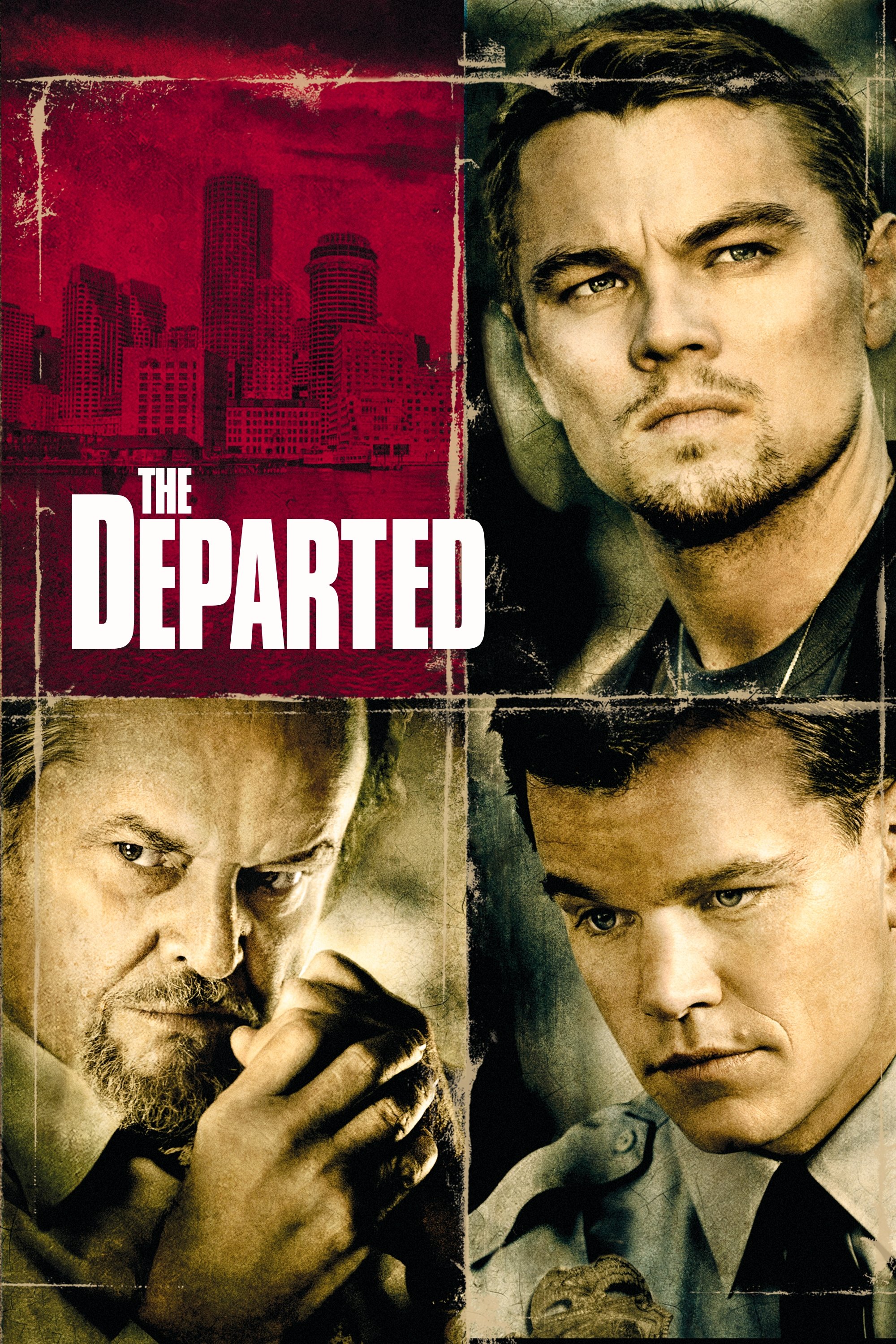
The Departed at a Glance
| Premiere | September 26, 2006, Ziegfeld Theatre, New York |
|---|---|
| US release | October 6, 2006 |
| Director | Martin Scorsese |
| Screenplay | William Monahan, from Infernal Affairs by Alan Mak and Felix Chong |
| Producers | Brad Pitt, Brad Grey, Graham King |
| Starring | Leonardo DiCaprio, Matt Damon, Jack Nicholson, Mark Wahlberg, Martin Sheen, Ray Winstone, Vera Farmiga, Alec Baldwin, Anthony Anderson, James Badge Dale |
| Cinematography | Michael Ballhaus |
| Editor | Thelma Schoonmaker |
| Music | Howard Shore |
| Running time | 151 minutes |
| Budget | $90 million |
| Worldwide gross | $291.5 million |
| Oscars | Four: Best Picture, Best Director, Best Adapted Screenplay, Best Film Editing |
From Hong Kong to South Boston: The Remake Nobody Expected to Win
The starting point was Infernal Affairs, a 2002 Hong Kong thriller about two moles, one planted by the triads inside the police and one planted by the police inside the triads. In January 2003, Warner Bros., together with producers Brad Grey and Brad Pitt, bought the remake rights from Media Asia for $1.75 million. William Monahan was hired to write the screenplay, and Scorsese, who admired the script, signed on to direct.
By March 2004, United Press International reported that Scorsese would set the story in Boston and that Leonardo DiCaprio and Brad Pitt were attached to star. Pitt, who had been tentatively scheduled to play the mole Colin Sullivan, decided a younger actor should take the part and stayed on as a producer instead. Scorsese’s associate Kenneth Lonergan suggested Matt Damon, who grew up in the Boston area, and Scorsese asked Jack Nicholson to play the mob boss, Frank Costello.
Not every approach landed. Robert De Niro was approached to play Captain Queenan but chose to direct The Good Shepherd, while Scorsese has said that De Niro simply was not interested. Ray Liotta was approached for a role and declined because of another commitment. Martin Sheen took Queenan. Casting what-ifs like these are part of film history, and Every Movie Plug collects more of them in 10 Actors Who Turned Down Roles That Became Legendary.
Warner Bros. officially greenlit the film in early 2005, and shooting began on April 18 of that year. Some of the film was shot on location in Boston, but many scenes, especially interiors, were filmed on sets and locations in New York City, which offered tax incentives for filmmakers that Boston did not have at the time.
The Gangster Hiding in the Script: Whitey Bulger
What changed the remake from a transplanted thriller into a Boston story was a decision about Costello. Nicholson wanted the character to offer something beyond the usual gangster-movie boss, and Monahan came up with the idea of basing him on Whitey Bulger, the Irish-American crime boss who led the Winter Hill Gang. The real Bulger had been an informant for the FBI, and the bureau gave him wide latitude in exchange for information about rival gangsters. The film’s own Sullivan was loosely drawn from John Connolly, the corrupt FBI agent who protected Bulger.
That choice gave the screenplay both realism and a sense of danger, because an informant protected by the government can never be fully trusted by either side. In the film, Costello’s secret is that he is an FBI informant himself, which helps explain how he stays one step ahead of the police. Tom Duffy, a technical consultant who served thirty years with the Boston Police Department and spent part of that time as an undercover detective investigating the Irish mob, advised the production. The DVD release later included a 21-minute documentary on Bulger, South Boston and the crimes that inspired the film.
Stories about criminals and the institutions that tolerate them are a recurring theme in crime cinema. Every Movie Plug looked at another example from 2007 in Today in Cinema, November 2: American Gangster Opens in 2007, which also drew on real history and real disputes about what was true.
Two Men, Two Masks: A Plot That Closes Like a Trap
The story begins in 1980s Boston, where Costello introduces himself to a young Colin Sullivan. Years later, Sullivan has become a state police staff sergeant and Costello’s spy inside the force, joining the Special Investigation Unit. At the same police academy, a recruit named Billy Costigan is chosen by Captain Queenan and Sergeant Dignam to go undercover in Costello’s crew. Costigan serves a prison term as a cover, earns Costello’s attention through crime and is recruited, and his mental state deteriorates as he sinks deeper into the gang’s violence.
Both men become involved with the same police psychiatrist, Madolyn Madden, who is assigned to Costigan as a court-ordered therapist and who begins dating Sullivan. After a failed sting involving stolen microprocessors, each side realizes it has been infiltrated, and Sullivan and Costigan are each ordered to find the other’s organization’s mole. Costigan learns Costello is an FBI informant, and Queenan is murdered after Sullivan realizes whom Costigan is meeting.
The final act is brutal. Sullivan kills Costello, and Costigan, whose assignment is finished, discovers Costello’s envelope on Sullivan’s desk and realizes who the mole is. Sullivan erases Costigan’s records. Costigan arrests Sullivan on the rooftop where Queenan was killed, but as they take the elevator down, a second Costello spy, Trooper Barrigan, shoots Costigan dead. Sullivan kills Barrigan and frames him as Costello’s only mole, then recommends Costigan for a posthumous commendation. Madden, now pregnant, leaves him, and Dignam shoots Sullivan in his own apartment, where a rat sits on the window ledge.
What Scorsese Put in the Frame
Critics have found layers in the film’s imagery. Scorsese has said the rat on the ledge in the last scene is not meant to be taken literally but somewhat symbolizes the story’s hunt for the rat and the climate of mistrust among the characters, which he compared to the United States after September 11. The window behind the rat nods to gangster classics such as Little Caesar, Scarface and White Heat, and the funeral scene in which Madden walks past Sullivan without looking at him echoes the closing shot of The Third Man.
Throughout the film, Scorsese also uses an “X” motif to foreshadow death, a device borrowed from Howard Hawks’s 1932 Scarface. Examples include the cross-beam supports in an airport walkway when Costigan phones Dignam, the lighted X on the wall of Sullivan’s office, the taped windows of the building Queenan enters before he is killed, and the pattern behind Costigan’s head in the elevator. Spotting them is one of the pleasures of a second viewing.
The Costello character’s taste for opera is another touch of design. He is seen listening to the sextet from Donizetti’s Lucia di Lammermoor, and its theme is his phone ringtone. Critics also pointed to the film’s themes of identity and divided selves. Stanley Kauffmann said Scorsese was concerned with identity but did not find the theme conveyed especially effectively, while Roger Ebert compared the two moles’ hunger for approval from the people they deceive to Stockholm syndrome and noted the weight of Catholic guilt.
A director’s recurring motifs are one of the subjects of Every Movie Plug’s Five Directors, Five Visions: The Signature Styles of Hollywood’s Defining Filmmakers, which includes Scorsese among its subjects.
The Sound of Boston: A Lethal Tango and a Punk Anthem
Howard Shore wrote the score, which was performed by the guitarists Sharon Isbin, G. E. Smith, Larry Saltzman and Marc Ribot and recorded in Shore’s studio in New York State. Scorsese described the music as a “very dangerous and lethal tango,” and he cited the guitar-driven score of Murder by Contract and the zither in The Third Man as inspirations. The score album was released on December 5, 2006.
The soundtrack album is built from a mix of classic rock and soul and one modern song that became closely tied to the film. It features Roger Waters with Van Morrison and The Band performing “Comfortably Numb,” The Beach Boys’ “Sail On, Sailor,” The Rolling Stones’ “Let It Loose,” Badfinger, The Allman Brothers Band and Patsy Cline. The track most closely associated with the movie, though, is Dropkick Murphys’ “I’m Shipping Up to Boston,” a Woody Guthrie lyric set to punk music, which helped turn a local band into a national name after the band had released it on an earlier album.
Opening Weekend: Number One, and the Last of Its Kind
The Departed opened on October 6, 2006 in 3,017 theaters and took $26.9 million over the weekend, enough for first place. It was the fourth Scorsese film to debut at number one, and, notably, it is still the most recent Best Picture winner to have opened at the top of the box office. Over the next three weekends it earned $19 million, $13.5 million and $9.8 million, finishing second each time. In its fifth week it earned $7.7 million and dropped to fifth place.
The final total was $132.4 million in the United States and Canada and about $159 million in other territories, for $291.5 million worldwide against a $90 million budget. That made it the biggest commercial success of Scorsese’s career at the time, according to coverage of its run, and a rare case of an adult crime drama that turned a profit several times over. Warner Home Video released it on DVD, HD DVD and Blu-ray on February 13, 2007, and an Ultra HD Blu-ray followed on April 23, 2024.
Rankings of the highest-earning films tend to be dominated by franchises, which is the focus of Every Movie Plug’s The Billion-Dollar Club: The 10 Highest-Grossing Movies of All Time. The Departed belongs to a different category, a prestige drama that succeeded on word of mouth.
The Reviews: Rave Notices and a Few Dissenters
The film was widely acclaimed. Rotten Tomatoes reports that 91 percent of 285 reviews are positive, with an average rating of 8.4 out of 10, and Metacritic gives it 85 out of 100 from 39 critics, a score that signals universal acclaim. CinemaScore audiences gave it an A-minus. Roger Ebert and online critic James Berardinelli each awarded it four stars out of four, with Berardinelli calling it an American epic tragedy and placing it alongside Taxi Driver, Raging Bull and Goodfellas.
It appeared on many critics’ 2006 top-ten lists. Peter Travers of Rolling Stone, Scott Tobias of The A.V. Club, Rene Rodriguez of The Miami Herald and Joshua Rothkopf of Time Out New York were among those who ranked it first, and Richard Roeper went further, naming it the best film of the 2000s. Entertainment Weekly placed it on its end-of-decade list, noting that Scorsese had produced a classic in each decade.
Not everyone agreed. J. Hoberman of The Village Voice argued that the remake raised the temperature of the original with ultraviolent exchanges and an excess of belligerence, drifting toward Tarantino territory. The creators of the source film were more measured. Andrew Lau, co-director of Infernal Affairs, said he thought his own version was better but that the Hollywood film was pretty good, and Andy Lau, one of its stars, felt the American version was too long, as if it had combined all three Infernal Affairs films, though he still rated it eight out of ten.
Finally an Oscar: The Night Scorsese Won
At the 79th Academy Awards on February 25, 2007, The Departed won four Oscars: Best Picture, for producer Graham King; Best Director, for Scorsese; Best Adapted Screenplay, for Monahan; and Best Film Editing, for Thelma Schoonmaker. Mark Wahlberg was nominated for Best Supporting Actor but did not win, and none of the film’s stars took an acting Oscar. For Scorsese, it was the first time he had won after five earlier losses, and it remains his only personal Oscar win as a director. Many felt he had deserved the award years earlier for other films, and some described the victory as a lifetime-achievement award for a lesser work. Scorsese joked that he had won because it was the first movie he had made with a plot.
The film also took the Golden Globe for Best Director, the Writers Guild Award for Best Adapted Screenplay, and Satellite Awards for best drama, ensemble cast, adapted screenplay and supporting actor, the last for Leonardo DiCaprio. It received six Golden Globe nominations and six BAFTA nominations, as well as two Screen Actors Guild nominations, and it was a nominee for the American Film Institute’s Top 10 Gangster Films list in 2008.
Its reputation has held up. In 2021, the Writers Guild ranked its screenplay 30th on the list of the 101 greatest screenplays of the 21st century so far. In 2025, The New York Times placed it 31st on its list of the 100 best movies of the 21st century, and 25th on the readers’ edition. Another Oscar-night story from the same era appears in Every Movie Plug’s Today in Cinema: The Social Network, the 2010 Film That Defined the Facebook Era, which looks at a different kind of awards-season favorite.
The Villain Question: Frank Costello and Colin Sullivan
Part of the film’s staying power lies in its refusal to offer a comfortable moral center. Nicholson’s Costello is charismatic and monstrous, a man who treats a child’s upbringing as a recruitment strategy. Damon’s Sullivan is polite, ambitious and utterly self-serving, a traitor who rises through the system by being trusted. DiCaprio’s Costigan, by contrast, is the hero the story punishes, a man who spends the film pretending to be a criminal and is killed at the moment he proves he is not.
That inversion is a recurring appeal of crime stories, and it connects to the antagonists collected in When Movie Villains Were Right: 10 Antagonists Who Had a Point. In The Departed, the system rewards deceit and discards honesty, which is a large part of why the ending still lands with such force.
Afterlife: A Shelved Sequel and a Simpsons Parody
Although many main characters die by the end, a script was written for a sequel. It was ultimately shelved because of the cost and because Scorsese has little interest in making sequels, a contrast with Infernal Affairs, which spawned a prequel and a sequel. The film also became a pop-culture reference point. The Simpsons spoofed it in an episode titled “The Debarted.”
Other franchises have faced the opposite question of when to return, and Every Movie Plug covered one of them recently in Today in Cinema, November 5: The Matrix Revolutions Ends the Trilogy in 108 Territories at Once. For another film that reshaped its genre, see Today in Cinema, November 3: Godzilla Rises From Tokyo Bay in 1954.
How to Revisit The Departed
The film is available on DVD, Blu-ray and 4K Ultra HD Blu-ray, and it has appeared on several streaming services, though availability changes often, so check current listings before you plan a viewing. For a deeper look, the DVD’s second disc contains deleted scenes, a featurette on the influence of New York’s Little Italy on Scorsese, a Turner Classic Movies profile and the 21-minute Bulger documentary.
A natural pairing is the original Infernal Affairs, which is shorter and sparer, followed by The Departed, which is longer and more operatic. Watching them in that order makes it easier to see what Scorsese and Monahan changed, from the setting and the cast of characters to the way guilt and faith shape the story.
Frequently Asked Questions About The Departed
When was The Departed released?
It premiered on September 26, 2006 at the Ziegfeld Theatre in New York and was released in the United States on October 6, 2006.
Is The Departed based on a true story?
It is a remake of the 2002 Hong Kong film Infernal Affairs, but it is also loosely based on real people, including the Winter Hill Gang, Irish-American crime boss Whitey Bulger and the corrupt FBI agent John Connolly.
How many Oscars did The Departed win?
Four: Best Picture, Best Director for Martin Scorsese, Best Adapted Screenplay for William Monahan and Best Film Editing for Thelma Schoonmaker, at the 79th Academy Awards on February 25, 2007.
How much money did The Departed make?
It grossed $291.5 million worldwide, including $132.4 million in the United States and Canada, against a budget of $90 million.
Who was originally going to star in The Departed?
Brad Pitt was tentatively slated to play Colin Sullivan before deciding a younger actor should take the part and becoming a producer. Robert De Niro and Ray Liotta were approached for roles and declined.
Is there a sequel to The Departed?
A sequel script was written but shelved because of the expense and Scorsese’s lack of interest in sequels.
Conclusion: Twenty Years On, Still Looking for the Rat
The Departed succeeds because it takes a flawless piece of genre machinery and fills it with the textures of a particular city, a particular kind of crime and a particular director’s obsessions. It was a hit, a critical favorite and an Oscar winner, and it remains one of the few modern crime films that audiences and critics still discuss with equal intensity.
Today in Cinema returns with another film from movie history. Recent entries include Nightcrawler, American Gangster and The Matrix Revolutions.
News
Latest on Every Movie Plug
 Film News The Mosquito Bowl Opens October 30: Cast, Release Date and What Critics Are Saying Peter Berg’s World War II drama The Mosquito Bowl opens in theaters October 30 and streams on Netflix November 25. The cast, the true story behind the game and the first critic reactions. Read the story →
 Film News Who Will Be the Next James Bond? Casting Reportedly Narrows to a Short List Reports name Jack Lowden, Jacob Elordi, Callum Turner and Josh O’Connor among the actors in the running for James Bond, with final screen tests reportedly set for the coming week. Read the story →
 Film News Call of Duty Movie Is About the Cost of War and Being a Warrior, Director Says Director Peter Berg says the Call of Duty movie is about the cost of war and having to be a warrior, and that the characters are not comic books or cartoons. Read the story →
Articles
Latest on Every Movie Plug
 Today in Cinema Today in Cinema, November 5: The Matrix Revolutions Ends the Trilogy in 108 Territories at Once A record-setting global opening, a record-setting drop and an ending that critics and fans have argued about for 23 years. Read the story →
 Today in Cinema Today in Cinema, November 2: American Gangster Opens in 2007 and Makes a Myth of a Harlem Heroin Kingpin How a cancelled, recast and rebuilt crime epic became Ridley Scott’s biggest hit, what was true, and why critics still argue over it. Read the story →
 Article Five Directors, Five Visions: The Signature Styles of Hollywood’s Defining Filmmakers The signature styles of five defining modern filmmakers: Steven Spielberg, Martin Scorsese, Christopher Nolan, Quentin Tarantino and James Cameron. Read the story →
Image and Source Credits
- Theatrical poster: Warner Bros. Pictures, via TMDB
- Related-story thumbnails: Every Movie Plug
References and Further Reading
- Development, production, release, reception, awards and legacy: The Departed, Wikipedia; Box Office Mojo; The Numbers
- Weekend of November 3 to 5, 2006: Box Office Mojo, “Borat Bombards the Top Spot”; opening weekend: Box Office Mojo
- Critical reception: Rotten Tomatoes; Metacritic; Roger Ebert; The Guardian on Andrew Lau’s reaction
- Awards: The New York Times; Academy of Motion Picture Arts and Sciences; Writers Guild of America; The New York Times, 100 Best Movies of the 21st Century
- Release details: TMDB release dates; Boston Magazine, “The Departed, By the Numbers”