Every great villain needs a reason. The best of them need a good one.
Screenwriters know that an antagonist who is merely evil is a cardboard obstacle, a monster to be defeated in the third act. The ones audiences remember are the ones who walk into a scene carrying a real grievance, a real fear or a real piece of the truth, and who then make the catastrophic mistake of acting on it. That is why viewers can quote their speeches years later, and why arguments about whether they were “technically correct” show up every time one of these films is revisited.
This list collects ten of them. Each was an antagonist in a major film. Each lost, was killed or was exposed by the closing credits. And each, on at least one important point, was right: right about the problem, right about the hypocrisy around him, or right about what the hero’s world owed somebody. Being right did not excuse what they did. In several cases it makes what they did more disturbing.
How these ten were chosen. Every entry is a villain from a widely released feature film whose central argument is supported by events inside that film or by the real world it reflects. The test was not whether the villain was sympathetic. It was whether a reasonable viewer could finish the film and say, “He had a point.”
First, the ones who saw the problem before anyone else
1. Erik Killmonger, Black Panther (2018)
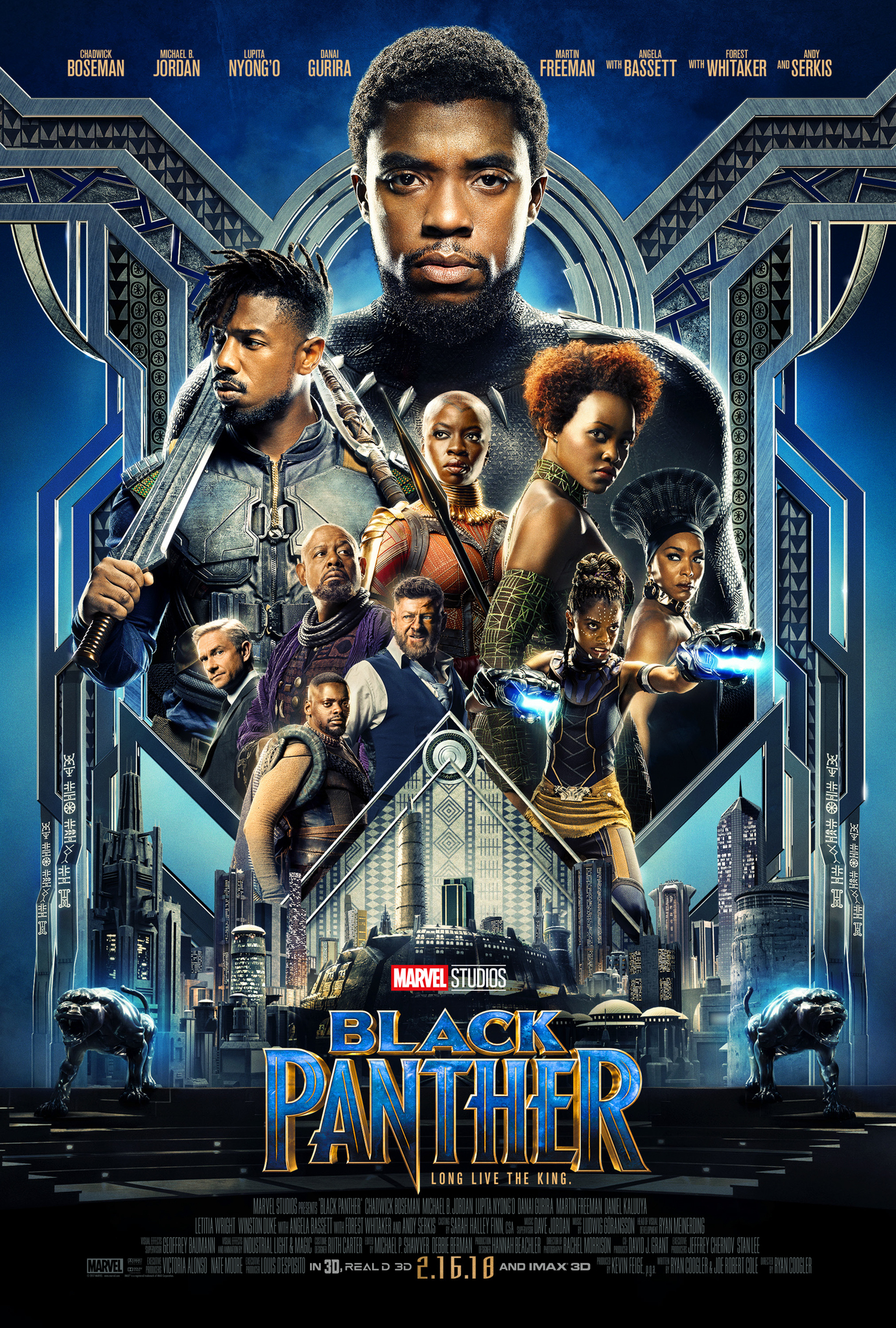
Ryan Coogler’s film begins with a nation that has the most advanced technology on Earth and a long tradition of using it for nothing but its own comfort. Wakanda’s borders are closed, its resources are hidden, and the rest of the world, including people of African descent in places like Oakland, California, is left to cope on its own. Michael B. Jordan’s Killmonger, the son of a Wakandan prince killed by his own brother, the king, is the one person in the film willing to say plainly what that isolation costs.
His plan, arming oppressed people worldwide so they can overthrow their rulers, is a recipe for empire, and the film treats it as one. But the movie does not dismiss his central complaint. By the end, King T’Challa opens a Wakandan outreach center in the Oakland neighborhood where Killmonger grew up, and announces to the world that Wakanda will stop hiding. The hero wins the fight and then adopts the villain’s premise. That is as close as a blockbuster gets to an admission.
The film earned about $1.35 billion worldwide, according to IMDb, with $700 million of it in the United States, and it became the first superhero movie nominated for the Academy Award for Best Picture.
2. Magneto, X-Men (2000)

Bryan Singer opens his film not with a superhero but with a boy being dragged through the gates of a Nazi concentration camp in Poland in 1944. That boy becomes Erik Lehnsherr, played in adulthood by Ian McKellen, and the prologue does the villain’s persuading for him. When a US senator pushes a mutant registration bill, Magneto does not need to exaggerate. He has seen what happens when a government asks a minority to be listed.
The film never says he is wrong to be afraid. It says he is wrong to answer fear with a machine that would forcibly turn world leaders into mutants, a plan that costs lives and treats consent as an obstacle. The rival view, held by Professor Xavier, is that coexistence is still worth attempting. Fittingly, the X-Men films have spent more than two decades dramatizing the argument between those two old friends. The actor who played Xavier, Sir Patrick Stewart, died on October 28 at the age of 86, and Every Movie Plug has reported on both his death and the tributes that followed from Hollywood.
The movie opened to $54.5 million and finished with $157.3 million in North America, per Box Office Mojo, and it is widely credited with proving that comic-book films could carry serious themes.
3. Tyler Durden, Fight Club (1999)

Brad Pitt’s Tyler Durden is easy to mistake for a hero, which is the film’s point and also its trap. David Fincher’s adaptation of Chuck Palahniuk’s novel gives him the sharpest monologues about the emptiness of consumer life, about workers who define themselves by furniture catalogs and jobs they hate. The Narrator, an insomniac cog who lives inside precisely that routine, is the proof.
Tyler is right about the numbness. He is catastrophically wrong about the cure. Fight Club’s basement brawls grow into Project Mayhem, a paramilitary cult that sabotages property, intimidates people and eventually kills. Fincher spends the last third of the film dismantling the man he spent the first two-thirds making irresistible.
The studio did not know what to do with it. The film opened to $11 million in October 1999 and ended with about $101 million worldwide on a $63 million budget, Box Office Mojo reports, then found its audience on home video. It remains a reminder that a persuasive diagnosis can come from a very dangerous doctor.
The institutions were exactly as rotten as they said
4. Ra’s al Ghul, Batman Begins (2005)

Christopher Nolan’s Gotham is a city in managed decline. Crime boss Carmine Falcone owns the police and the courts, an Arkham psychiatrist moonlights as his smuggler, and the poor are trapped in a district that officials have written off. Liam Neeson’s Ra’s al Ghul, leader of the League of Shadows, arrives with a historian’s patience and a simple thesis: some civilizations decay past saving, and the responsible thing is to let them burn.
The film spends two hours demonstrating that the first half of his claim is hard to dispute. Gotham is corrupt, its institutions are compromised, and its wealthiest citizens are comfortable looking away. Ra’s is wrong in the details, since the film’s answer is that one determined person can still shift a city, and the League’s plan to unleash a fear toxin on a crowded district is mass murder disguised as cleansing. But the argument carries weight precisely because Bruce Wayne has to admit how much of it he already believed.
The film opened with $48.7 million and earned about $373 million worldwide, according to Box Office Mojo. Nolan is one of the filmmakers profiled in Five Directors, Five Visions, and the future of the Dark Knight is back in the headlines after James Gunn said the DCU’s Batman is close to being cast.
5. Gordon Gekko, Wall Street (1987)
Oliver Stone’s morality tale made Michael Douglas an Oscar winner and gave the 1980s its most famous line of financial philosophy. The speech from which it comes is delivered at the shareholder meeting of Teldar Paper, a company Gekko is trying to buy, and its target is not the workers but the executive suite. Gekko points out that the firm employs dozens of vice presidents, none of whom seem to contribute to its health, and that the shareholders who own the company are the ones paying for the perks.
As an indictment of bloated corporate management, it lands. What undercuts Gekko is not his logic but his motives. He is not a reformer; he is a raider who intends to strip the company for parts and has the same plan for the airline where the film’s young hero’s father works. The movie lets the speech work on the audience and then shows what it looks like when the man giving it gets what he wants. Stone, famously, was dismayed that some viewers kept only the first half.
6. Adrian Toomes, Spider-Man: Homecoming (2017)
It is easy to forget that Michael Keaton’s Vulture begins as a blue-collar contractor. Toomes runs a salvage company that has just won a municipal contract to clean up the wreckage left by the Battle of New York, a job his crew has staffed and equipped. Then Tony Stark’s new Department of Damage Control, a government agency backed by Stark Industries, takes over the whole operation and shuts him out, leaving his crew without work.
The film’s villain is, in effect, a small-business owner crushed by the same billionaire the heroes admire. Toomes’s argument that the powerful clean up their messes by erasing the people who do the real work is not subtle, but it is plausible, and Keaton delivers it with exhausted conviction. His mistake is not the grievance. It is deciding to sell stolen alien weapons to criminals, a choice that gets people killed. Building villains out of the consequences of the heroes’ own world is part of the Marvel approach examined in Behind the Cape, which compares how Marvel and DC built their cinematic universes.
When the math checked out and the morality didn’t
7. Thanos, Avengers: Infinity War (2018)
)
Josh Brolin’s Thanos is the rare Marvel villain whose plan is, in principle, a policy proposal: eliminate half of all life so that the other half can flourish. He says his home planet, Titan, was lost to overpopulation and resource collapse, and that his warnings were dismissed as the ravings of a madman. His proof of concept arrives when he tells his adopted daughter Gamora that her own homeworld thrived after he culled it, with its surviving children growing up without hunger.
The Russo brothers’ film is careful about what it endorses. Thanos is a murderer on a cosmic scale who sacrifices the one person he loves, and the heroes spend the sequel undoing the damage. Yet the film also never really rebuts his central claim that scarcity is real and that societies tend to ignore it until too late. Audiences remained fascinated precisely because the argument could be applied to any shortage in the real world. Infinity War opened to $257.7 million in the United States and earned more than $2 billion worldwide, according to Box Office Mojo, placing it among the highest-grossing films ever made. For the full ranking, see The Billion-Dollar Club.
8. Adrian Veidt, Watchmen (2009)

Zack Snyder’s adaptation of the Alan Moore and Dave Gibbons graphic novel is set in 1985 in a version of America where Richard Nixon remains president and the Doomsday Clock hovers just seconds from midnight. Matthew Goode plays Veidt, the former hero Ozymandias and, by general agreement, the smartest man alive. He has studied the Cold War and concluded that nuclear catastrophe is not a danger but a schedule.
His solution is to stage a devastating attack on several world cities, blame it on the godlike Dr. Manhattan, and let the shock unite the United States and the Soviet Union against a common enemy. Millions die so that billions may live. The unsettling quality of the story is that the film takes the premise seriously: within its world, the war was coming, and the plan appears to work. Rorschach, the only hero who will not accept the lie, becomes the film’s tragic figure, and his refusal is the closest the picture comes to saying that some prices should not be paid.
At the box office the film opened to $55.2 million and reached $185.4 million worldwide against a $130 million budget, Box Office Mojo reports, a sum that undersold its long afterlife on home video.
9. Colonel Nathan Jessup, A Few Good Men (1992)
Rob Reiner’s courtroom drama, written by Aaron Sorkin, builds to one of the most quoted cross-examinations in American film. Jack Nicholson’s Jessup, a Marine commander at Guantanamo Bay, is on the stand because a young Marine died after a hazing ritual that his men carried out on what they believed were his orders. Tom Cruise’s Lt. Daniel Kaffee, a lawyer who has never tried a case, pushes him until he loses his temper and says the quiet part aloud.
What he says is partly valid. Civilians sleep safely because someone else guards the border, he argues, and many of them criticize that someone in comfort. It is a real tension in every democracy, and Nicholson, nominated for an Academy Award for the role, plays it as bone-deep belief. But the film’s verdict is that none of it excuses ordering, or permitting, the abuse that killed Private Santiago. The moral is quietly unusual: the villain is correct about a social contradiction and still guilty. Sorkin would return to the idea of testimony as drama in The Social Network (2010), which is built around two depositions.
And one who never needed to argue
10. Roy Batty, Blade Runner (1982)

Every other entry on this list required some qualification. Roy Batty requires almost none. Rutger Hauer’s replicant is an artificial human built for labor on off-world colonies and given a lifespan of four years, which is to say a mortality that someone else chose for him. He has escaped, returned to Earth and gone looking for the man who made him, to ask for more time. The company that profits from replicants has no answer except that nothing can be done.
By the standards of any ordinary moral system, Batty has been wronged. He is a person denied life by the people who sold him as a product. His violence is real and the film does not hide it, yet the closing scenes are among the most humane in science fiction, as he spares the man hunting him and delivers a short farewell that Hauer reportedly trimmed and reshaped on the day of shooting. Ridley Scott’s film was a modest performer on release, earning about $33 million at the US box office against a $28 million budget, and it took years and a restored cut for audiences to catch up. Now that artificial minds are an ordinary part of the conversation, as How 2026 Became the Breakout Year for Artificial Intelligence in Cinema details, Batty’s question lands with fresh force.
The scorecard
The table below summarizes what each villain got right, what he got badly wrong, and how his film judged him.
| Villain | Right about | Wrong about | What the film decided |
|---|---|---|---|
| Killmonger | Wakanda’s isolation | Arming the oppressed | The hero adopts his premise |
| Magneto | Governments registering a minority | Forced conversion | Fear is justified, the plan is not |
| Tyler Durden | Consumer numbness | Violence as therapy | The cult is exposed |
| Ra’s al Ghul | Gotham’s corruption | Destroying it | The city is worth saving |
| Gordon Gekko | Bloated management | Stripping companies for profit | Greed collects its bill |
| Adrian Toomes | Billionaires erase workers | Selling stolen weapons | He is arrested |
| Thanos | Resources are finite | Killing half of life | The sacrifice is undone |
| Adrian Veidt | War was coming | Mass murder as method | The question is left open |
| Nathan Jessup | Civilians depend on soldiers | Ordering the abuse | Guilty regardless |
| Roy Batty | He deserved a longer life | Little | Spared, mourned, remembered |
Why these villains keep winning the argument
Look across the ten and a pattern appears. Nearly all of them identified a genuine injustice that the film’s heroes were comfortable ignoring. Killmonger’s Wakanda, Ra’s’s Gotham and Toomes’s New York are each protected by someone who benefits from the status quo. The villains became dangerous only when they decided that the injustice entitled them to unlimited force.
That is a more useful way to read them than the usual debate over whether a character is “really” a villain. A story can condemn a method and still concede a premise. The best films on this list do both at once, and trust the audience to hold the two ideas together. It is the reason their antagonists are quoted, memed and defended long after the heroes’ catchphrases have faded.
It is also a reminder of how rare the technique is. Plenty of modern blockbusters give their opponents a motive that disappears the moment the hero throws a punch. For a look at one of Gotham’s most tragic examples of the opposite, a villain whose story is built on loss rather than conquest, see Who Is Clayface?, and for the franchises that are about to put new antagonists on screen, the list of Most Anticipated Movies of 2027 is a good place to start. James Gunn has also said that Harley Quinn will almost certainly appear in the DCU, another reminder of how often audiences root for the character they are supposed to fear.
News
Latest on Every Movie Plug
 Celebrity News Sir Patrick Stewart, Star of Star Trek and X-Men, Dies at 86 Sir Patrick Stewart, who played Jean-Luc Picard and Professor Charles Xavier, died at his home in Los Angeles on October 28 at age 86, his family announced. Read the story → Film News James Gunn on DC Casting: Batman “Isn't Far Away,” Harley Quinn Is Open and Man of Tomorrow Is Nearly Cast James Gunn says the DCU's Batman is not cast yet but casting is close, that he wants the best actor rather than a default movie star, and that Harley Quinn will almost certainly return. Read the story →

 Film News James Gunn Says Harley Quinn Will Almost Certainly Appear in the DCU, With or Without Margot Robbie James Gunn says Harley Quinn will almost certainly appear in the DCU, but whether Margot Robbie returns is still undecided. Here is what he said and what comes next. Read the story →
Articles
Latest on Every Movie Plug


Image and Video Credits
- Black Panther poster: Marvel Studios and Walt Disney Pictures, via IMDb
- X-Men poster: 20th Century Fox, via IMDb
- Fight Club poster: 20th Century Fox, via IMDb
- Batman Begins poster: Warner Bros. Pictures, via IMDb
- Watchmen poster: Warner Bros. Pictures, via IMDb
- Blade Runner poster: Warner Bros., via IMDb
- Share image: Warner Bros. Pictures promotional image for Batman Begins, via Box Office Mojo
- Black Panther final trailer: Marvel Studios, via YouTube
- Related-story thumbnails: Every Movie Plug
References and Further Reading
- Box office figures: Black Panther, X-Men, Fight Club, Batman Begins, Avengers: Infinity War, Watchmen and Blade Runner, all via Box Office Mojo
- Black Panther worldwide gross and credits: IMDb
- Blade Runner budget and grosses: The Numbers
- Film plots, casts and production histories: IMDb