Today in Cinema looks at one major Hollywood film released on this date in movie history: how it was made, how it was received and why it is still discussed.
Every October 31, the film calendar leans toward horror: masked killers, haunted houses and sequels timed for the holiday. On this date in 2014, one of the decade's most unnerving films opened in American theaters without a mask, a monster or a single supernatural element. Nightcrawler, written and directed by Dan Gilroy in his first outing as a director, introduced audiences to Lou Bloom, a petty thief who discovers that the most profitable commodity in Los Angeles after dark is other people's worst moments.
The film cost $8.5 million, opened in a crowded fall season on a weekend when many moviegoers were busy with costumes and parties, and still became one of the most admired American thrillers of its year. It earned an Academy Award nomination for its screenplay, turned Jake Gyllenhaal's gaunt, unblinking performance into a reference point for screen sociopaths, and built the kind of cult following that keeps a film in conversation long after its box-office run ends. This edition of Today in Cinema covers how Nightcrawler came to exist, why its release date was moved to Halloween, what happened when it arrived, and what its reputation looks like more than a decade later.
A short note on spoilers: the article describes the film's premise and the general shape of its story, but it does not reveal how it ends.

Nightcrawler at a Glance
| Release date (US) | October 31, 2014 |
|---|---|
| Festival premiere | Toronto International Film Festival, September 2014 |
| Director and writer | Dan Gilroy (directorial debut) |
| Starring | Jake Gyllenhaal, Rene Russo, Riz Ahmed, Bill Paxton |
| Cinematography | Robert Elswit |
| Editor | John Gilroy |
| Music | James Newton Howard |
| Production and distribution | Bold Films; distributed in the US by Open Road Films |
| Running time | 117 minutes |
| Budget | $8.5 million |
| Worldwide gross | $50.3 million |
The Premise: A Career Built on Other People's Emergencies
The story follows Louis "Lou" Bloom, a man who survives on scrap-metal theft and petty crime until he stops at the scene of a highway collision and watches freelance camera crews arrive before the paramedics do. These crews are known as stringers: independent photojournalists who monitor police radio, race to crashes, fires and shootings, and sell their footage to local television stations. Lou pawns a stolen bicycle for a camcorder and a police scanner and starts competing for the same footage.
His first buyer is a Los Angeles morning news program, where news director Nina Romina makes clear that the station wants graphic, fast-moving crime stories that play well with its audience. Lou hires a desperate young assistant named Rick, studies the business with the focus of a night-school student, and then begins to treat the scenes he films as something he is entitled to arrange. The film's tension comes from watching a man with no visible conscience become steadily more competent at a job that rewards exactly that absence.
For a debut feature, the structure is unusually disciplined. Almost every scene is a transaction, a negotiation or a piece of reconnaissance, and Lou's speech, which sounds like a business self-help course delivered by someone who has never met a person, gives the film a dark comic rhythm. That mix of satire and dread is a large part of why viewers still disagree about what genre it belongs to.
From a Photographer's Photo Book to a Screenplay
Dan Gilroy first got the idea for the film in 1988, after reading Naked City, a collection of photographs by Weegee, the New York crime photographer who sold lurid pictures of 1940s street life to tabloid newspapers. Gilroy was struck by what he described as the intersection of art, crime and commerce, and wrote a treatment with a Chinatown-style mood. He shelved it after The Public Eye, a 1992 film loosely based on Weegee's life, appeared.
The idea returned after Gilroy moved to Los Angeles in the mid-1990s and noticed how heavily local news relied on violent crime stories. He reasoned that a police chase or shooting must lift ratings dramatically, and later learned about the stringer profession, which he saw as the modern equivalent of Weegee's work. He spent years searching for the right plot, trying conspiracies and murder mysteries, before concluding that the film should begin with character rather than incident.
That decision shaped everything. Gilroy found that a conventional hero was uninteresting, so he wrote an antihero, and he deliberately wrote a success story rather than a downfall. He studied earlier portraits of ambitious outsiders, including The King of Comedy, To Die For and The Talented Mr. Ripley. He also chose not to give Lou a character arc or a backstory. The film opens with Lou attacking a security guard, which tells the audience immediately that he is a criminal and not a decent man corrupted by the news business. With no history on offer, viewers invent their own, which keeps them engaged with an otherwise closed character.
The finished script attracted unusual interest. Gilroy sent it to his brother Tony Gilroy, who advised him on directing and later produced the film, and their brother John Gilroy edited it. According to the production's account, nearly everyone who read the screenplay wanted to be part of it. First-time directors rarely have that kind of material; for a look at how established filmmakers developed distinctive voices over longer careers, see Five Directors, Five Visions: The Signature Styles of Hollywood's Defining Filmmakers on Every Movie Plug.
Casting the Coyote

Jake Gyllenhaal was Gilroy's first choice for Lou. The two met to discuss the script in Atlanta, where Gyllenhaal was filming Prisoners, and the actor was drawn in once he learned that Gilroy had conceived the character as a success story. Gyllenhaal became a producer, helped choose crew members, watched audition tapes for other roles and rehearsed with Gilroy for months before cameras rolled.
During those rehearsals Gilroy described Lou as a coyote: a nocturnal predator driven by constant hunger. Gyllenhaal took the image literally. He lost nearly thirty pounds on a diet of kale salads and chewing gum while running long distances every day, a regimen that left him hollow-cheeked and permanently alert on screen. Some members of the crew questioned the approach, but Gilroy supported it. Casting stories this decisive are the exception, not the rule: 10 Actors Who Turned Down Roles That Became Legendary traces ten famous parts that went to someone other than the first choice.
The supporting roles were cast with similar care. Riz Ahmed was one of seventy-five actors to audition for Rick. Gilroy initially felt he was not the right physical fit, yet within the first minute of Ahmed's tape he was convinced. Ahmed prepared by spending time with people in Skid Row and researching homeless shelters, and he drew on the abandonment issues he found there to shape Rick's volatile dependence on Lou. Rene Russo, Gilroy's wife, played Nina; Gilroy wrote the part with her in mind, believing she would give a potentially one-note television executive a streak of vulnerability. Bill Paxton, as rival stringer Joe Loder, supplied the veteran confidence Lou aims to overtake.
To get the details of the profession right, Gilroy, Gyllenhaal and Ahmed rode along at night with the Raishbrook brothers, a trio of real Los Angeles stringers. The brothers also licensed some of their own footage for use in newsroom scenes and were eventually brought on as technical advisers.

Shooting Los Angeles at Night on $8.5 Million
The film's budget was $8.5 million, most of it financed by Bold Films, with about $2.3 million coming from a California film tax credit. Tony Gilroy has said the film should easily have cost twice that amount. Principal photography began on October 6, 2013, and lasted 27 days across roughly 80 Los Angeles locations. The crew often had to move between several sites in a single night, and Dan Gilroy recalled that shooting wrapped for the night only minutes before sunrise every day.
Cinematographer Robert Elswit, whom Gilroy met while writing The Bourne Legacy, built efficiencies into every day of the schedule, and the two prepared a detailed shot list months in advance. Some crew members doubted there would be time to film every scene and expected that at least fifteen script pages would be cut. Gilroy treated that prediction as a challenge. For more on productions that sit at the opposite end of the scale, 20 Movies That Were Almost Impossible to Film collects films whose shoots stretched for years or hauled equipment over mountains.
The look of the film was a deliberate choice. Instead of the desaturated, man-made Los Angeles common in crime pictures, Gilroy wanted the city to feel like a landscape of primal struggle and survival, and the team approached it somewhat like a wildlife documentary. Elswit used wide-angle lenses and deep focus and avoided soft focus, so that the freeways, parking lots and suburban streets read as hunting ground. The coyote comparison therefore shaped not only the lead performance but also the camera.
The score by James Newton Howard follows the same logic of misdirection. Instead of the expected strings-driven dread, Howard wrote moody electronic pieces influenced by 1980s synthesizers, and Gilroy wanted music that would sound as if it were playing inside Lou's head. In the sequence where Lou moves a body to improve his camera angle, the music turns triumphant rather than sinister, an effect Howard has described as an anthem of potential for Lou's success. The result is a film that frequently asks the audience to share, uncomfortably, in its protagonist's excitement.
For scale, the contrast with today's biggest projects is striking. A24's Elden Ring adaptation is reportedly carrying a budget of nearly $200 million, according to Every Movie Plug's report on the Wall Street Journal story, which is more than twenty times what Nightcrawler cost.
A Release Date Moved to Halloween
The path to theaters began in earnest at the 2014 Cannes Film Festival, where an unfinished cut screened in May and set off a bidding war among several distributors, including A24, Focus Features, Fox Searchlight, Open Road Films and The Weinstein Company. Open Road won United States rights for a reported $4.5 million. The film then had its world premiere at the Toronto International Film Festival in September and screened at other festivals including Fantastic Fest and the Rome Film Festival.
Open Road originally planned a release on October 17, 2014. In August, it moved the film two weeks later to October 31, a shift widely reported as a way to avoid competing with bigger films such as Fury, Birdman, Dracula Untold and The Book of Life. The new date gave Nightcrawler more breathing room from awards-season rivals and happened to place a story about predatory night-time scavenging on Halloween itself.
The marketing treated the character as if he were a real person. A fictional video résumé for Lou appeared on Craigslist in July, showing him pitching himself to a potential employer. The studio later added fake social media profiles for Lou, including a LinkedIn page, and promoted the film on Twitter with a hashtag built around his catchphrase style of speech. The first trailer arrived on July 23 and a red-band trailer followed on October 24. Open Road's chief executive Tom Ortenberg said the company wanted to present the film as a commercial property without abandoning its independent roots.
Watch: The Nightcrawler Trailer
Video: Open Road Films trailer for Nightcrawler, via YouTube.
Opening Weekend: A Quiet Halloween at the Box Office
The film opened in 2,766 theaters and earned about $3.2 million on its first day, a figure that included roughly $500,000 from early screenings. It finished the weekend with $10.9 million. Trade coverage at the time described the holiday as a drag on attendance, and the weekend ended in a near dead heat with the horror film Ouija, which held a narrow lead in final figures. The second weekend brought a 49 percent drop to $5.4 million, a typical decline for a specialty-leaning thriller.
What followed was less typical. After grossing about $28.8 million by December, the film returned to theaters when its awards nominations arrived, and it finished with $32.4 million in North America. International markets added about $18 million, bringing the worldwide total to $50.3 million against the $8.5 million budget. In the United Kingdom, the film opened to roughly £1 million. Ortenberg credited word of mouth, saying students, cinephiles, mainstream moviegoers, critics and bloggers had adopted the film as their own and pushed others to see it.
The home-video release followed on February 10, 2015, with an audio commentary featuring all three Gilroy brothers. The film sold 67,132 units in its first week on DVD and Blu-ray. Release-date strategy remains a central part of how studios position films today, and the current calendar is a good example; this weekend's openings include Peter Berg's war drama, covered in The Mosquito Bowl Opens October 30: Cast, Release Date and What Critics Are Saying.

What Critics Said
Reviews were strong from the first festival screenings. Rotten Tomatoes lists a 95 percent approval rating from 279 reviews, with an average score of 8.3 out of 10. Metacritic assigns the film a 76 out of 100 based on 45 critics, a rating that signals generally favorable reviews. Audiences polled by CinemaScore were more reserved, giving it a B-minus, a common result for films whose protagonist is deliberately hard to like.
Critics singled out Gyllenhaal. Christopher Orr of The Atlantic compared his performance to the young Robert De Niro in Taxi Driver and The King of Comedy and called it the actor's best work to that point, while other reviewers described Lou as a charming sociopath and the performance as career-changing. Christy Lemire praised the film's themes and found the lead performance supremely creepy. Ben Sachs of the Chicago Reader highlighted Gilroy's assurance as a first-time director. Not every critic agreed: Richard Roeper thought Gyllenhaal was good but not breaking new dramatic ground, and felt Russo's character drifted toward caricature.
Beyond the performances, critics debated what the film was actually about. Many read it as an indictment of sensational local news and of an audience that rewards it. Gilroy himself said he wanted viewers to recognize that by watching sensationalized stories they encourage unethical journalism. Writers at Overland and The Progressive extended the argument to consumer culture and to the class and racial biases that decide which crimes become news. Others, including Alyssa Rosenberg of The Washington Post and Sam Adams of IndieWire, argued that the film is less a critique of journalism than a study of one man's entitlement. The film's genre has been argued over as well, with descriptions ranging from thriller to dark comedy, drama, horror and neo-noir. Gyllenhaal has pointed to its comic side, saying he and Gilroy laughed through much of the process.
Awards Season and a Famous Snub
At the 87th Academy Awards, Gilroy was nominated for Best Original Screenplay. The film also received four additional nominations at the 68th British Academy Film Awards, three at the 20th Critics' Choice Awards, one at the 72nd Golden Globe Awards and one at the Screen Actors Guild Awards, though it did not win in any of those categories. It did win Best Film from the San Diego Film Critics Society. Gyllenhaal was nominated for the Golden Globe, BAFTA, Critics' Choice and SAG awards for best actor, but was not among the Best Actor nominees at the Oscars, an omission that many commentators called one of the major snubs of that season. His sister, the actress Maggie Gyllenhaal, discussed the omission publicly at the 2015 SAG Awards.
The Conversation Online
The film has remained a regular subject of discussion on social platforms, especially around Halloween and the annual rounds of best-performance and best-screenplay lists. Fans compare Lou Bloom to other screen opportunists, trade favorite scenes and debate whether the ending is a triumph or a warning. The embeds below show a sample of that ongoing conversation.
Social embed: Reddit discussion thread for Nightcrawler on r/WatchItWithMe.
Social embed: latest posts from Every Movie Plug on X.
Watch: Riz Ahmed on Playing Rick
Video: Movieclips interview with Riz Ahmed about Nightcrawler, via YouTube.
A Legacy That Keeps Growing

In the years since its release, the film has gained a cult following and a steady stream of institutional recognition. In 2021, members of the Writers Guild of America West and East voted its screenplay 53rd on the list of the 101 Greatest Screenplays of the 21st Century (So Far). In 2024, Paste Magazine ranked Lou Bloom fifth among the best portrayals of cinematic sociopaths. In 2025, it appeared among the films voted for the Readers' Choice edition of The New York Times' list of the 100 best movies of the 21st century, placing 232nd. Retrospectives marking the film's tenth anniversary in 2024 described it as a perfectly hungry, perverse Los Angeles noir that has aged better than most of its contemporaries.
Its relevance has only grown as the news cycle has sped up. The film's central idea, that attention rewards whoever supplies the most shocking material fastest, now describes far more than local television. Viewers in the age of smartphones and viral video can see parts of Lou in anyone who films an emergency before helping, which is arguably why the film plays differently in 2026 than it did in 2014. Pairing it with other Halloween-night viewing remains popular too; MTV even called it the only movie to watch on Halloween when it opened.
The collaborators kept working together and apart. Dan Gilroy followed his debut with Roman J. Israel, Esq. and then reunited with Gyllenhaal and Russo for the Los Angeles art-world horror film Velvet Buzzsaw. He also wrote for the Star Wars series Andor, which fits into the larger franchise chronology laid out in Star Wars Timeline Explained: Every Movie and TV Series in Chronological Order. Riz Ahmed, who counted Nightcrawler among the roles that raised his profile in American film, went on to prominent work of his own.
The film also left a mark on how casting and star-making are discussed. Gyllenhaal's willingness to physically transform himself, and the industry's reaction when he was left out of the Oscar race, became part of a broader conversation about which performances awards bodies reward. That conversation continues each time a particularly committed performance misses a nomination.
Why It Still Works as a Halloween Film
Nightcrawler is not a horror film in the traditional sense, yet it contains many of the genre's ingredients: a predator who stalks at night, victims who become raw material, and a final act in which the audience realizes exactly how much the protagonist is prepared to risk and sacrifice. The scares are moral rather than supernatural. Lou never raises his voice and never loses his composure, and that calm is what unsettles viewers most.
That combination, tension from behavior instead of spectacle, is also why the film has traveled so well across home video, streaming and repertory screenings. It requires no franchise knowledge and carries no special effects that date it. What it asks is that viewers sit with an unlikable lead and notice their own interest in what he films. For a film released into a holiday weekend dominated by costumes and sequels, that is a strikingly quiet kind of dread. For a look at the films now heading toward theaters, see Most Anticipated Movies of 2027: Every Major Release to Watch, and for casting rumors from the current news cycle, see Who Will Be the Next James Bond? Casting Reportedly Narrows to a Short List.
Frequently Asked Questions About Nightcrawler
When was Nightcrawler released?
The film premiered at the Toronto International Film Festival in September 2014 and opened in United States theaters on October 31, 2014. It was originally scheduled for October 17.
Is Nightcrawler based on a true story?
No. The story and characters are fictional, but the profession is real. Gilroy was inspired by the photographer Weegee and by the freelance stringers who sell crime footage to local television, and three real stringers, the Raishbrook brothers, served as technical advisers.
How much money did Nightcrawler make?
It grossed $32.4 million in North America and about $18 million internationally, for a worldwide total of $50.3 million against a budget of $8.5 million.
Did Nightcrawler win an Oscar?
No. Dan Gilroy was nominated for Best Original Screenplay at the 87th Academy Awards, but the film did not win. Jake Gyllenhaal was nominated for several other lead-actor awards but did not receive an Oscar nomination.
Conclusion
On October 31, 2014, Nightcrawler arrived as a modestly budgeted thriller from a first-time director on one of the year's quietest weekends for moviegoing. Its reputation has since grown well beyond its opening numbers. It combined a screenplay that took years to find its shape, a lead performance built on extreme discipline, and a view of Los Angeles that treated the city as a hunting ground. More than a decade later, viewers still return to it for the performance, the photography and the uncomfortable questions it raises about what audiences choose to watch.
Today in Cinema returns tomorrow with another film released on its date in movie history.
News
Latest on Every Movie Plug
 Film News
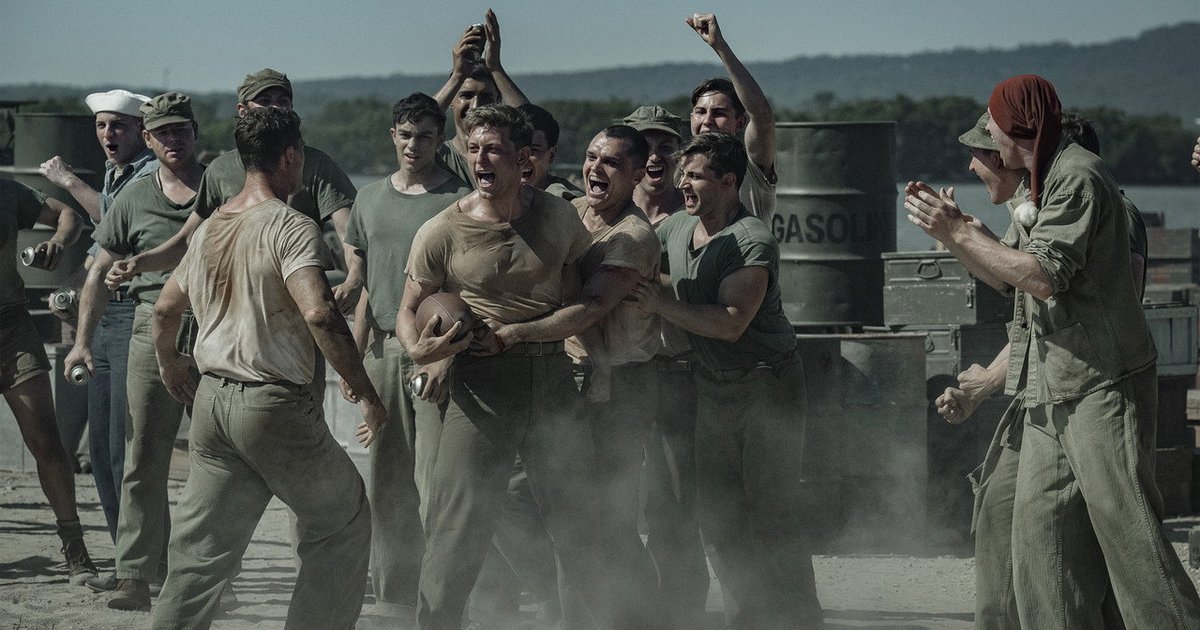
The Mosquito Bowl Opens October 30: Cast, Release Date and What Critics Are Saying
Peter Berg's World War II drama The Mosquito Bowl opens in theaters October 30 and streams on Netflix November 25. The cast, the true story behind the game and the first critic reactions.
Read the story →
 Film News
A24's Elden Ring Movie Reportedly Costs Nearly $200 Million
The Wall Street Journal reports Alex Garland's Elden Ring now carries a budget of nearly $200 million, roughly triple A24's previous record.
Read the story →
 Film News
Who Will Be the Next James Bond? Casting Reportedly Narrows to a Short List
Reports name Jack Lowden, Jacob Elordi, Callum Turner and Josh O'Connor among the actors in the running for James Bond, with final screen tests reportedly set for the coming week.
Read the story →
Articles
Latest on Every Movie Plug
 Article
10 Actors Who Turned Down Roles That Became Legendary
Hollywood history turns on sliding-door moments. These are the casting rejections that reshaped blockbuster cinema and handed other stars their defining parts.
Read the story →
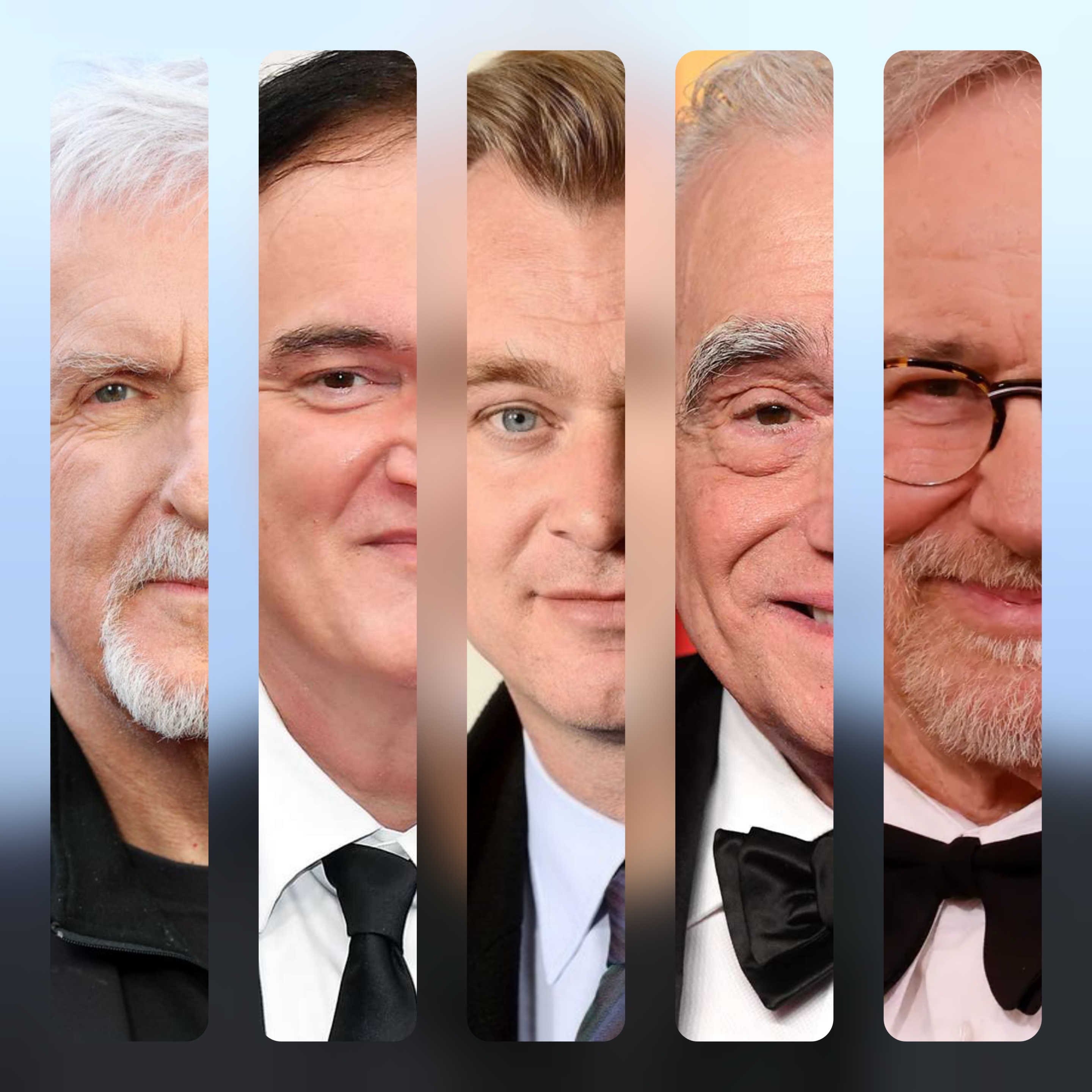 Article
Five Directors, Five Visions: The Signature Styles of Hollywood's Defining Filmmakers
The signature styles of five defining modern filmmakers: Steven Spielberg, Martin Scorsese, Christopher Nolan, Quentin Tarantino and James Cameron.
Read the story →
 Article
Star Wars Timeline Explained: Every Movie and TV Series in Chronological Order
A comprehensive chronological guide explaining every Star Wars movie and TV series from the High Republic era through the sequel trilogy.
Read the story →
Image, Video and Embed Credits
- Theatrical poster: Open Road Films, via IMDb
- Film stills of Jake Gyllenhaal and Riz Ahmed: Open Road Films, via MovieWeb
- Film still of Jake Gyllenhaal: Open Road Films, via AwardsWatch
- Portrait of Jake Gyllenhaal (2019): Glenn Francis, via Wikimedia Commons
- Trailer video: Open Road Films, via YouTube
- Riz Ahmed interview video: Movieclips, via YouTube
- Reddit embed: r/WatchItWithMe discussion thread
- X embed: @everymovieplug
- Related-story thumbnails: Every Movie Plug; Star Wars card image via TMDB
References and Further Reading
- Film overview, production, release and reception: Nightcrawler (film), Wikipedia
- Box office: Weekend Report, Box Office Mojo; The Numbers; How Nightcrawler Found Daylight at the Boxoffice, Deadline
- Release date move: TheWrap
- Production and budget: Variety; Film Independent
- Score: The New York Times
- Marketing: IndieWire; Complex interview with Dan Gilroy
- Critical reception: Rotten Tomatoes; Metacritic; The Atlantic
- Awards and snub coverage: The Hollywood Reporter; Variety
- Legacy: Writers Guild of America, 101 Greatest Screenplays of the 21st Century; The A.V. Club tenth-anniversary essay