Today in Cinema looks at one major Hollywood film from movie history: how it was made, how it was received and why it is still discussed.
Few films have arrived with lower expectations and left with a larger reputation than The Social Network. When it was announced, the idea of a drama about the founding of Facebook struck many observers as a joke: a story about a website, with no chase scenes, no obvious heroes and a central character who spends much of it typing. Then the trailers appeared, the reviews followed, and by the end of 2010 the film had become the most consistently praised American release of the year.
The film premiered at the New York Film Festival on September 24, 2010, and opened in United States theaters on October 1. This edition of Today in Cinema looks back at how David Fincher and Aaron Sorkin turned a contested piece of tech history into a thriller about ambition, friendship and betrayal, how the film performed on release, why the people it portrayed objected to it, and why a sequel released this very month has sent audiences back to the original.
A short note on spoilers: the story is based on well-known public events, and the article discusses its structure and general outcome, but it does not walk through the final scenes.

The Social Network at a Glance
| Release date (US) | October 1, 2010 |
|---|---|
| Festival premiere | New York Film Festival, September 24, 2010 |
| Director | David Fincher |
| Screenplay | Aaron Sorkin, based on The Accidental Billionaires by Ben Mezrich |
| Starring | Jesse Eisenberg, Andrew Garfield, Justin Timberlake, Armie Hammer, Max Minghella |
| Cinematography | Jeff Cronenweth |
| Editors | Angus Wall and Kirk Baxter |
| Music | Trent Reznor and Atticus Ross |
| Distributor | Sony Pictures Releasing, through Columbia Pictures |
| Running time | 120 minutes |
| Budget | $40 million |
| Worldwide gross | About $225 million |
The Premise: Two Lawsuits, Three Versions of the Truth
The story follows Mark Zuckerberg, a Harvard sophomore played by Jesse Eisenberg, who is dumped by his girlfriend in October 2003, writes a cruel blog post about her and then builds a campus website that lets students rate the attractiveness of their classmates. The stunt crashes parts of Harvard's network and earns him academic probation, but it also attracts the attention of three fellow students, twins Cameron and Tyler Winklevoss and their partner Divya Narendra, who invite him to help build a Harvard-only dating site.
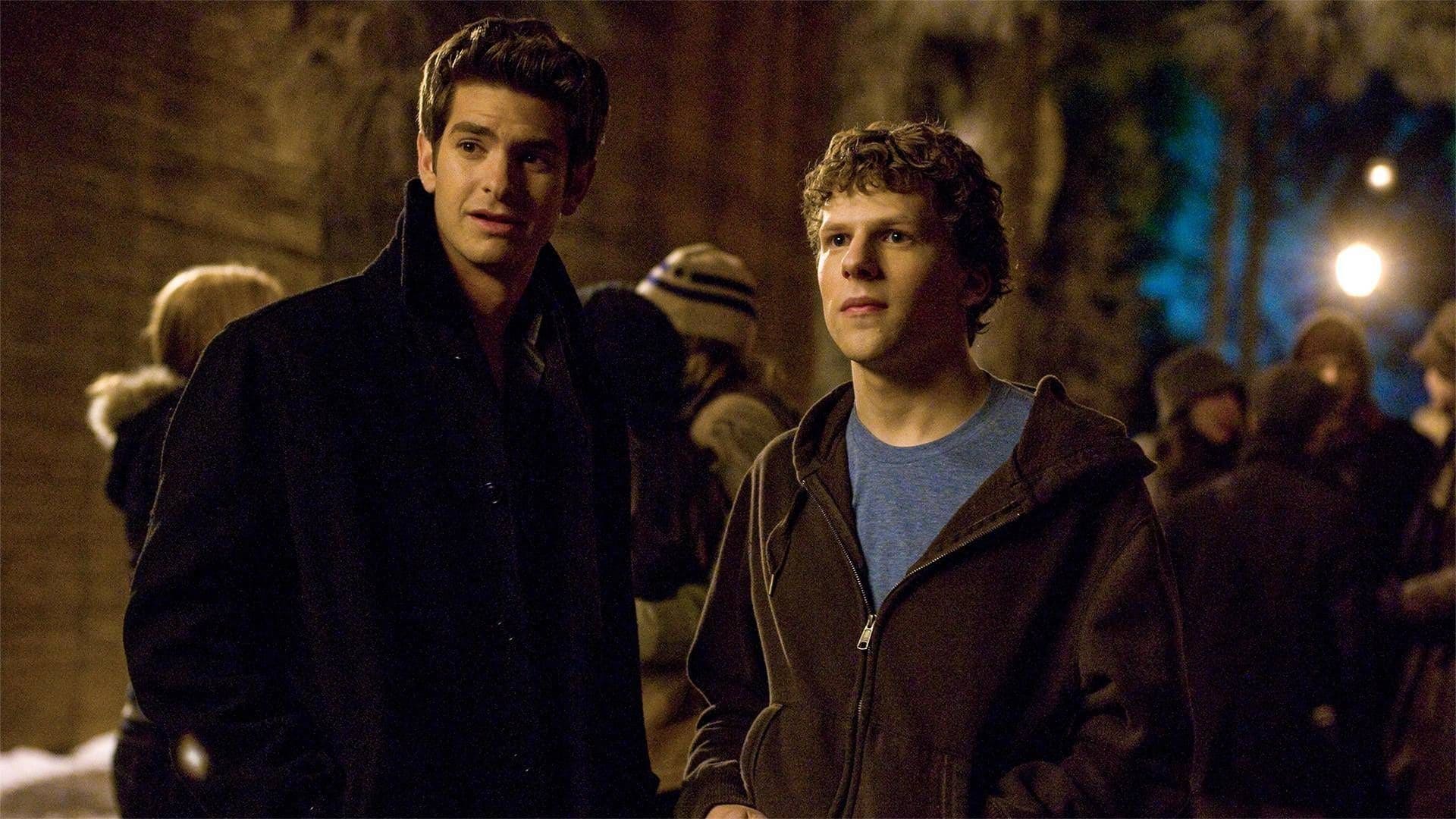
Zuckerberg instead takes a different idea, a social network for college students, to his friend Eduardo Saverin, played by Andrew Garfield, who provides the first seed money and becomes the company's chief financial officer. The site spreads from campus to campus, the Napster co-founder Sean Parker, played by Justin Timberlake, enters the picture with grander ambitions, and the friendship at the center of the company begins to fracture.
The film tells this story through two frame narratives. In one, Zuckerberg is deposed in a lawsuit filed by Saverin; in the other, he is deposed in a separate suit brought by the Winklevoss twins and Narendra. The intercutting between boardrooms, dorm rooms and conference tables gives the film its propulsion, and it lets the script present competing accounts of the same events without ever declaring one of them definitive. The closing text notes that both cases were settled out of court and that Zuckerberg became the youngest billionaire in the world.
From a Book to a Screenplay in Three Pages
The film is based on The Accidental Billionaires, a 2009 book by Ben Mezrich. Sorkin has said that he was drawn to the project when the book was being shopped to studios, and that he agreed to write the screenplay almost immediately, somewhere around the third page of reading. Producer Scott Rudin and Sony were attached from the start, and in August 2008 Sorkin created a Facebook group to research the subject, noting publicly that his first step was to find out what the site actually was.
Sorkin and Mezrich worked in parallel rather than together. They met a few times to compare notes, but Sorkin did not read the finished book until he was already about eighty percent through his screenplay. He also interviewed people involved in the story, mostly on condition of anonymity. What he discovered shaped the entire structure: two lawsuits had been filed against Facebook at roughly the same time, and in the depositions the plaintiffs, defendants and witnesses told conflicting stories under oath. Rather than choose the most accurate or most dramatic version, Sorkin decided to dramatize the fact that there were three versions, which became the film's deposition-room framework.
That decision also explains the tone. The film does not present itself as a documentary, and Sorkin has defended his approach on the grounds that his loyalty was to storytelling rather than to literal accuracy. The question of how faithfully the film portrays real people became one of the most debated aspects of its release, and it is discussed later in this article.
The material also fits a wider pattern in Fincher's career as a director of procedural, detail-obsessed films about people consumed by a single pursuit. For a broader look at how the best-known directors in Hollywood develop recognizable approaches, see Five Directors, Five Visions: The Signature Styles of Hollywood's Defining Filmmakers on Every Movie Plug.
Casting Zuckerberg, Saverin and Parker
Casting began in mid-2009, with Eisenberg, Timberlake and Garfield announced early. The final assignments were less obvious than they now seem. Garfield originally auditioned for Zuckerberg and was told the part was practically his, but Fincher cast him as Saverin after seeing Eisenberg's audition. Jonah Hill was also in contention for Timberlake's role, though Fincher passed on him. Eisenberg had planned to meet the real Zuckerberg and even considered driving to Facebook's offices, but the producers would not allow it for legal reasons.
Casting reversals like these are a recurring feature of film history; 10 Actors Who Turned Down Roles That Became Legendary collects ten famous examples of parts that went to a second choice and became defining roles.
The wider cast was filled in during October 2009 with Brenda Song, Rooney Mara, Armie Hammer, Shelby Young and Josh Pence, followed by Max Minghella and Dakota Johnson. Rashida Jones joined later as the junior lawyer Marylin Delpy. Joseph Mazzello played Facebook co-founder Dustin Moskovitz, and Aaron Sorkin himself appears in a small role as an advertising executive.
Shooting Harvard Without Harvard
Principal photography began in October 2009 in Cambridge, Massachusetts, and ran through November, with additional scenes shot in Los Angeles and Pasadena. Harvard has declined most film requests ever since the 1970 production of Love Story caused physical damage to trees on campus, so the production built its Harvard from other places. Scenes were shot at two Massachusetts prep schools, Phillips Academy and Milton Academy, at Wheelock College, which was dressed to resemble Harvard's campus, and at Johns Hopkins University in Baltimore, where the Homewood campus quadrangles stood in for Harvard's yards. The second half of the story is set in Silicon Valley, yet those scenes were filmed in Los Angeles and Pasadena.
Fincher's reputation for repetition is part of the film's legend. The opening scene between Zuckerberg and his girlfriend took 99 takes to complete. The production shot on the RED One digital cinema camera, an early adopter's choice at the time, and the rowing scenes with the Winklevoss twins were filmed at a community rowing club in Newton, Massachusetts, and at the Henley Royal Regatta in England, where a miniature-faking process was used for the race sequence.
The twins themselves were one of the film's most talked-about technical feats. Armie Hammer played both brothers, acting opposite body double Josh Pence while his own face was digitally grafted onto Pence's body in post-production, with some scenes using split-screen photography instead. The actors reportedly attended a ten-month "twin boot camp" to learn the brothers' mannerisms. A decade and a half later, the ethics and craft of digital performance have become a far larger argument; Every Movie Plug explores that debate in AI Cannot Act and How 2026 Became the Breakout Year for Artificial Intelligence in Cinema, and Fincher's film now reads as an early chapter in that conversation.
The Score and the Cut
Trent Reznor and Atticus Ross of Nine Inch Nails were announced as the film's composers on June 1, 2010. Their score was released on September 28, three days before the film opened, and a free five-track sampler was offered in the weeks before. The music won the Golden Globe and the Academy Award for Best Original Score. Reviewers described it as a persistent source of simmering tension in the film. Two pre-existing songs frame the film: one by The White Stripes plays in the opening, and one by The Beatles closes it, neither of which appears on the soundtrack album.
The editing, by Angus Wall and Kirk Baxter, also won an Academy Award. The film's rapid dialogue scenes depended on precise rhythm, and IndieWire reported in 2020 that the editing team spent about three weeks cutting the opening scene alone.
A Poster, a Tagline and a Trailer That Changed the Conversation
The film's marketing began with a single approved photograph of Eisenberg's face. Poster designer Neil Kellerhouse built the key art around it, released on June 18, 2010, and coined a tagline about how many friends one can make before making a few enemies. The first version referred to 300 million friends; he changed it to 500 million in anticipation of Facebook reaching that user count by the film's release date. The poster has been praised for its design and has influenced the look of later campaigns.
The trailers did even more to shift expectations. A teaser followed on June 25 and a second on July 8. The full-length theatrical trailer arrived on July 16, 2010, featuring a choral cover of Radiohead's "Creep" by the Belgian group Scala & Kolacny Brothers. Prepared by the trailer house Mark Woollen & Associates, it won the Grand Key Art award at the 2011 Key Art Awards, and many commentators have since cited it as one of the best trailers ever made, noting how decisively it changed the tone of the conversation around the film.
Watch: The Social Network Theatrical Trailer
Video: Sony Pictures theatrical trailer for The Social Network, via YouTube.
Release and Box Office: A Quiet Hit That Held
The Social Network opened in theaters on the weekend of October 1 to 3, 2010, and debuted at number one with $22.4 million from 2,771 theaters. It held the top spot the following weekend with a drop of just 31.2 percent, which broke the record set by Inception earlier that year for the smallest second-weekend decline of any number-one film of 2010. By the end of its theatrical run it had earned about $97 million in the United States and $128 million in other territories, for a worldwide total of roughly $225 million against a $40 million budget.
Home-video results were similarly strong. The DVD and Blu-ray arrived on January 11, 2011, and in its first week the DVD alone sold more than $13 million, making it the best-selling disc of that week. The release included commentaries by Fincher and by Sorkin with the cast, plus a feature-length documentary about the making of the film. A 4K Ultra HD edition followed in October 2021.
The numbers look modest beside the billion-dollar franchise releases covered in The Billion-Dollar Club: The 10 Highest-Grossing Movies of All Time, but the profile was healthy for an adult drama, and the budget now looks small against the scale of today's tentpoles: A24's Elden Ring adaptation is reportedly carrying a budget of nearly $200 million, according to Every Movie Plug's report on the Wall Street Journal story, five times what Fincher had to spend.
What Critics Said
Reviews were among the strongest of the decade. Rotten Tomatoes reports a 96 percent approval rating from 335 reviews with an average score of 9 out of 10, and Metacritic gives the film a 95 out of 100 based on 42 critics, a score that indicates universal acclaim. Audiences polled by CinemaScore gave it a B-plus. It appeared on 78 critics' top-ten lists for 2010 according to Metacritic's tally, more than any other film that year, and 22 of those critics ranked it first.
Roger Ebert gave the film four stars and named it the best of the year, describing it as being smart in the same way its brilliant protagonist is. Rolling Stone's Peter Travers called it the movie of the year and wrote that its wit and aching sadness defined the dark irony of the decade. The Guardian's Peter Bradshaw gave it four stars and praised the claustrophobic intensity of Fincher's direction, while The Harvard Crimson awarded it five stars and called it flawless. Joe Morgenstern of The Wall Street Journal found it exhilarating but cautioned that its biographical elements take liberties, since it was built on a book that was itself contested.
Dissent existed, too. Nathan Heller of Slate wrote a negative review that called the film generic and argued that it got Harvard's social world wrong. Others objected on different grounds, which leads to the most persistent argument about the film: whether it is fair to the people it portrays.
The Accuracy Debate
Zuckerberg himself was not involved in the production, and neither were other Facebook staff, although Saverin consulted on Mezrich's book. At a conference in June 2010, Zuckerberg told the host that he wished no one made a movie about him while he was still alive. He later said on television that the drama and partying shown in the film were mostly fiction and that he had spent those years coding and building the company. At a Stanford event he said he built the site because he enjoyed building things, not to meet women, and in 2014 he added that he was dating his future wife at the time. He did concede that the film got his wardrobe right, saying the shirts and fleeces shown were ones he owns.
Others tied to the story responded in different ways. Dustin Moskovitz described the film as a dramatization that emphasized things that did not matter and omitted people who did. Saverin said it was clearly meant as entertainment rather than a factual documentary, and Sean Parker called it a complete work of fiction. Facebook's chief operating officer, Sheryl Sandberg, described it as very Hollywood and mostly invented. Divya Narendra said he was surprised to see himself played by a non-Indian actor, though he credited Max Minghella with pushing the dialogue forward.
Commentators raised broader objections. Journalist Jeff Jarvis called it well made but the "anti-social movie," and broadcaster Leo Laporte described it as anti-geek and misogynistic, a charge Sorkin answered by saying that he was writing about a deeply angry and misogynistic group of people. The Guardian's Andrew Clark questioned the ethics of docudrama about a living young businessman, and Harvard Law professor Lawrence Lessig argued in The New Republic that the film missed the real villain of the story, which he identified as a legal system that allowed the Winklevoss claim to produce a large settlement. Sorkin's own position was consistent: he said his fidelity was to storytelling, and that truth should not become the enemy of the good.
Awards Season: A Sweep That Stopped Just Short
The film received eight nominations at the 83rd Academy Awards, including Best Picture, Best Director and Best Actor for Eisenberg, and won three: Best Adapted Screenplay, Best Original Score and Best Film Editing. It lost Best Picture to The King's Speech, a result that remains one of the more frequently revisited outcomes in recent Oscar history. At the 68th Golden Globe Awards on January 16, 2011, it won Best Motion Picture, Drama, along with Best Director, Best Screenplay and Best Original Score, making it the night's biggest winner. At the BAFTAs it received seven nominations and won three, for Best Editing, Best Adapted Screenplay and Best Direction.
Among critics' groups, it won Best Picture from the National Board of Review, the National Society of Film Critics, the New York Film Critics Circle and the Los Angeles Film Critics Association. That made it only the third film in history, after Schindler's List and L.A. Confidential, to sweep those four major critics' awards. The Hollywood Film Awards also gave it their ensemble honor.
A Legacy That Kept Growing
The film's reputation has risen with time. In 2016, a poll of 177 critics for the BBC ranked it the 27th-best film of the 21st century. Metacritic's roundup of end-of-decade lists placed it third among the films of the 2010s, behind Mad Max: Fury Road and Moonlight. The Writers Guild of America ranked Sorkin's screenplay third on its list of the 101 greatest screenplays of the 21st century, and in June 2025 the film ranked tenth on The New York Times' list of the 100 best movies of the 21st century, followed in July by 13th place on Rolling Stone's equivalent list. In December 2024, the Library of Congress selected it for preservation in the National Film Registry as culturally, historically or aesthetically significant.
Esquire called it the best film of the 2010s and compared it to Citizen Kane for the internet age, while writers at Polygon, Time Out and Rolling Stone stressed how prophetic it came to seem as Facebook's reputation shifted from a connecting force to a subject of political concern. Quentin Tarantino named it the best film of the decade and praised Sorkin as the greatest active writer of dialogue. The film also had a direct cultural effect: commentators noted that it inspired viewers to start companies and helped fuel the view that technologists had become the new rock stars, a trend Zuckerberg himself said he found interesting, noting that he received messages from people who said the film had inspired them to start their own ventures.
Sorkin carried the template forward. His next technology-company drama, the 2015 biopic Steve Jobs, used a similar structure of staged confrontations, and his rapid-fire, deposition-style writing became a reference point for later films about founders and start-ups. True-story dramas still draw audiences to theaters today, as seen in Peter Berg's The Mosquito Bowl, covered in The Mosquito Bowl Opens October 30: Cast, Release Date and What Critics Are Saying.
The Sequel: The Social Reckoning Arrives in October 2026
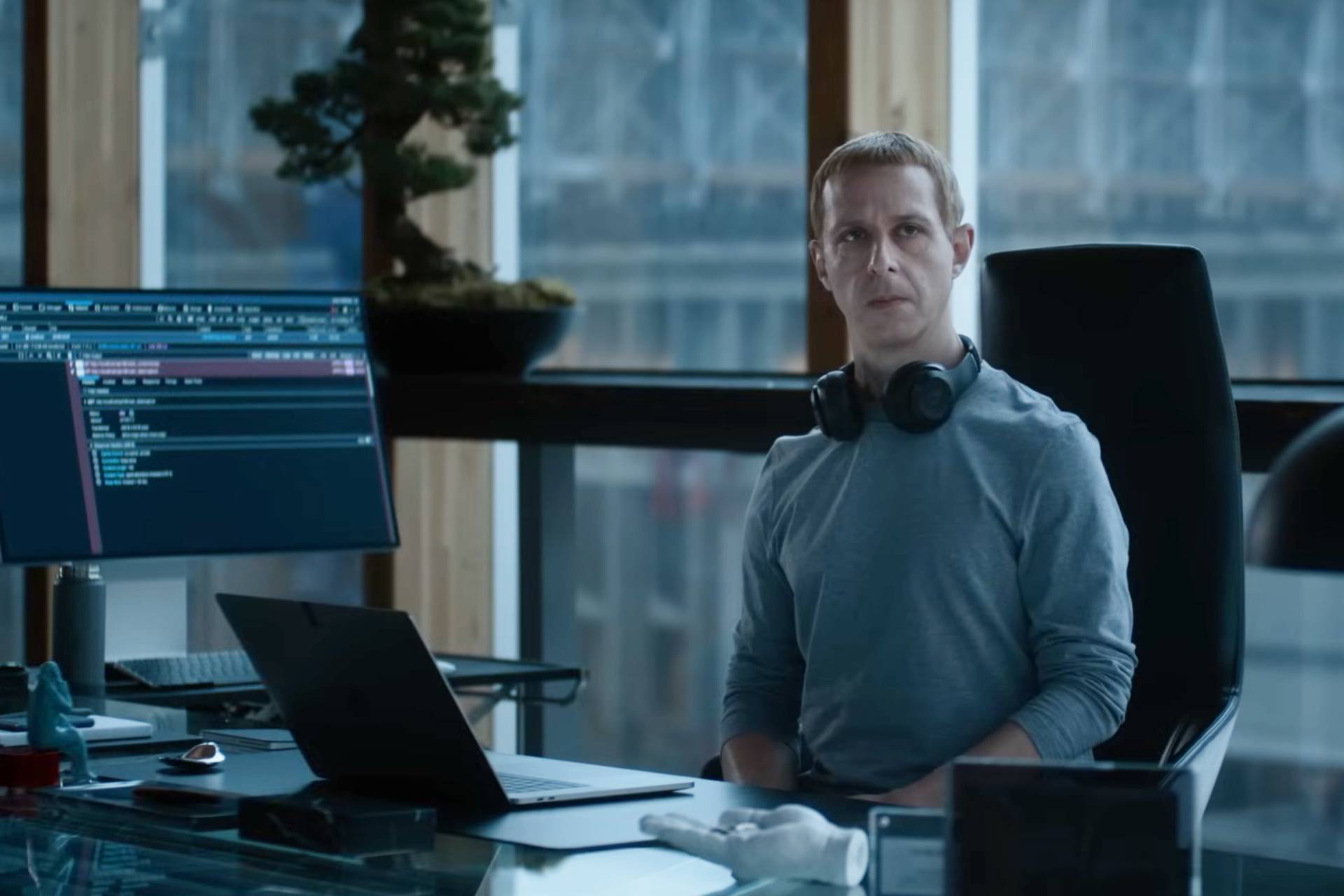
For years, Sorkin said that a sequel would be possible only if Fincher returned. That condition changed in 2025, when it was announced that Sorkin would write and direct a follow-up himself. The result, The Social Reckoning, reached theaters on October 9, 2026. It follows the whistleblower story of former Facebook employee Frances Haugen and journalist Jeff Horwitz, played by Mikey Madison and Jeremy Allen White, with Jeremy Strong taking over as Zuckerberg from Eisenberg. Neither Fincher nor any of the original cast returned.
The trailer was released on June 10, 2026, and drew immediate and divided reactions online, including comparisons with the original and jokes about its dialogue. Critics responded with mixed reviews, many judging it inferior to its predecessor. In North America it opened to about $5.5 million, according to Associated Press reporting, well below the $22.4 million of the original's debut, and audiences gave it a B-minus CinemaScore. Within three weekends its theater count was reported to have fallen from 2,606 locations to 619.
Watch: The Social Reckoning Trailer
Video: Sony Pictures trailer for The Social Reckoning, via YouTube.
The Conversation Online
The sequel's arrival has sent viewers back to the original, and reaction on social media has been a mix of nostalgia and comparison. The post below, embedded from X, is one fan's response to the sequel's trailer when it was released.
Social embed: post on X by @BrosephSZN reacting to The Social Reckoning trailer, as cited by Gizmodo.
Why The Social Network Still Works
The film has aged well because its subject was never really a website. It is a story about how a small group of young, brilliant and insecure people turned an idea into a business, and about what that process does to friendship, loyalty and ownership. Those themes do not depend on any particular technology, and they are why the film remains watchable even for viewers who have never used the platform it depicts.
The craft also matters. Fincher's cool, controlled direction gives Sorkin's overheated dialogue a dark counterweight, and the combination produces tension out of conversations. The editing never lets a scene go slack, the score suggests dread beneath the banter, and the performances, especially Eisenberg's guarded, rapid-fire Zuckerberg and Garfield's wounded Saverin, give the story an emotional core that a purely procedural treatment would lack. The sequel's reception has made this combination look less like an accident and more like a rare alignment of director, writer, cast, composer and editors.
Finally, the film's meaning has shifted with events. Viewers in 2010 saw a story about the birth of a cultural phenomenon. Viewers now often see a story about the beginning of a company whose influence became a subject of political and regulatory debate. That change in perspective is a large part of why critics keep returning to it, and why it continues to appear near the top of lists of the best films of its era. For a look at the films heading to theaters next, see Most Anticipated Movies of 2027: Every Major Release to Watch.
Frequently Asked Questions About The Social Network
When was The Social Network released?
The film premiered at the New York Film Festival on September 24, 2010, and opened in United States theaters on October 1, 2010.
Is The Social Network a true story?
It is based on real events and real people, but it is a dramatization. It draws on Ben Mezrich's book The Accidental Billionaires and on research by Aaron Sorkin, and many people portrayed in the film, including Mark Zuckerberg, have said that parts of it are fictional.
Did The Social Network win Best Picture?
No. It was nominated for eight Academy Awards and won three: Best Adapted Screenplay, Best Original Score and Best Film Editing. Best Picture went to The King's Speech.
How much money did The Social Network make?
It earned about $97 million in the United States and $128 million in other territories, for roughly $225 million worldwide on a budget of $40 million.
Is there a sequel to The Social Network?
Yes. The Social Reckoning, written and directed by Aaron Sorkin and starring Jeremy Strong, Mikey Madison and Jeremy Allen White, was released in the United States on October 9, 2026. David Fincher and the original cast did not return.
Conclusion
More than fifteen years after it opened, The Social Network remains one of the most closely studied American films of its century. It turned a dispute over a website into a tense, funny and sorrowful drama, assembled a rare set of collaborators at their peak, and became a reference point for how Hollywood tells stories about technology. Its sequel has not changed that standing, and has arguably underlined it.
Today in Cinema returns with another film from movie history.
News
Latest on Every Movie Plug
 Film News
Grok Imagine Releases Episode 1 of Its AI-Made Odyssey Series
xAI's Grok Imagine released a roughly seven-minute first episode of an AI-generated Odyssey series with Wonder Studios and director Dev Walker.
Read the story →
 Film News
The Mosquito Bowl Opens October 30: Cast, Release Date and What Critics Are Saying
Peter Berg's World War II drama The Mosquito Bowl opens in theaters October 30 and streams on Netflix November 25. The cast, the true story behind the game and the first critic reactions.
Read the story →
 Film News
A24's Elden Ring Movie Reportedly Costs Nearly $200 Million
The Wall Street Journal reports Alex Garland's Elden Ring now carries a budget of nearly $200 million, roughly triple A24's previous record.
Read the story →
Articles
Latest on Every Movie Plug
 Article
AI Cannot Act
A photorealistic “AI actress” had Hollywood's agents curious and its actors furious. The debate is usually framed as a question of technology. It is really a question of what acting is.
Read the story →
 Article
10 Actors Who Turned Down Roles That Became Legendary
Hollywood history turns on sliding-door moments. These are the casting rejections that reshaped blockbuster cinema and handed other stars their defining parts.
Read the story →
 Article
Five Directors, Five Visions: The Signature Styles of Hollywood's Defining Filmmakers
The signature styles of five defining modern filmmakers: Steven Spielberg, Martin Scorsese, Christopher Nolan, Quentin Tarantino and James Cameron.
Read the story →
Image, Video and Embed Credits
- Theatrical poster: Columbia Pictures and Sony Pictures, via IMDb
- Promotional image: Columbia Pictures, via Box Office Mojo
- Trailer still: Sony Pictures, via The Fincher Analyst
- The Social Reckoning image: Sony Pictures Entertainment, via Gizmodo
- The Social Network trailer: Sony Pictures, via YouTube
- The Social Reckoning trailer: Sony Pictures, via YouTube
- X embed: post by @BrosephSZN
- Related-story thumbnails: Every Movie Plug
References and Further Reading
- Film overview, production, release, reception and legacy: The Social Network, Wikipedia
- Box office and release data: Box Office Mojo; The Numbers
- Critical reception: Rotten Tomatoes; Metacritic; Roger Ebert; The Guardian
- The accuracy debate: The Guardian on Mark Zuckerberg's reaction; Observer interview with Aaron Sorkin
- Trailer history: Quartzy
- Library of Congress: National Film Registry additions
- The Social Reckoning: The Numbers; Associated Press box office report; ThePrint