The most dangerous thing in Redemption River isn’t the river itself. It’s how easily two people who are hurting can mistake each other’s silence for indifference.
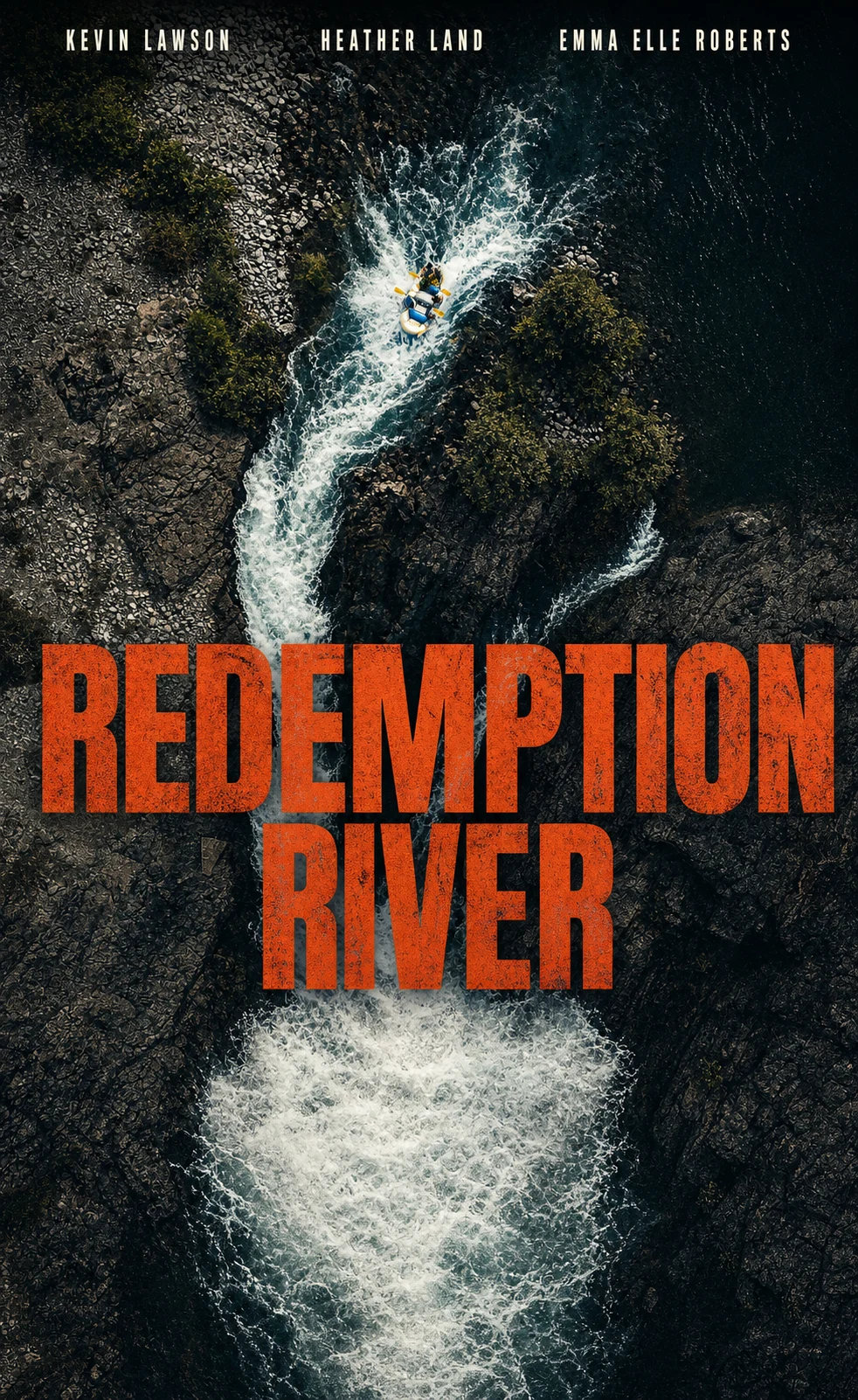
Directed by Zac Hersh and James Rich, Redemption River is a drama exploring marriage, grief, faith and the unexpected challenges that can either pull people apart or bring them closer together. Starring Emma Elle Roberts and Oscar Rudecindo as Margo and Josh, alongside Heather Land, Michael Bonini, Kevin Lawson and Brad Stine, the film follows a couple already struggling with the devastating loss of their baby before an unexpected turn of events places their lives in danger.
What initially appears to be an opportunity to escape everyday pressures gradually becomes a test of their relationship, forcing them to confront the emotional pain they have been carrying and the distance that has developed between them. While the film occasionally struggles to balance its relationship drama with its survival-thriller elements, its strongest moments come from exploring the complicated emotions that can exist within a marriage when grief makes communication difficult.
Content note
The film deals with the loss of a child and contains intense survival sequences. The first half of this review is spoiler-free. A second warning will mark the point where we start discussing key plot developments.
Spoiler warning
Read before scrolling further. The opening section of this review is spoiler-free. Beyond this point, we discuss key plot developments from Redemption River, including the rafting accident on the American River, the fallout back home, and how Margo and Josh’s story unfolds.
The Weight of Unspoken Grief
At the heart of Redemption River is a marriage struggling under the weight of loss. Margo and Josh have experienced something deeply painful, but grief doesn’t affect everyone in the same way. Rather than bringing them closer together, their shared tragedy creates an emotional distance that neither seems entirely capable of overcoming.
One of the film’s most affecting moments comes when Margo admits that she thought Josh didn’t care about losing their baby because she never saw him cry or openly discuss his feelings. Josh’s quiet confession that he hurts just as much, but has been trying to hold the remaining pieces of their lives together, reveals how easily two people can misunderstand one another when they process pain differently.
It’s an effective scene because it highlights something that isn’t always recognised in portrayals of grief: the absence of visible sadness doesn’t mean someone is suffering any less. Roberts and Rudecindo approach the exchange with understated naturalism, allowing the emotional weight of the conversation to emerge without relying on exaggerated displays of sorrow. Their performances help communicate the frustration of two people who still care deeply about each other but have struggled to recognise the other’s pain.
The relationship feels like a roller coaster, with moments of connection followed by frustration, uncertainty and emotional distance. What’s particularly effective is the film’s understanding that grief doesn’t automatically bring couples together. Sometimes it exposes the differences that already exist within a relationship, making honest communication more important than ever.
The film suggests that marriage isn’t about always having the right words or knowing exactly how to solve every problem. Sometimes it’s about being willing to listen, acknowledge another person’s suffering and keep choosing one another even when circumstances become difficult.
A Getaway That Becomes a Trap
Hoping to give the couple some breathing room, Josh’s boss, Justin (Brad Stine), rewards him with an all-expenses-paid retreat to a secluded bed and breakfast up north. For two people in desperate need of time away from everyday pressures, it initially seems like the perfect opportunity to reconnect.
However, their journey eventually takes them to the American River, where a rafting accident leaves them stranded and transforms their getaway into a fight for survival.
This change in circumstances gives the filmmakers an opportunity to bring the film’s two central elements together. The relationship drama becomes intertwined with the physical danger surrounding Margo and Josh, forcing them to depend on one another when their circumstances leave little room for avoidance or emotional withdrawal.
The wilderness becomes more than simply a backdrop for the action. It reflects the uncertainty surrounding their marriage, with the couple facing an unfamiliar environment while also trying to navigate emotions they haven’t fully addressed. Their physical struggle for survival mirrors the emotional challenges they face as they attempt to find their way through a relationship that has been shaken by loss.
The survival element also gives the story a different kind of urgency. However, the transition from intimate marital drama to outdoor thriller isn’t always seamless. Although the accident raises the stakes, the film is ultimately more compelling when it concentrates on the emotional consequences of what Margo and Josh are experiencing rather than relying solely on the dangers surrounding them.
“Dry eyes are not the same as an empty heart.”
The Cost of Other People’s Choices
One of the film’s other important themes is the damage caused when people put personal gain ahead of the wellbeing of others.
Josh’s coworker Spencer (Michael Bonini) and Justin become connected to decisions that turn an already difficult situation into a much bigger crisis. Spencer’s focus on making money comes at a direct cost to Ruth (Heather Land), while the corner-cutting surrounding the operation contributes to the accident on the American River, leaving Margo and Josh fighting for their lives because others have placed profit ahead of safety.
This storyline gives Redemption River a broader dimension beyond the struggles within Margo and Josh’s marriage. Their problems aren’t happening in isolation, and the consequences of other people’s decisions introduce another layer of hardship into an already fragile situation.
Spencer’s actions serve as a reminder that selfishness rarely affects only the person making the decision. When financial gain becomes more important than responsibility or compassion, it is often innocent people who end up suffering the consequences.
Although Spencer occasionally feels more like a cautionary figure than a fully developed character, his role reinforces an important part of the film’s message. Personal choices carry responsibility, particularly when other people’s safety and wellbeing are involved.
Ruth and the Importance of Having Someone in Your Corner
Heather Land’s Ruth provides an important counterbalance to the emotional turmoil surrounding Margo and Josh. Having experienced the consequences of Spencer’s selfish decisions herself, Ruth could easily have become another character consumed by resentment. Instead, she demonstrates a willingness to offer compassion despite the difficulties she has faced.
Land brings a grounded warmth to the role, making Ruth’s encouragement feel like more than a convenient plot device. At a time when guilt, uncertainty and the heavy silence of God threaten to overwhelm Margo, Ruth offers reassurance and a spiritual perspective that helps her find the strength to keep going.
Her presence also allows the film to explore faith through human connection. Rather than suggesting that difficult circumstances can always be resolved through simple answers, Ruth represents the importance of having someone willing to stand beside you when life becomes overwhelming.
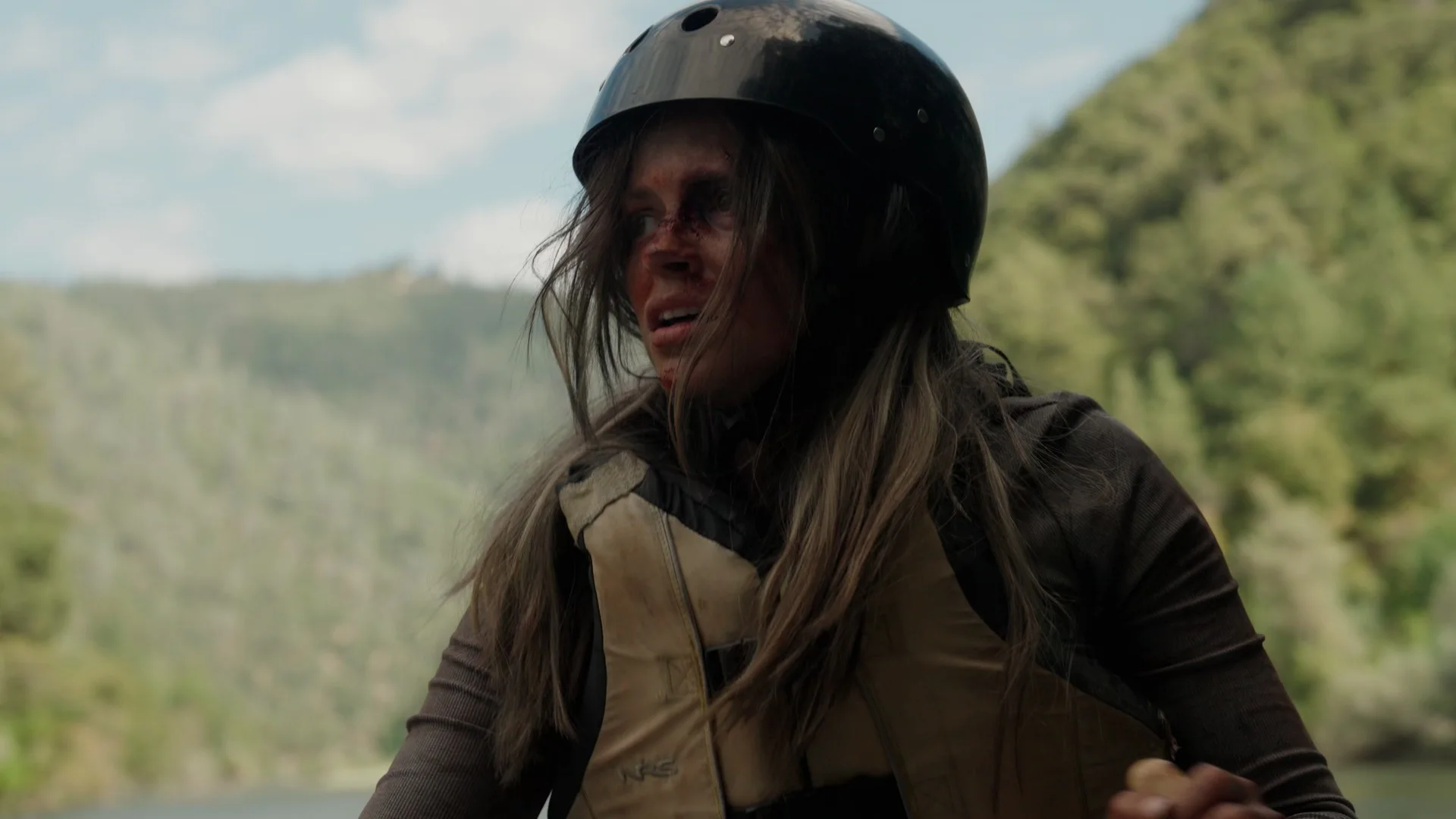
This is particularly meaningful because Margo needs someone she can turn to while her relationship with Josh is under pressure. Ruth doesn’t necessarily have all the answers, but her compassion demonstrates that support can make a significant difference when someone is struggling to find their footing.
Her character reinforces one of the film’s most encouraging ideas: getting through difficult circumstances sometimes requires more than determination. It also takes faith, understanding and the willingness to accept help from people who genuinely care.
How the Movie Pulls You Into the Wilderness
Beyond its emotional themes, Redemption River makes effective use of its visual and audio elements to establish atmosphere and reinforce the story’s central conflicts.
During Margo and Josh’s quieter arguments, the camera stays tight and close, creating a sense of claustrophobia that reflects the emotional pressure between them. These intimate frames contrast with the wider, colder shots of the rugged landscape, emphasising just how small and vulnerable the couple are against the surrounding wilderness.
It’s a visual contrast that works particularly well because it reflects the two different challenges facing the characters. Their relationship feels increasingly confined by unresolved emotions, while the landscape around them represents a much larger and more unpredictable threat.
The sound design also contributes to the atmosphere. Rather than constantly relying on heavy background music to dictate how the audience should feel, the film allows the rushing river and the eerie quiet of the woods to carry much of the tension. These quieter moments create an unsettling atmosphere while echoing the spiritual uncertainty Margo experiences as she struggles to hold onto her faith.
The filmmaking is at its strongest when these technical elements complement the emotional story rather than compete with it. The wilderness feels threatening, but the film’s more intimate moments remind us that the greatest struggles facing Margo and Josh aren’t necessarily the ones taking place outside.
Where the Film Loses Its Footing
Although Redemption River has a compelling emotional foundation, it doesn’t always manage to bring its different elements together seamlessly. The transition from quiet marital drama to high-stakes survival thriller occasionally feels abrupt, and the pacing loses some momentum during the middle stretch as the narrative moves between the wilderness and the fallout back home.
The dialogue also occasionally spells out themes that the performances have already communicated effectively. Some conversations might have been more powerful if the filmmakers had allowed the actors’ expressions and silences to do more of the work. Roberts and Rudecindo are capable of conveying considerable emotion through their performances, making certain explanatory exchanges feel a little unnecessary.
Spencer’s motivations also occasionally feel more functional to the plot than fully developed. While his selfishness serves an important purpose in illustrating the consequences of prioritising profit over people, a little more character development could have made his decisions and their consequences feel even more convincing.
These shortcomings don’t undermine the film’s central message, but they do prevent it from reaching the emotional and dramatic heights it occasionally promises.

Redemption River is ultimately a film about understanding that surviving life’s most difficult moments requires more than simply holding on. It requires honesty, forgiveness, faith and the willingness to recognise that the person beside you may be hurting just as deeply, even when they struggle to show it.
Directed by Zac Hersh and James Rich, the film offers a thoughtful exploration of marriage and grief, using an increasingly dangerous outdoor adventure to examine the emotional challenges that can develop when two people struggle to communicate. Emma Elle Roberts and Oscar Rudecindo help bring that story to life, particularly when the film allows their characters’ pain and misunderstandings to emerge through quieter, more personal moments.
Its message about the consequences of selfishness also gives the story an added dimension, reminding viewers that other people’s decisions can have devastating consequences for those caught in the middle. Although the transition between relationship drama and survival thriller isn’t always seamless, the film succeeds in delivering a meaningful story about perseverance, compassion and the importance of having people who genuinely care about you.
You cannot always prevent life’s roller coaster from taking unexpected turns, nor can you control the selfish decisions of others. But Redemption River makes a compelling case for refusing to let those challenges destroy the relationships that matter most. For viewers who appreciate faith-centred dramas exploring marriage, personal struggles and the importance of perseverance, it is a film worth experiencing.
Our rating
Redemption River (2026)
A heartfelt, quietly acted portrait of two people grieving apart, held back by uneven genre mechanics and a script that explains too much.
Pros
- Restrained, believable lead performances
- An honest look at how differently people grieve
- Atmospheric camerawork and sound design
- Heather Land’s grounded warmth as Ruth
Cons
- An abrupt shift from marital drama to survival thriller
- Pacing sags in the middle
- Dialogue that over-explains what the actors already show
- A thinly drawn antagonist in Spencer
Where to Watch
Redemption River arrived on October 15, 2026, and is streaming on Angel Studios. Watching there also supports future values-driven films through the Angel Guild. It can also be rented or bought digitally on Apple TV and Amazon Prime Video.
Where to watch
News
Latest on Every Movie Plug
 Film News Robert Pattinson Is the New James Bond, Amazon MGM Announces Amazon MGM Studios has named Robert Pattinson as the next James Bond, with Denis Villeneuve directing. What was announced, what it means and what is still unknown. Read the story →
 Entertainment Spielberg, Honored at MoMA, Says He Has Never Stood Alone on a Set Steven Spielberg was honored at MoMA’s 18th Film Benefit with Tom Cruise, Martin Scorsese and Bruce Springsteen, and spent his speech crediting everyone else. Read the story →
 Film News Netflix Unveils The Take First Look With Denzel Washington and Robert Pattinson, Sets January 15 Release Netflix revealed the first poster and photos for The Take, the Fernando Meirelles heist thriller with Denzel Washington and Robert Pattinson, out January 15. Read the story →
Articles
More on Every Movie Plug
 Article The Ending of The Graduate Explained The ending of The Graduate explained: the church chase, the bus ride, the fading smiles and what Mike Nichols, Dustin Hoffman and Katharine Ross said about it. Read the article →
 Today In Cinema Today in Cinema, November 13: Meet Joe Black, the Three-Hour Romance With Death That Critics Buried and Audiences Kept Meet Joe Black opened November 13, 1998. A look at the Brad Pitt and Anthony Hopkins drama that Star Wars fans skipped, critics doubted and viewers never forgot. Read the article →
 Reviews HOPE Review: Na Hong-jin’s Creature Feature Is Really a Story About Grief Na Hong-jin’s HOPE looks like an alien-attack thriller but hides a tragedy about grief and ignorance. Our spoiler-marked review of the film and its monster. Read the article →
 Industry Analysis James Bond vs John Wick: Which Franchise Is Stronger Now? James Bond and John Wick compared: box office, stars, ownership, spin-offs and tone, as Robert Pattinson takes over 007 and Caine heads for 2027. Read the article →