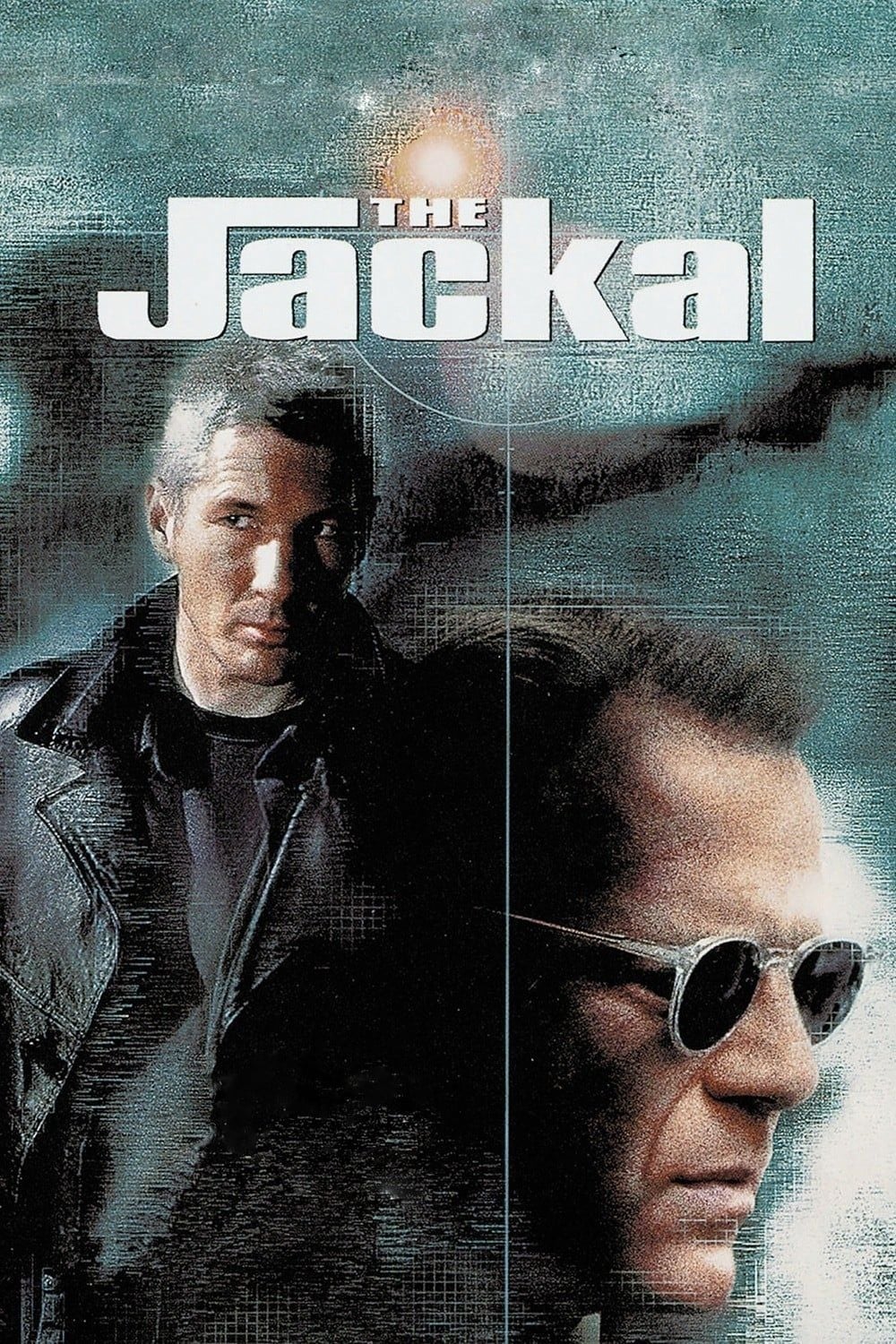
Before The Jackal had an audience, it had opponents.
In the autumn of 1996, a production was shooting in Chicago under a title that carried real weight in the thriller world: The Day of the Jackal. The people who had made that title famous were not pleased. Frederick Forsyth, who wrote the 1971 novel, and Fred Zinnemann and John Woolf, the director and producer of the celebrated 1973 film, objected to Universal Pictures borrowing the name for a new picture with Bruce Willis and Richard Gere. They went further than objecting. They filed for an injunction.
They won, at least on the question of the name. The film that opened on November 14, 1997 was called simply The Jackal, marketed as inspired by the earlier work rather than based on it, and credited only to Kenneth Ross’s 1973 screenplay. Forsyth’s novel went uncredited. It was the first of several things the movie would lose on its way to theaters, and the last that mattered to the box office, where it opened at number one and finished with $159.3 million worldwide against a $60 million budget.
That gap, between a film that made money and a film that almost nobody defended, is the subject of this look back, 29 years to the day after its release.
For readers short on time, the record shows five things:
- The title was contested. The makers of the original blocked the name, and the film was sold as “inspired by” it.
- The script was a problem. Its writer took the job to fulfil a contract, and its director later said he never liked it.
- The best-known idea was added late. Richard Gere’s imprisoned IRA sniper was created in a rewrite.
- The set pieces were real. A Montreal subway stood in for Washington’s Metro in the finale.
- Audiences came; critics did not. A number-one opening, a B-minus CinemaScore and a 24 percent critics score.
Exhibit A: A Name Worth Fighting Over
To understand why Forsyth and Zinnemann cared, it helps to know what they had built. The 1971 novel followed a professional assassin hired to kill a head of state, and a police investigator racing to identify him. The 1973 film, directed by Zinnemann and starring Edward Fox, turned that premise into one of the most admired procedural thrillers of its era. It had no need for a love story or a chase through a subway. Its pleasures were patience and method.
The 1997 film kept the idea of a hired killer and a hunt, then changed nearly everything else. It moved the action to the United States, replaced French politics with Russian organized crime, and added characters who had no equivalent in the original. In Universal’s version, the Jackal is a former KGB asset hired for $70 million by an Azerbaijani crime boss seeking revenge for his brother’s death in a joint FBI and Russian police operation.
The objections were not only about taste. A famous title is an asset, and the original’s creators had watched a studio put it on a very different kind of movie. The studio pushed back, the filmmakers escalated, and the injunction followed. Edward Fox, the original Jackal, reportedly turned down a cameo in the new film.
- 1971Frederick Forsyth publishes The Day of the Jackal.
- 1973Fred Zinnemann’s film adaptation, with a screenplay by Kenneth Ross, reaches theaters.
- August 19, 1996Principal photography begins on Universal’s remake, still titled The Day of the Jackal.
- October 28, 1996The Los Angeles Times reports that the original filmmakers are publicly assailing the new film and its use of the classic title.
- November 30, 1996Principal photography wraps after locations in North America and Europe.
- February 1997Variety reports on the dispute under the headline “2nd ‘Jackal’ raises hackles.”
- November 14, 1997Universal releases The Jackal in the United States, marketed as inspired by the earlier film.
- April 28, 1998The film arrives on VHS, DVD and LaserDisc.
- 2024A new television series adapts Forsyth’s novel, the second screen version to use its title.
A Script in Search of an Author
Chuck Pfarrer wrote the first draft, and he did not want to. He was finishing a three-year deal at Universal when the project was offered to him. He said no, then agreed to write it to satisfy his contractual obligations to the studio.
Kevin Jarre, who is credited as a producer, then rewrote the script and contributed its most distinctive element: Declan Mulqueen, an imprisoned Provisional IRA sniper who agrees to help the FBI catch the Jackal in exchange for his freedom. The character gave the film its second lead and its central relationship, a duel between two men who share a skill set and almost nothing else.
Director Michael Caton-Jones, previously known for This Boy’s Life and Rob Roy, later said in an interview with The Washington Post that he regretted not being on hand to supervise and improve the screenplay. He had never liked it, he said, and found it far too long.
“I really made the film in the editing room”
The composer was no happier. Carter Burwell, who would go on to score the Coen brothers’ films, including No Country for Old Men, disliked the script and disapproved of the remix of his score by producer Danny Saber. His music for the film was never released on CD, although he later put select cues on his own website.
Subject One: The Assassin
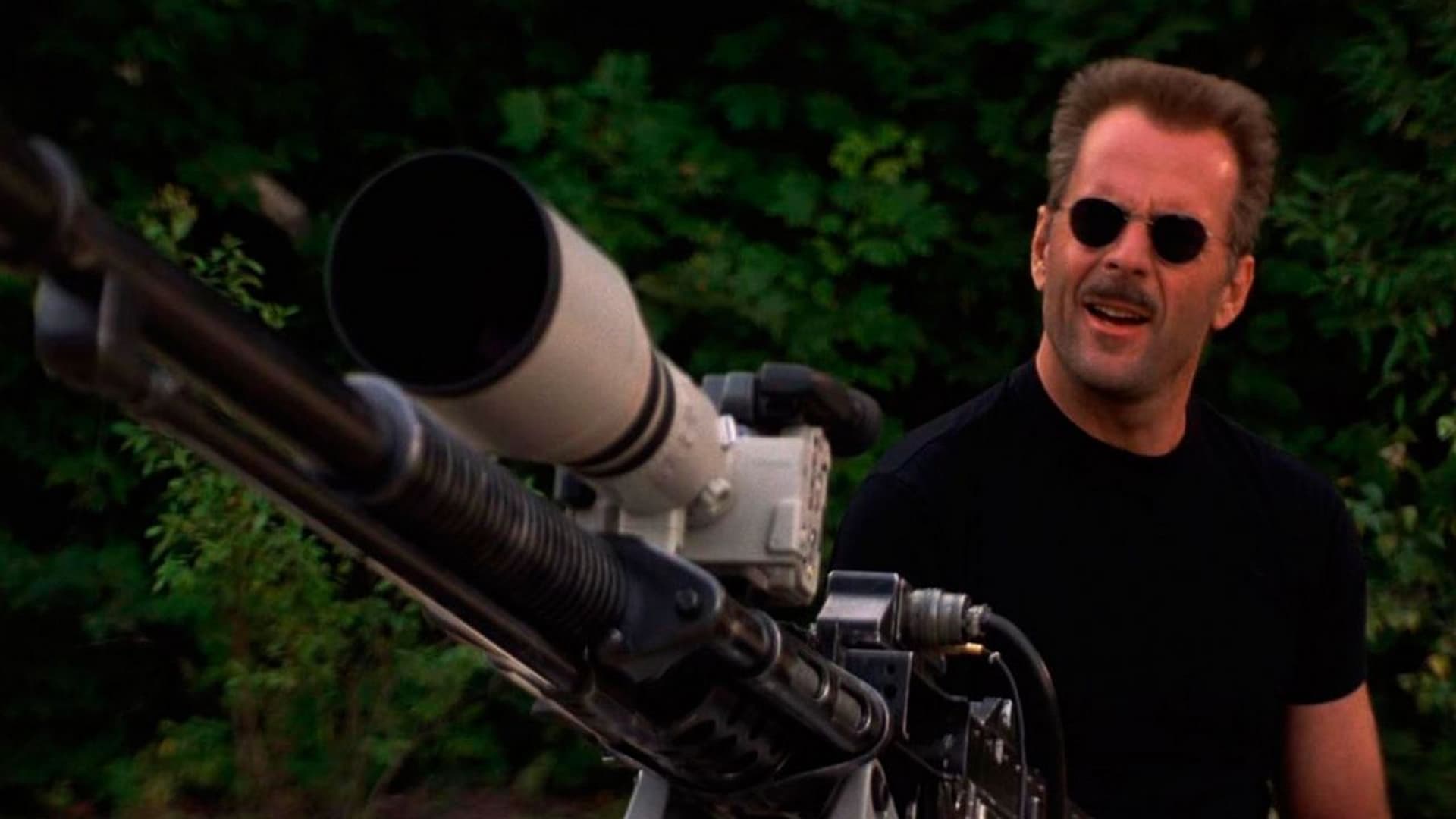
Bruce Willis was at the peak of his star power in 1997, and the film uses that. His Jackal is a man of many faces, a master of disguise and forged identification who treats each job as an engineering problem. He collects a large-caliber weapon in Montreal, kills a hijacker with a poisonous chemical and has a gunsmith build a remote mount for the rifle, then disposes of the gunsmith when the man tries to squeeze him for more money.
The gunsmith, Ian Lamont, is played by a young Jack Black. The cast list is filled with names that would become more familiar later: J. K. Simmons as an FBI agent, Daniel Dae Kim, Sophie Okonedo as a document forger and, as himself, the talk-show host Larry King. Tess Harper plays the First Lady, the film’s intended target, a role that places her a decade before she would appear in the Coens’ Texas thriller.
The Jackal’s route runs from Montreal across the Great Lakes to Chicago and down to Washington, where he plans to kill the First Lady during a public speech with a weapon concealed in a parked minivan and fired by remote control. It is an elaborate scheme, and the film takes pleasure in each stage of it.
Subject Two: The Hunter
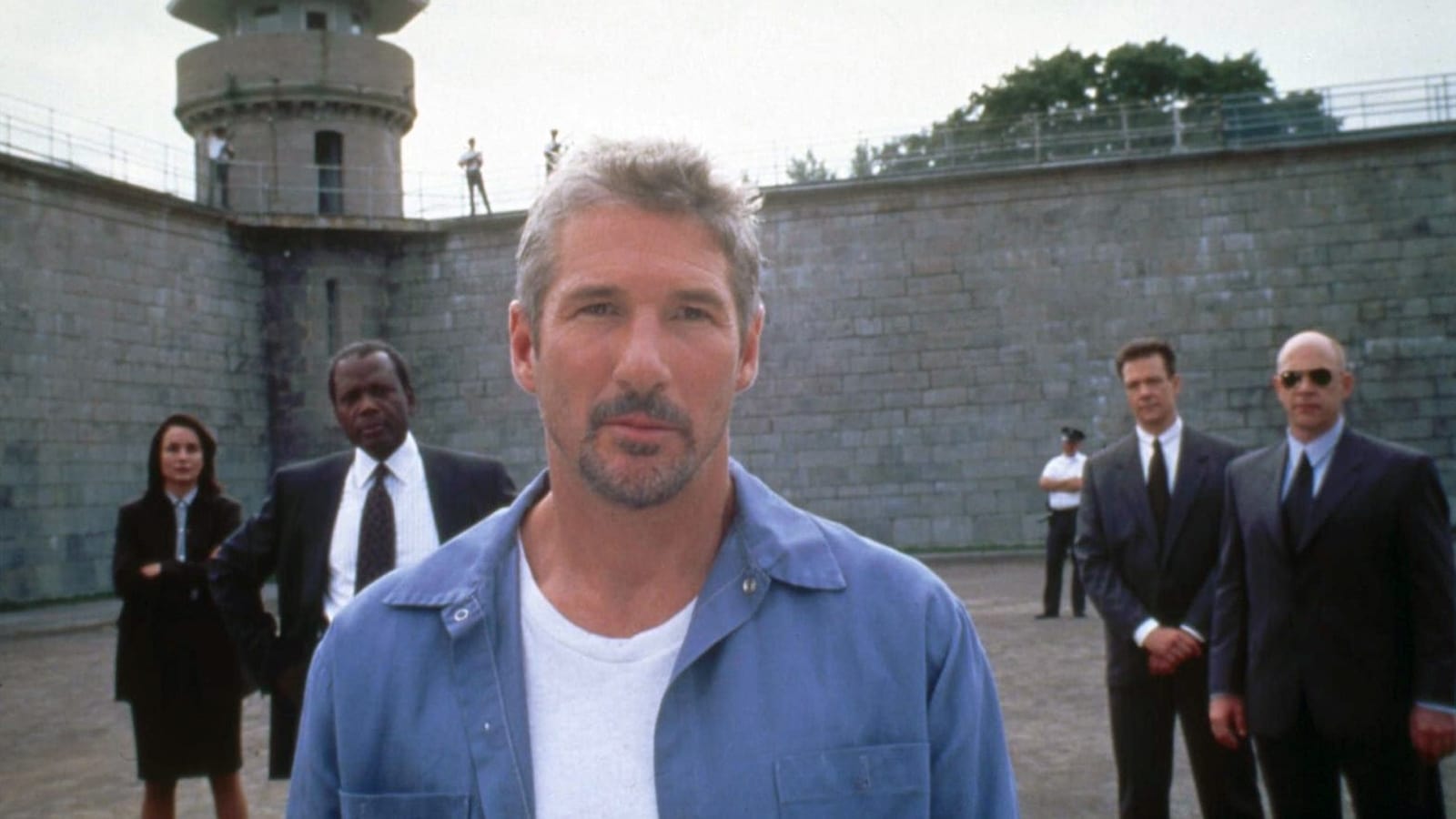
Richard Gere’s Declan Mulqueen is the film’s emotional center, and the part that most divided viewers. He is a former sniper held in prison, recruited by FBI Deputy Director Carter Preston and a Russian police major, Valentina Koslova, because he once knew the Jackal. He has his own reasons for wanting him found: the Jackal wounded his former lover, an ETA militant named Isabella Zancona, in Libya, and she lost their unborn child.
Gere’s Irish accent drew mixed reviews, and it earned him a nomination for Worst Fake Accent at the Stinkers Bad Movie Awards. He lost to Jon Voight, who was cited for two other 1997 films. It is a small footnote, and an unfair one, since the role is largely a physical and emotional performance in which accent matters less than endurance.
Sidney Poitier plays Preston, the FBI official who runs the operation, in what was his final theatrically released film role. It is a quiet, authoritative performance, and it gives the film a measure of dignity that its plot sometimes lacks. Diane Venora, as Koslova, and Mathilda May, as Zancona, round out a cast that is stronger than the script it was given.
Stories about hunters who must borrow the skills of the people they chase are a thriller staple. Every Movie Plug’s Today in Cinema: The Departed Turns 20 looks at another film built on a cat-and-mouse arrangement between men on opposite sides of the law.
Tradecraft: Where It Was Shot
Principal photography ran from August 19 to November 30, 1996, across an unusually wide set of locations. Chicago, Washington, Richmond and Wilmington stood in for much of America. Moscow, Helsinki and Porvoo in Finland supplied Russia. London, Montreal and Colleton County, South Carolina were also used, and the studio interiors were built at Carolco Pictures Studios in Wilmington and at Pinewood Studios in England.
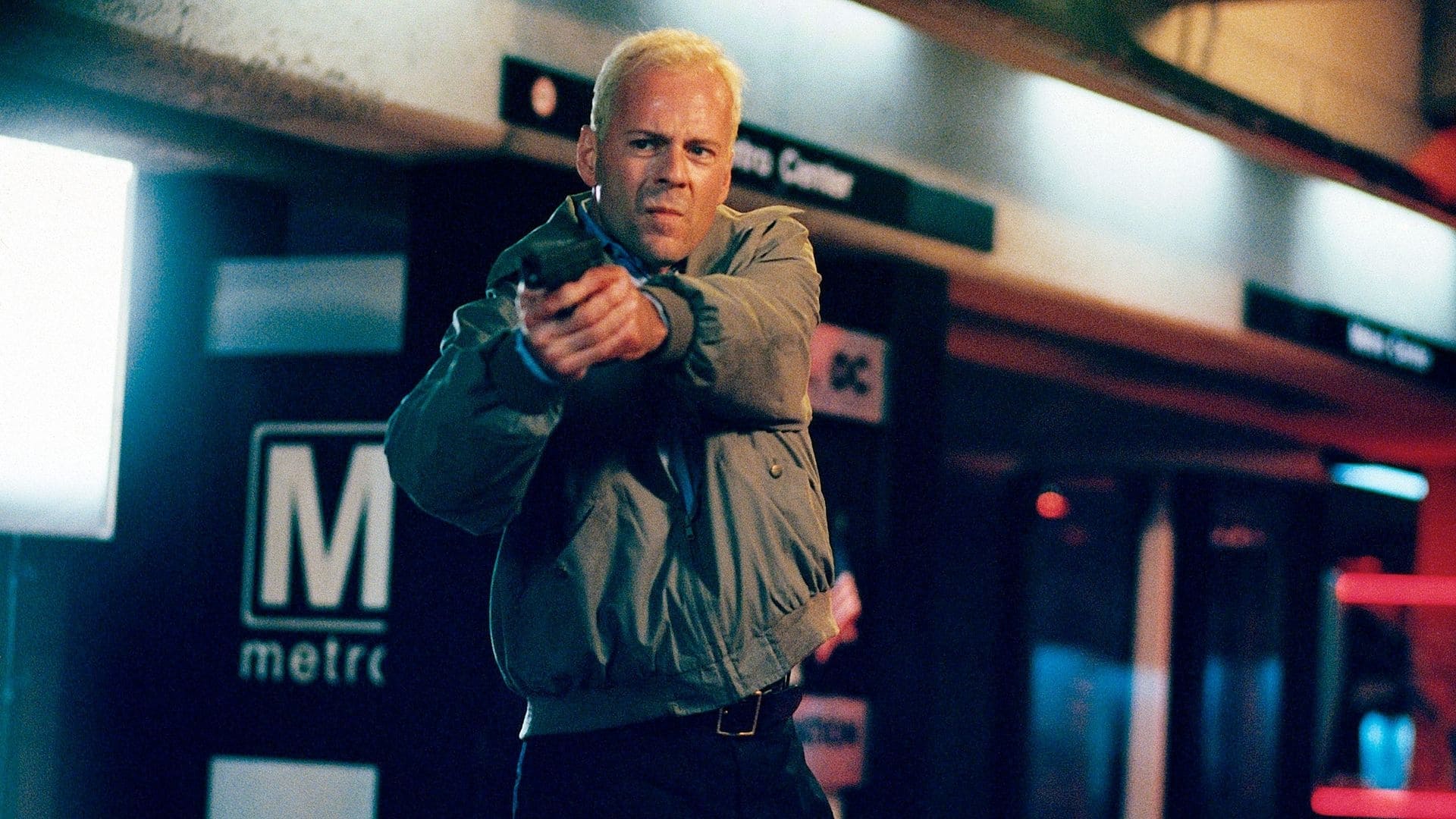
The climactic chase is the film’s most memorable set piece. Though it is set in the Washington Metro, it was filmed in the Montreal Metro, which doubled for the American subway. The sequence, with its tunnels, its hostage and its last-minute rescue, is the closest the film comes to the kind of mechanical suspense found in a chase film. Every Movie Plug’s recent Today in Cinema, November 12: Sixteen Years Down the Line, Unstoppable Still Refuses to Brake looks at how another thriller of this era built its excitement from rails and machinery.
A Test Screening, a Cheer and a Phone Call
One production story reached beyond the film industry. In an early test-screened version, the Jackal, hiding out in a gay bar, shoots an innocent man, and the audience loudly cheered the killing. The reaction came to the attention of GLAAD, and the group’s entertainment media director, Chaz Bono, spoke with producer Sean Daniel, who arranged to have the scene re-edited.
Willis, for his part, successfully fought to keep a same-sex kiss in the finished film. The episode is a useful reminder of how test audiences, advocacy groups and studios shaped what reached theaters in the 1990s, and how a single scene could change in the editing room.
Opening Weekend: Number One, With Help From Abroad
The Jackal opened on November 14, 1997 and topped the box office with $15.2 million, a result that pushed down the previous week’s winner. That film was Starship Troopers, which fell to second place after a 54 percent drop in its second weekend, a story told in Every Movie Plug’s Today in Cinema, November 7: Starship Troopers Invades Theaters in 1997.
The film earned about $55 million in the United States and Canada and $104.4 million overseas, which means roughly two-thirds of its total came from abroad. That ratio is typical of action films built around international stars, and it explains why Universal considered the film a success despite its reception. Audiences polled by CinemaScore gave it a B-minus.
The Verdict
Critics were not kind. Rotten Tomatoes lists a 24 percent approval rating from 33 reviews, with an average score of 4.6 out of 10, and Metacritic gives it 36 out of 100. Roger Ebert, who called it a glum and curiously flat thriller, went on to include it on his worst-of-1997 list, describing it as a retread of the 1973 film, cruder and dumbed down. Ruthe Stein of the San Francisco Chronicle thought it more preposterous than thrilling, and Russell Smith of the Austin Chronicle named it the most tedious movie of the year.
The complaints centered on a plot critics found preposterous and a pace they found tedious. A retrospective on the genre site JoBlo has since asked whether the film is better than its reputation, a question more viewers seem willing to entertain with each passing year.
The trouble comes partly from the comparison the film invites. A movie that borrows a famous title is measured against the work that earned it, and few would survive that test.
The Jackal Never Left
The story did not end in 1997. In 2024, a television series adapted Forsyth’s novel for a new generation, restoring the original premise and title, and making the 1997 film the middle entry in a three-part history of the same idea. The Blu-ray era also gave the film a second life: it was released on disc in 2010 and paired with Mercury Rising in a Willis double feature the following year.
The film now carries an additional weight. Willis, whose career is bound up with it, stepped away from acting in 2022 after a diagnosis that his family later identified as frontotemporal dementia, and Poitier, who died in 2022, made this one of his last appearances on a theater screen. Watching it today, it is easy to see it as a document of a moment: two big stars at their commercial height, a veteran in a farewell part and a studio trying to turn a classic into a franchise.
The hitman remains a durable figure in popular culture. Lionsgate has just greenlit an animated prequel to the John Wick films, as reported in Lionsgate Greenlights Animated John Wick Prequel as Keanu Reeves Signs On to Return, and Netflix has announced a London-set revenge thriller with Jason Statham, covered in Jason Statham and Guy Ritchie Reunite for Netflix Revenge Thriller Dogfight. The spy side of the genre is also in the headlines, with the search for the next 007 reportedly including a screen test for Robert Pattinson, a story told in Robert Pattinson Reportedly Screen-Tested for James Bond as the 007 Casting Race Tightens. The history of the franchise they are all measured against is explored in Today in Cinema, November 6: Spectre Opens in America in 2015.
As for The Jackal, it remains what it was in 1997: a competent, overlong, expensive thriller that made money and lost an argument. It did not need the original’s name to earn its box-office total, but it needed more than it had to earn the original’s respect.
Credits and Sources
- Images: Universal Pictures, Mutual Film Company and Alphaville Films, via TMDB. Related-story thumbnails: Every Movie Plug.
- Production, cast, locations, release and reception: The Jackal (1997 film), Wikipedia; Box Office Mojo; The Numbers
- The title dispute: Los Angeles Times, 1996; Variety, 1997
- Script and score: The Washington Post, 1997; Los Angeles Times, 1997; Carter Burwell
- Test screening: Entertainment Weekly, 1997. Montreal Metro: Cult MTL
- Reviews: Roger Ebert; The Austin Chronicle; Rotten Tomatoes; Metacritic; JoBlo
- Every Movie Plug news referenced: John Wick animated prequel; Statham and Ritchie Dogfight; Pattinson and 007
News
More on Every Movie Plug
 Film News Lionsgate Greenlights Animated John Wick Prequel as Keanu Reeves Signs On to Return Lionsgate has greenlit its animated John Wick prequel about the Impossible Task, with Keanu Reeves voicing the assassin and Shannon Tindle directing. Read the story →
 Casting News Robert Pattinson Reportedly Screen-Tested for James Bond as the 007 Casting Race Tightens Robert Pattinson reportedly screen-tested for James Bond in London, joining Callum Turner, Jack Lowden and Josh O’Connor in Amazon MGM’s 007 search. Read the story →
 Film News Jason Statham and Guy Ritchie Reunite for Netflix Revenge Thriller Dogfight Netflix has announced Dogfight, a London-set revenge action film starring Jason Statham and written and directed by Guy Ritchie, with production due to start in early 2027. Read the story →
Articles
More on Every Movie Plug
 Today In Cinema Today in Cinema, November 12: Sixteen Years Down the Line, Unstoppable Still Refuses to Brake Unstoppable opened November 12, 2010. Why Tony Scott’s final film, a runaway-train thriller built on a true story, still moves faster than most blockbusters. Read the story →
 Today In Cinema Today in Cinema, November 7: Starship Troopers Invades Theaters in 1997 and Gets Mistaken for What It Mocks Starship Troopers opened November 7, 1997 and was called pro-fascist. How Verhoeven’s satire was made, why it flopped and why it is now a cult classic. Read the story →
 Today In Cinema Today in Cinema, November 6: Spectre Opens in America in 2015 and Takes Bond From Mexico City to a Sahara Crater Eleven years after Spectre opened in the US, how Bond 24 revived Blofeld, filmed a Mexico City parade that did not exist and won an Oscar for its theme song. Read the story →