Today in Cinema looks at one major film from movie history that reached audiences on this date: how it was made, how it was received and why it still matters.
On November 9, 2007, a film with almost no music, a hitman armed with a cattle gun and a sheriff who ends the story by admitting he does not understand what he has seen opened in just 28 American theaters. No Country for Old Men earned about $1.2 million that weekend, an average of roughly $43,800 per theater, and it gave no sign that it would become one of the most honored American films of the decade. Twelve days later it expanded to 860 theaters, and three months after that it won four Academy Awards, including Best Picture.
Nineteen years on, the Coen brothers’ adaptation of Cormac McCarthy’s 2005 novel is widely regarded as their finest film and as one of the greatest of the 21st century. It is also, to date, the last Western to win the Oscar for Best Picture. This edition of Today in Cinema looks at how the film was made, why it sounds the way it does, who almost played its main roles, how it was released and what its famously abrupt ending is really about.
Because the film is nearly two decades old, this article discusses its plot and ending openly.
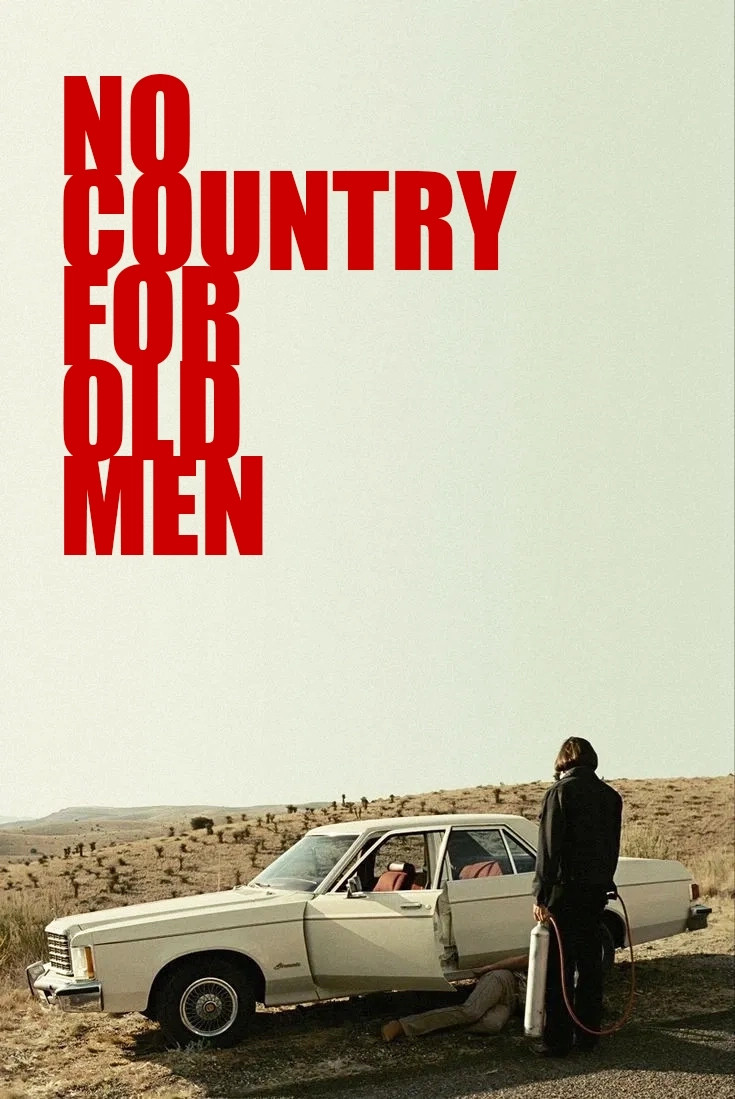
No Country for Old Men (2007) at a Glance
| Premiere | May 19, 2007, Cannes Film Festival (in competition) |
|---|---|
| US release | November 9, 2007 (limited); wide release November 21, 2007 |
| Directors and writers | Joel and Ethan Coen, from Cormac McCarthy’s 2005 novel |
| Producers | Scott Rudin, Joel Coen and Ethan Coen |
| Starring | Tommy Lee Jones, Javier Bardem, Josh Brolin, Woody Harrelson, Kelly Macdonald, Garret Dillahunt, Tess Harper, Barry Corbin |
| Cinematography | Roger Deakins |
| Editing | “Roderick Jaynes” (the Coens’ shared pseudonym) |
| Music | Carter Burwell |
| Studios | Miramax and Paramount Vantage |
| Running time | 122 minutes |
| Rating | R |
| Budget | $25 million |
| Gross | About $74 million domestic and $171.6 million worldwide |
| Oscars | Four: Best Picture, Best Director, Best Adapted Screenplay, Best Supporting Actor (Javier Bardem) |
A Briefcase, a Border and Three Men Who Never Share a Frame
The story is set in 1980 in the desert of West Texas. Llewelyn Moss, a Vietnam veteran and welder played by Josh Brolin, is hunting pronghorn when he finds the aftermath of a drug deal gone wrong: dead men, a truck full of heroin, one dying survivor and a case holding $2 million. He takes the money, and that decision sets three men in motion. Anton Chigurh (Javier Bardem), a hitman with a strict private code, is hired to recover it. Sheriff Ed Tom Bell (Tommy Lee Jones) investigates the failed deal and trails the violence from one motel to the next.
The structure is unusual. As The New York Times critic A. O. Scott observed, the three leads occupy the screen one at a time and almost never appear in the same frame, even as their fates become more closely tied. Moss runs, Chigurh hunts and Bell arrives too late to change anything. Stories in which the pursuit matters more than the capture are a staple of the neo-noir tradition, and Every Movie Plug has covered another unsettling night-time character study in Today in Cinema, October 31: Nightcrawler Opens on Halloween 2014.
How the Coens Came to Cormac McCarthy
Producer Scott Rudin bought the film rights to McCarthy’s novel and suggested it to the Coens, who were at the time trying to adapt James Dickey’s To the White Sea. By August 2005, they had agreed to write and direct. The attraction was both the book’s strong sense of place and the way it played with genre. Joel Coen said they were naturally drawn to subverting genre expectations, and he liked that the bad guys never really meet the good guys, since McCarthy declined to follow formula.
The film was the Coens’ first adaptation of a major American novel, and it was a faithful one. The brothers have joked that one of them typed while the other held the book open flat. They compressed rather than invented. A teenage runaway who appears late in the book was dropped, as was much of Bell’s backstory, and Carla Jean’s reaction to Chigurh at the end was changed. Kelly Macdonald has said that in the book she falls apart, while in the film she has been through so much that she has a quiet acceptance. Neither brother met McCarthy until filming; Ethan later said that hearing the author chuckle a couple of times during a screening felt like a seal of approval.
The title comes from the first line of W. B. Yeats’s poem “Sailing to Byzantium,” a lament for a world in which the old are no longer at home, and that sense of a society out of alignment runs through Bell’s narration. Faithful adaptation on a modest budget is a recurring theme in the guide How to Film, Direct and Produce Your Own Movie: A Complete Guide for First-Time Filmmakers, which covers how planning decisions made early can save money later.
The Casting That Nearly Went Another Way
Several of the film’s defining performances nearly belonged to someone else. The role of Llewelyn Moss was first offered to Heath Ledger, who turned it down to spend time with his newborn daughter. Garret Dillahunt auditioned five times for Moss and was instead given the smaller part of Bell’s deputy, Wendell. Josh Brolin was not the Coens’ first choice; he enlisted the help of Quentin Tarantino and Robert Rodriguez to make an audition reel while they were shooting Grindhouse, and his agent eventually secured a meeting that won him the part.
Javier Bardem nearly left the film because of scheduling conflicts. English actor Mark Strong was put on standby to take over as Chigurh, but the conflicts were resolved and Bardem stayed. That outcome earned him an Oscar and made the haircut of his character one of the most recognizable looks of the decade. Hollywood history is full of these near-misses, and Every Movie Plug collects more of them in 10 Actors Who Turned Down Roles That Became Legendary. Casting is also a live conversation in current news: James Gunn has said he wants the best actor rather than a default movie star for the DCU’s Batman, as covered in James Gunn on DC Casting: Batman “Isn’t Far Away,” Harley Quinn Is Open and Man of Tomorrow Is Nearly Cast.

Shooting in New Mexico and West Texas, Next Door to There Will Be Blood
The production was a 50/50 partnership between Miramax and Paramount’s classics division, Paramount Vantage, with a total budget of $25 million, at least half of it spent in New Mexico. Santa Fe, Albuquerque and Las Vegas, New Mexico, stood in for the border towns of Eagle Pass and Del Rio, while other scenes were filmed around the West Texas towns of Sanderson and Marfa. The Mexican town square was shot in Piedras Negras, Coahuila.
Marfa also hosted a second production that season. Paul Thomas Anderson’s There Will Be Blood, another Miramax-Paramount partnership and an Oscar rival, was shooting nearby at the same time. The two films would compete for the top prizes the following February, and the Coens were forced to scrap a full day of filming when smoke from the oil-derrick preparations for Anderson’s film drifted into their scenes and ruined the shots.
Cinematographer Roger Deakins, on his ninth film with the Coens, wanted a look that was realistic, sparse and not stylized. The brothers storyboard their films in advance, and Deakins has said that only about a dozen shots they filmed did not make the final cut. The production shot roughly 250,000 feet of film, compared with the 700,000 feet to a million that productions of similar size often use. He never uses a zoom. In the gas-station coin-toss scene, the camera pushes forward so slowly that the audience does not notice the movement, an effect Deakins says is more powerful than a zoom because the audience itself seems to move closer.
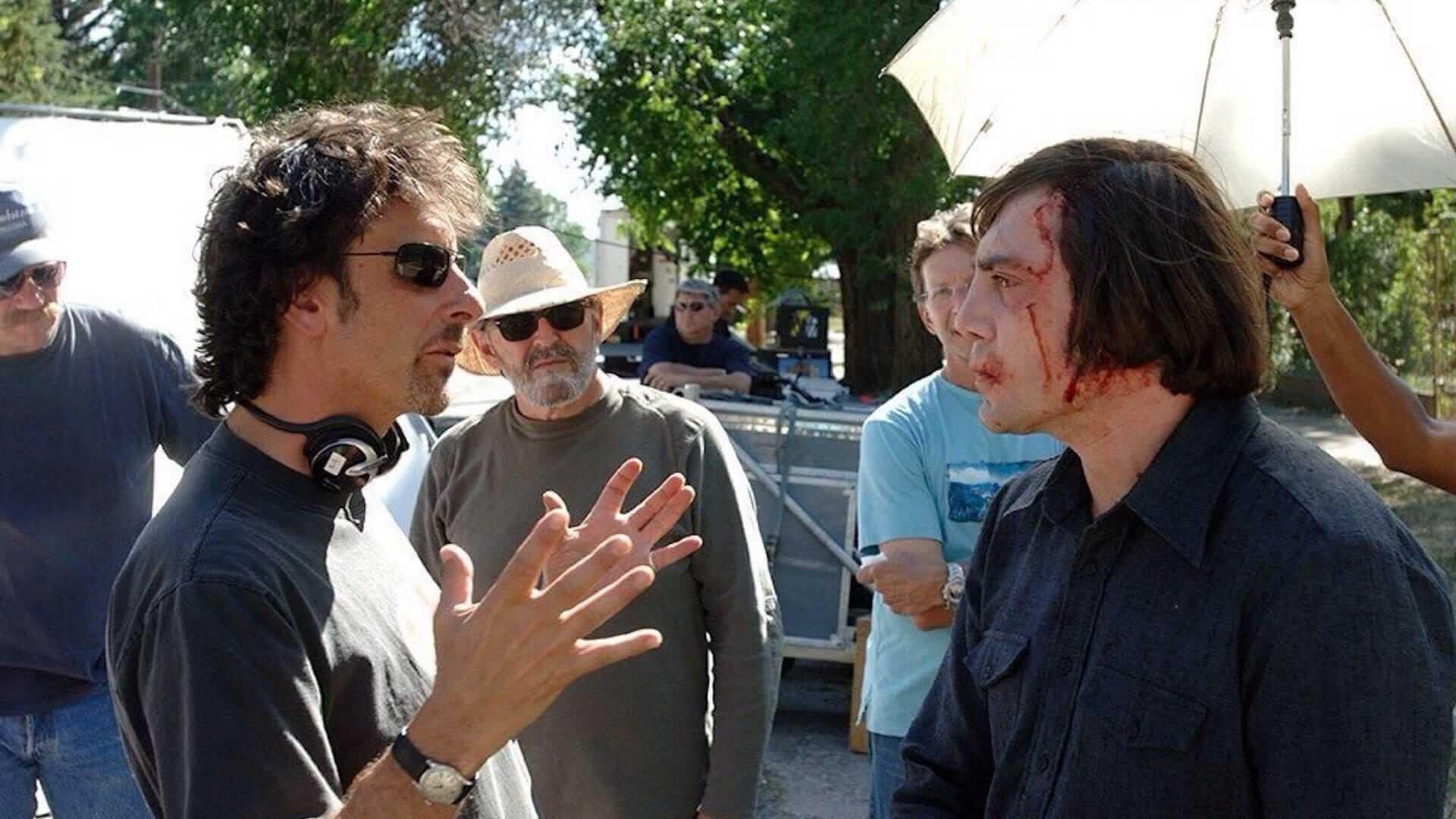
The Sound of Almost Nothing
The film’s most distinctive feature is how quiet it is. Ethan Coen proposed minimizing the score, and he persuaded a skeptical Joel to go along. Composer Carter Burwell found that most conventional instruments did not suit the minimalist sound he had in mind, so he used singing bowls, the standing metal bells used in Buddhist meditation, which produce a sustained tone when rubbed. The film contains only about 16 minutes of music in total, several of them in the closing credits.
Sound editor Skip Lievsay, another longtime Coen collaborator, built tension from emphatic effects such as gunshots and from ambient noise such as engines and prairie wind. He told The New York Times that the idea was to remove the safety net that lets an audience feel it knows what will happen. Burwell tuned a swelling hum under the coin-toss scene to the 60-hertz frequency of a refrigerator. The foley for Chigurh’s captive bolt pistol was made with a pneumatic nail gun. In the hotel scenes, the beeping of a tracking transponder and the sound of footsteps on a hallway floor do the work that a conventional thriller score would do.
Chigurh, the Coin and a Very Careful Kind of Violence
Anton Chigurh opens the film by strangling a deputy, and he later kills a man with a bolt gun. He then spares a gas-station owner because the man calls a coin toss correctly. His philosophy is that fate, not he, decides who lives, a position critics have read as bad faith, since he hands responsibility to the coin rather than taking it himself. Variety critic Todd McCarthy described him as someone who walks hand in hand with death. A 2014 study by researchers at the Free University of Brussels went further, calling him the most clinically accurate portrayal of a psychopath in film to that date.
The violence is frank but also restrained. Joel Coen told Charlie Rose that they could not imagine soft-pedaling it, because the story is about a person confronting a brutal and arbitrary world. Critic Kenneth Turan wrote that the film does not celebrate or smile at violence but despairs of it. Several of the most chilling moments are quiet ones: Chigurh checks the soles of his boots as he leaves Carla Jean’s house, and Bob Mondello of NPR noted that by then no one needs to be told what he is checking for. The deaths of Moss and of the bounty hunter Carson Wells happen off-screen or with the camera turned away.
Villains with a rigid internal logic recur throughout cinema, and Every Movie Plug looks at a different group of them in When Movie Villains Were Right: 10 Antagonists Who Had a Point. Chigurh is not in that category, since his code excuses nothing, but he is a key example of how a screen antagonist can be built from principle instead of motive.
Neo-Western, Neo-Noir or Both?
The film’s genre has been argued over since Cannes. Joel Coen said it was interesting in a genre way because it subverts genre expectations, but he did not think of it as a Western, since that suggests horses, six-guns and hitching posts. Ethan said it is sort of a Western and sort of not. Critics generally call it a neo-Western: it takes place in the West and has a lawman at its center, but it involves a drug deal, four-wheel-drive trucks and semiautomatic weapons. Philosopher Richard Gillmore described it as a Western with a tragic, existential noir ending.
The pairing explains the film’s mood. In a classic Western, a man of skill and perseverance overcomes the odds. In noir, the odds win. Bell, an aging lawman in a country he no longer understands, is a Western hero in a noir story, and the film is about the point at which the old code stops working. It also recalls earlier Coen films, particularly Blood Simple, Raising Arizona and Fargo. Fargo is the closest relative, since it also features a decent small-town lawman confronted by out-of-town killers, although Ethan Coen has said the similarity was accidental.
The strain between old codes and new threats is also a feature of current Western-flavored television. Walton Goggins, who plays the Ghoul, a former cowboy actor turned wasteland gunslinger, has just finished filming the third season of Fallout, covered in Walton Goggins Wraps Fallout Season 3 With a Farewell Message From California.
The Ending: Two Dreams and a Sheriff Who Quits
The film’s last act has divided viewers, because its central hunt ends without a confrontation. Moss is killed off-screen by Mexican gunmen, and Bell finds the aftermath in a motel room. Chigurh visits Carla Jean, offers her the coin and, when she refuses to call it, tells her he must keep his word. She tells him the choice is his. He leaves, checks his boots, and is injured in a car crash moments later, then pays a boy for a shirt to make a sling and walks away. The film never settles accounts with him.
Bell, meanwhile, retires. A relative and former lawman, Ellis, tells him that vanity makes him think he could have stopped the world from changing. In the final scene, Bell tells his wife about two dreams: in the first, he loses money his father gave him, and in the second, his father rides past him in a snowy pass carrying fire in a horn and goes on ahead to light a campfire. The cut to black comes in the middle of the story rather than at a conventional climax.
That choice was the main complaint of the film’s critics. David Denby of The New Yorker faulted the Coens for disposing of Moss so casually after the audience had invested in him, and Stephen Hunter of The Washington Post felt the film offered almost no character development. Supporters see a deliberate refusal of resolution: the message is that the disorder Bell encounters has no neat end, and the only consolation available is the memory of an older generation that kept a fire burning. Debates about what an ambiguous final shot means are a perennial topic, and Every Movie Plug explores another famous example in The Ending of The Graduate Explained.
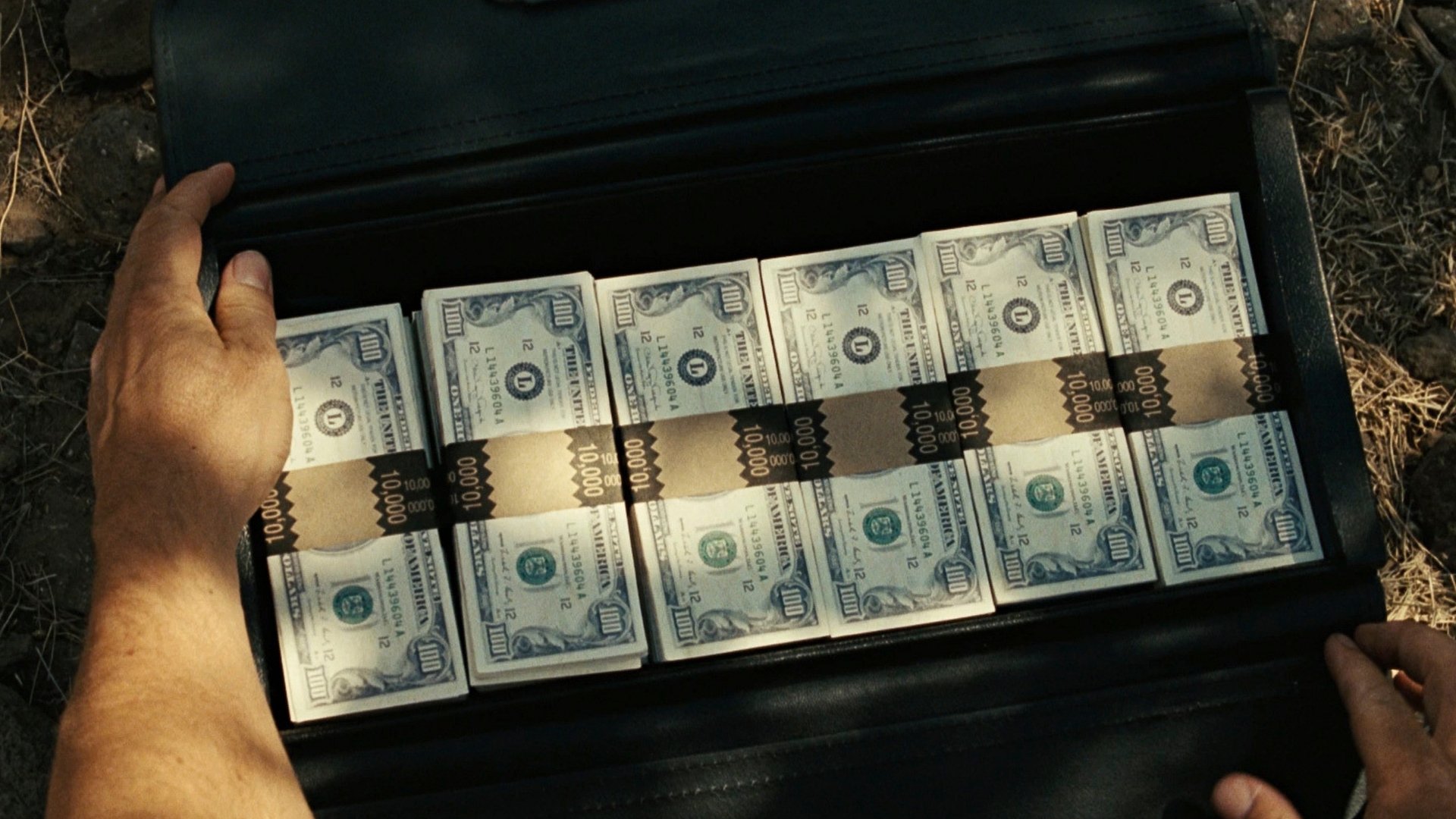
Release Day: 28 Theaters, a Slow Build and a Gradual Strategy
Miramax used a gradual-release approach that was typical of prestige films. After its Cannes premiere on May 19, where it was nominated for the Palme d’Or, No Country for Old Men opened in limited release on November 9, 2007, in 28 theaters. On November 21 it expanded to 860 theaters and earned $7.78 million over that first wide weekend. It later grew to 2,037 theaters and ranked fifth at the US box office on the weekend ending December 16, the same weekend as the record-setting opening of I Am Legend.
The final domestic total was about $74 million, with the worldwide gross reaching $171.6 million on a $25 million budget. It was the Coens’ biggest box-office hit until True Grit surpassed it in 2010. Its earnings also reflect an unusual pattern: grosses grew after each major nomination and win rather than collapsing after the first weekend. By one count it is among the lowest-grossing Best Picture winners of recent decades, although its return on investment was strong. The contrast with the previous year’s winner is striking. The Departed followed a conventional blockbuster curve of a big opening and a steady decline, a path that Every Movie Plug describes in Today in Cinema: The Departed Turns 20.
The release was part of an unusually crowded fall for crime and prestige drama. A week earlier, American Gangster had opened as a studio epic about a heroin kingpin, and the two films have remained a favorite pairing for viewers comparing different approaches to the same genre.
What Critics Said
Critical response was overwhelming. Rotten Tomatoes reports a 93 percent approval rating from 288 reviews, and Metacritic gives the film 92 out of 100 from 39 critics, a score indicating universal acclaim. It appeared on more critics’ ten-best lists for 2007 than any other film, 354 in all, and it was named the best film of the year by more critics, 90, than any other. The National Board of Review chose it as the year’s best film, and the American Film Institute listed it as one of its Movies of the Year.
Peter Travers of Rolling Stone called it a new career peak for the Coens. Peter Bradshaw of The Guardian described it as the best of their careers so far, and Time’s Richard Corliss picked it as the best film of the year. Roger Ebert singled out Tommy Lee Jones’s opening narration, which he said was delivered with extraordinary precision and contained emotion. Not every critic agreed. Stephanie Zacharek of Salon thought the film felt more like an exercise than a living movie, and Sukhdev Sandhu of The Daily Telegraph accused the Coens of pseudo-profundity.
Its reputation has only grown. In 2021, the Writers Guild of America ranked its screenplay fifth on its list of the 101 greatest screenplays of the 21st century. In 2025, The New York Times placed it sixth on its list of the 100 best movies of the 21st century and third on the readers’ list, and Rolling Stone ranked it 31st on its own list. Denis Villeneuve named it among his favorite films in 2023, calling it the Coens’ magnum opus, and in December 2024 the Library of Congress selected it for the National Film Registry.
Oscar Night: Four Wins and a Haircut
At the 80th Academy Awards on February 24, 2008, the film received eight nominations and won four: Best Picture, Best Director, Best Adapted Screenplay and Best Supporting Actor for Bardem. The other nominations were for Best Film Editing, credited to Roderick Jaynes, Best Cinematography for Deakins, Best Sound Editing and Best Sound Mixing. It was only the second time in Oscar history that two people shared the directing award, after Robert Wise and Jerome Robbins for West Side Story.
Bardem became the first Spanish actor to win an Academy Award. In his acceptance speech, he thanked the Coens for being crazy enough to think he could play the part and for putting one of the worst haircuts in history on his head, and he dedicated the award to Spain and to his mother, the actress Pilar Bardem. Joel Coen said that making movies now did not feel much different from what he and Ethan had done as children with a Super 8 camera, and he thanked the audience for letting them keep playing in their corner of the sandbox.
The film also won the Golden Globes for Best Supporting Actor and Best Screenplay, the Directors Guild of America award for the Coens, and three BAFTAs, for Best Director, Best Cinematography and Best Supporting Actor. Bardem’s later work has kept him in the center of major releases: he is part of the ensemble of Dune: Part Three, which Every Movie Plug covers in the Dunesday Survival Guide, and he also played the villain in a Bond film, a franchise that Every Movie Plug revisits in Today in Cinema, November 6: Spectre Opens in America in 2015.
Legacy: The Last Western to Win Best Picture
The film is the most recent Western to win the Academy Award for Best Picture, following Cimarron in 1931, Dances with Wolves in 1990 and Unforgiven in 1992. That is a fitting distinction for a film about the end of a tradition. Its influence can be seen in a generation of crime thrillers that rely on silence, long takes and antagonists who are less characters than forces, and in a revival of the contemporary Western in film and television.
Josh Brolin went on to play Thanos in Avengers: Infinity War and Avengers: Endgame, Tommy Lee Jones and Woody Harrelson continued a long run of character roles, and the Coens have continued to work both together and separately. The film itself has been steadily restored and reissued. A Criterion Collection 4K and Blu-ray edition was released on December 10, 2024, and the Coens’ own pseudonym for editing, Roderick Jaynes, remains one of cinema’s better in-jokes.
Another hard-edged crime story with a revenge at its center is in the works at Netflix: Jason Statham and Guy Ritchie Reunite for Netflix Revenge Thriller Dogfight covers the London-set project, which is due to begin production in early 2027.
How to Watch No Country for Old Men Today
The film is available on DVD, Blu-ray and 4K Ultra HD Blu-ray, and it has appeared on streaming services and for digital rental over the years, though availability changes often, so check current listings before you plan a viewing. The 2024 Criterion release is the most complete home edition, and earlier discs included featurettes, a Q&A hosted by Spike Jonze and interviews with the cast and the Coens.
For a first-time viewer, the film rewards close attention to sound. Watch it in a quiet room, with the volume up, and notice how many scenes depend on a creak, a hum or a footstep. On a second viewing, the choices that frustrate some audiences on the first, such as the off-screen deaths and the abrupt ending, are easier to read as intentional.
Frequently Asked Questions About No Country for Old Men
When was No Country for Old Men released?
It premiered at the Cannes Film Festival on May 19, 2007, opened in limited release in 28 US theaters on November 9, 2007, and expanded to 860 theaters on November 21, 2007.
Who directed No Country for Old Men?
Joel and Ethan Coen directed, wrote and produced the film, which they also edited under the shared pseudonym Roderick Jaynes. It is based on Cormac McCarthy’s 2005 novel.
How many Oscars did No Country for Old Men win?
Four at the 80th Academy Awards: Best Picture, Best Director, Best Adapted Screenplay and Best Supporting Actor for Javier Bardem. It had eight nominations in total.
Why does No Country for Old Men have almost no music?
The Coens, led by an idea from Ethan, minimized the score to remove the safety net that tells an audience what to expect. The film has about 16 minutes of music, much of it in the credits, and builds tension from ambient sound.
What does the ending of No Country for Old Men mean?
Sheriff Bell retires, convinced he cannot understand the violence he has seen, and describes two dreams about his father. Readers and critics interpret it as a story about the decline of an older moral order and the limits of one person’s power to stop evil.
Who was originally cast in No Country for Old Men?
Heath Ledger was first offered the role of Llewelyn Moss and turned it down, and Mark Strong was on standby to play Anton Chigurh when Javier Bardem had scheduling problems.
Conclusion: A Film Built on What It Withholds
No Country for Old Men works because it trusts silence, space and an audience willing to sit with discomfort. It treats its plot as a delivery system for a mood and its villain as a question with no answer. The film began its run in 28 theaters and ended it as a Best Picture winner, and its refusal to give viewers the climax they expect is the reason it is still being discussed.
Today in Cinema returns with another film from movie history. Recent entries include 8 Mile, Starship Troopers and The Departed.
Image and Source Credits
- Lead image, two scene images and on-set image: Miramax and Paramount Vantage, via TMDB
- Related-story thumbnails: Every Movie Plug
References and Further Reading
- Production, casting, themes, release, reception and awards: No Country for Old Men (film), Wikipedia; List of accolades, Wikipedia
- Box office and release data: The Numbers; SlashFilm, “Tales From the Box Office”; AFI Catalog
- Critical reception: Rotten Tomatoes; Metacritic; Roger Ebert; The New York Times; The Guardian
- Craft: Entertainment Weekly, Roger Deakins; The New York Times, sound design; Houston Chronicle, Marfa and There Will Be Blood
- Legacy: The New York Times, 100 Best Movies of the 21st Century; Library of Congress, National Film Registry; The Criterion Collection
- Every Movie Plug news referenced: James Gunn on DC casting; Walton Goggins and Fallout; Statham, Ritchie and Dogfight
News
More on Every Movie Plug
 Film News Jason Statham and Guy Ritchie Reunite for Netflix Revenge Thriller Dogfight Netflix has announced Dogfight, a London-set revenge action film starring Jason Statham and written and directed by Guy Ritchie, with production due to start in early 2027. Read the story →
 TV News Walton Goggins Wraps Fallout Season 3 With a Farewell Message From California Walton Goggins says he has finished filming Fallout season 3, sharing an Instagram goodbye to the Ghoul makeup. Here is what the post says and what it means for the season. Read the story →
 Film News James Gunn on DC Casting: Batman “Isn’t Far Away,” Harley Quinn Is Open and Man of Tomorrow Is Nearly Cast James Gunn has said the DCU’s Batman is not cast yet but casting is close, that he wants the best actor rather than a default movie star, and that Harley Quinn will almost certainly return. Read the story →
Articles
More on Every Movie Plug
 Article The Ending of The Graduate Explained The ending of The Graduate explained: the church chase, the bus ride, the fading smiles and what Mike Nichols, Dustin Hoffman and Katharine Ross said about it. Read the article →
 Today in Cinema Today in Cinema: The Departed Turns 20, and Scorsese’s Remake of Infernal Affairs Still Plays Like a Trap Door How Scorsese remade Infernal Affairs, the casting near-misses, the Whitey Bulger link and the Oscar that finally came. Read the article →
 Today in Cinema Today in Cinema, November 2: American Gangster Opens in 2007 and Makes a Myth of a Harlem Heroin Kingpin A film that was cancelled, recast and rebuilt before it ever reached theaters became Ridley Scott’s biggest hit and one of the most argued-over true-crime movies of its decade. Read the article →