Most sequels end by promising more. Back to the Future Part II ends by interrupting itself. A lightning bolt hits the DeLorean, the car vanishes in a flash of fire, a Western Union courier turns up with a letter that is seventy years overdue, and Marty McFly sprints through 1955 to find the only person who can help him. That person takes one look at him, says that he is back from the future, and faints. Then the credits roll, and instead of a quiet dissolve to black, the audience gets a trailer for a different movie.
That choice sums up the whole film. It opened on a Wednesday, November 22, 1989, the day before Thanksgiving, which makes today its 37th anniversary, and it was built to be finished by the next film. Robert Zemeckis and Bob Gale made it back to back with a third film, packed it with more ideas than a single movie can comfortably hold and ended it on a dare. Critics at the time were divided. Time has been kinder, and the case for Part II as the boldest studio sequel of its era grows stronger every year.

A Sequel Nobody Was Planning
Zemeckis has said that a second film was never part of the original plan. The first picture was a self-contained comedy about a teenager who gets stuck in 1955 and has to engineer his parents’ romance, and its enormous success made a continuation inevitable whether its makers liked it or not. He agreed to come back on one condition: Michael J. Fox and Christopher Lloyd had to return with him. When both said yes, he sat down with Gale to work out where the story could go.
The trouble began with a single shot. The first film ends with Marty’s girlfriend, Jennifer, climbing into the DeLorean beside him and Doc, which was a charming final gag and a structural headache. Now she had to be somewhere in the sequel, and the writers later admitted that they wished they had left her at home. Gale wrote most of the first draft alone while Zemeckis was busy finishing Who Framed Roger Rabbit. The original third act was set in 1967, with Lorraine as a protesting flower child and George as a Berkeley professor. It was eventually discarded in favor of something stranger and more elegant: sending Marty back to the weekend of the first movie and making the audience watch it again from the wings.
The economics were just as unusual. To keep costs down, and to take advantage of a break in Fox’s schedule as Family Ties was ending its run, the studio shot Part II and Part III together on a single $40 million budget. Two years went into building sets and writing scripts before cameras started on February 20, 1989. Near the end of production the crew split in two, with Gale and a few others finishing the middle film while most of the unit moved on to the Old West. Zemeckis slept a few hours a night and flew between locations to supervise both. The same strategy was used on the Wachowskis’ trilogy, which Every Movie Plug revisits in Today in Cinema, November 5: The Matrix Revolutions, and it carries the same trade-off: the sequels arrive quickly, and the second chapter has to hold the weight of both.
October 21, 2015, Built to Be Wrong
The first third of the film takes place in the future, a place that production designer Rick Carter set out to make unlike the smoke-and-chrome of Blade Runner. His team spent months planning a Hill Valley of 2015, and the visual effects crew started with little more than a note that the scene needed something called hoverboards. The result was bright, busy and funny: flying cars in the sky, a hologram shark advertising Jaws 19 (directed, naturally, by Max Spielberg), self-lacing sneakers, talking billboards and a diner that serves 1980s nostalgia as a theme.
What is easy to forget is that nobody involved was trying to be right. Zemeckis has said that predicting the future was the least enjoyable part of the whole trilogy, and that the team decided early on to make their version funny rather than scientifically defensible.
“Let’s just make it funny.”
Gale has said much the same in other words, noting that the filmmakers knew perfectly well that flying cars were not coming by 2015 and put them in anyway. He also described a deliberate choice to avoid the grim, Orwellian futures of most science fiction, building a world whose problems came from the people in it rather than the technology around them.
The film still landed some uncanny hits. It showed wall-mounted flat-screen televisions with several channels at once, video calls, wearable tech, tablets, drones used for news gathering, fingerprint payments and cameras on every corner. The misses became part of the joke, and the culture spent years trying to catch up. Nike made a limited run of Air Mag sneakers in 2011 and a consumer self-lacing shoe, the HyperAdapt, in 2016. A prank video in 2014 from Funny or Die even convinced some viewers that a working hoverboard existed, complete with Lloyd. Meanwhile, the Chicago Cubs, whom the film crowns champions in 2015, lost the National League Championship Series to the Mets on October 21, 2015, the same date that fans were celebrating as Back to the Future Day. The Cubs won the World Series a year later, about a season behind schedule.

One Actor, Three Faces, No Cutaway
The sequence that best shows how ambitious the production was is also the quietest. In the McFly dinner scene of 2015, Michael J. Fox plays three people at the same table: Marty, his teenage son Marty Jr., and his daughter Marlene. Thomas F. Wilson plays both the aging Biff and his hoverboarding grandson, Griff. Each actor spends the film acting against versions of himself who are not in the room.
The technology that made it possible was a motion-control rig called VistaGlide, developed at Industrial Light & Magic. Multiple-role scenes were not new, but they were usually shot with a locked-off camera, since a moving camera could not be repeated exactly for the second pass. VistaGlide could replay a move perfectly, which meant the camera could roam through a scene in which the same performer appeared more than once. The film was also among ILM’s first serious uses of digital compositing. It still has a delightful flaw: the hologram shark that lunges at Marty in the street was left as the effects department first built it, rough edges included, because supervisor Ken Ralston liked the mess.
The work earned the picture an Oscar nomination for Best Visual Effects, which it lost to The Abyss, along with a BAFTA and a Saturn Award for effects. It also set a template for the digital age. The ability to place a performer in one scene several times, or to place a performer where he had never stood, would reshape the industry, and the film was about to discover a darker version of that idea.
The Faces That Were Missing
Two familiar actors did not come back. Claudia Wells, who played Jennifer in the first film, planned to return but stepped away because her mother was seriously ill. Elisabeth Shue, whose career had just taken off with Adventures in Babysitting and Cocktail, took over the role, and the producers reshot the closing minutes of the first film for the start of Part II, almost shot for shot, to make the handoff seamless. Wells later said she was honored to be replaced by an actress of Shue’s standing, and she returned to the character’s voice in Telltale’s 2011 game.
The second absence was more complicated. Crispin Glover, who played George McFly, was asked back, but the two sides could not agree on money. Glover has said that the producers’ best offer was $125,000, less than half of what other returning actors were getting, while Gale has maintained that his demands were out of line for an actor of his standing at the time. Glover has also said that his objection was philosophical, because he felt the story rewarded its heroes with wealth rather than love.
The filmmakers solved the problem by rewriting George as a dead man in the alternate 1985, and by using footage from the first film where the plot needed him alive. Where new footage was required, they hired Jeffrey Weissman to play George in prosthetics, a false chin, nose and cheekbones, and hid him as best they could. He stands in the background, wears sunglasses or is turned upside down. When Glover later learned that the molds made from his own face for the first film had been reused to build those appliances, he sued, arguing that the producers had neither the right to his likeness nor his permission to use it.
The case was settled out of court, but its effects lasted. Screen Actors Guild agreements now contain language barring producers from reproducing another actor’s likeness through this kind of method, and the dispute is still cited as an early landmark in personality rights, a debate that has only grown louder as technology has improved. Every Movie Plug takes up the modern version of the same argument in AI Cannot Act and in How 2026 Became the Breakout Year for Artificial Intelligence in Cinema. Studios have since taken very different roads when an actor cannot return, as one of our recent pieces on how Marvel rewrote a sequel around Chadwick Boseman’s absence shows.
November 12, 1955, Again
The film’s smartest idea is its third act, which sends Marty back to the exact weekend of the first movie. Gale and Zemeckis saw an opportunity in the paradox. Instead of avoiding the events of 1985’s greatest hit, they went back through them, with a new Marty slipping around the edges of the old one, avoiding his own earlier self at the school dance and ducking behind the same cars. For an audience that had memorized the first film, it was like watching a magician repeat a trick from the other side of the curtain.
It also gave the plot its engine. In 2015, Marty buys a sports almanac covering 1950 to 2000, and an elderly Biff overhears Doc’s warning about profiting from time travel and steals both the book and the DeLorean. When Marty and Doc return to 1985, the town is unrecognizable. Biff is a billionaire, Hill Valley is a dystopia of casinos and gunfire, George was murdered in 1973, Lorraine has been forced to marry Biff and Doc has been committed to an asylum. The date on the almanac’s delivery is the one Marty remembers visiting, November 12, 1955, which is where the story has to go.
This is the film’s most daring turn. It takes a lovable, family-friendly franchise and gives it a nightmare, then solves the nightmare by putting its own predecessor under a microscope. In a 2018 interview, Gale said that audiences were surprised by how dark the alternate 1985 was, but that it remained some of his favorite material in the trilogy. The structure is complex without being cold, which is why timeline-minded readers still return to it. Our explainers on the Tenet timeline and the mechanics of Interstellar both owe a debt to the idea that time travel is most fun when the audience can follow the knots.

Thanksgiving Week
Universal opened the film on a Wednesday, so its first numbers were reported two ways. Over the ordinary Friday-to-Sunday weekend it earned $27.8 million, and over the five-day holiday stretch it took $43 million, which broke the Thanksgiving record that had been set by Rocky IV in 1985. The franchise behind that earlier record-holder reached a milestone of its own yesterday, which we marked in Rocky at 50. The following weekend the film fell 56 percent to $12.1 million and still finished first.
Its final tally was about $118.5 million in the United States and $213 million overseas, a total of roughly $333 million, which made it the third-biggest film of 1989 worldwide behind Indiana Jones and the Last Crusade and Batman. In Japan it set an opening record. It earned less than the first film but more than Part III would the following summer, which suggests that the back-to-back strategy worked even if the audience’s appetite for a new chapter every six months had limits.
Update (Nov 22, 2026): The film opened on a Wednesday, the day before Thanksgiving, which is why its first-weekend figures are usually quoted as both a three-day and a five-day total.
This sort of holiday launch is still the studio playbook. This weekend Lionsgate’s The Hunger Games: Sunrise on the Reaping took $56 million on its opening Friday, according to our box office report, and earlier this month Godzilla Minus Zero broke a record that had stood for 24 years. A strong sequel launch in the weeks around Thanksgiving remains one of Hollywood’s most dependable events.
The Verdict, Revised
The reviews were mixed. Rotten Tomatoes lists 63 percent positive from 63 critics, Metacritic sits at 57, and CinemaScore audiences gave it an A−. Roger Ebert awarded three of four stars, noting that it lacked the original’s genuine power but enjoying its zaniness and screwball jokes. The New York Times critic Janet Maslin found it more giddy than confusing. Variety thought the age makeup too cheap-looking for the weight placed on it, and Jonathan Rosenbaum of the Chicago Reader offered one of the harshest dissents, arguing that the film turned its characters into strident geeks and complaining that Jennifer is knocked out early so she cannot interfere with the boys’ adventure.
That last complaint is hard to wave away, and it is one of the reasons why the film is not a perfect piece of work. Jennifer spends much of the story unconscious or hiding. The central relationship, between Marty and Doc, is the film’s real romance, and it is much better served than any of the others.

Time has been generous anyway. The film is now widely included on lists of the best sequels and science-fiction movies ever made, and its reputation has risen as its challenges have come into view. Gale’s own explanation of the early coolness feels right: the film asked audiences to follow a dark turn they were not expecting, in a series they had assumed would stay light. It is a sequel that lost the argument in 1989 and won it over the next three decades.
Back to Back to the Future
The release schedule did its own odd work. The film came out on VHS and LaserDisc on May 22, 1990, three days before Part III reached theaters, so audiences could catch up on the cliffhanger before the resolution. The soundtrack arrived the same day as the film, and unlike the first movie’s, it carried only Alan Silvestri’s score, which is arguably the real star of the trilogy. A complete edition of the score from Intrada followed in October 2015, just before Back to the Future Day.
That October brought a new trilogy edition on disc and a fresh featurette, Doc Brown Saves the World, in which Lloyd, in character, explains why the real 2015 had not matched the one in the film. A 4K remaster followed in 2020. The picture has also been remembered as an Amblin production, which gives it a family tie to Steven Spielberg, whose recent speech at MoMA about never standing alone on a set could stand as a motto for the whole trilogy: it took a huge crew, an inventive effects house and two writers with an unusual amount of nerve.
The same logic applies to another famous second chapter built at speed, Harry Potter and the Chamber of Secrets, which we examined earlier this month in Today in Cinema, November 15. Like Part II, it was a second chapter made in a hurry, while the studio was still discovering how large its franchise could become.

What the Almanac Teaches
At bottom, Part II is a film about the cost of knowing too much. Marty’s first mistake is not a crime. It is a perfectly human impulse: he sees a book full of sports results, and he wants to make a little money. Doc understands the danger at once and is about to dispose of the book when the police interrupt him. Biff, who has no such scruples, turns the same temptation into an empire, and the film uses him as a warning about what happens when you take a shortcut through time.
That moral is stitched into the film’s form. Every scene in the future is shadowed by the possibility that someone will use it badly. Every scene in the past is haunted by the fact that an earlier version of the story has already been told. The sequel loves its predecessor so much that it breaks it open to see how it works, and in doing so it trusts its audience to keep up. That is a rare compliment for a studio picture, and it is a large part of why people still return to it.
Thirty-seven years on, it also holds up as an act of faith. It ends in the middle of a sentence, in the confidence that the next film will finish it. Few blockbusters today dare to do that. The ones that try are usually cashing in. Part II was building a bridge, and it knew exactly who would be waiting on the other side.
Back to the Future Part II is available on home video and across streaming and rental services, so check current listings for your region.
- Wikipedia: Back to the Future Part II
- Wikipedia: Back to the Future Part III
- Wikipedia: Back to the Future (1985)
- Wikipedia: List of Back to the Future franchise characters
- All The Right Movies: 45 interesting and hoverboarding facts about Back to the Future Part II
- Fandom: Back to the Future Part II
- Box Office Mojo: Back to the Future Part II (1989)
- Roger Ebert: Back to the Future Part II review
- The New York Times: Janet Maslin on Back to the Future Part II
- Variety: Back to the Future Part II review
- Chicago Reader: Jonathan Rosenbaum on Back to the Future Part II
- Los Angeles Times: Back-to-back sequels for Back to the Future (1989)
- Los Angeles Times: Back to Future falls off, still leads box office (1989)
- The Hollywood Reporter: Back to the Future II from a legal perspective
- FXGuide: The future is today, how ILM made time travel possible
- Uproxx: Back to the Future II’s art director on the film’s predictions
- CNN: What did Back to the Future II get right?
- The Verge: Nike will sell actual self-lacing sneakers
- Time: Funny or Die says the fake HUVr hoverboard video was theirs
- Oscars.org: The 62nd Academy Awards (1990)
- BAFTA: Achievement in special visual effects, 1990
- Amblin Road: Interview with Back to the Future co-creator Bob Gale
- Rotten Tomatoes: Back to the Future Part II
- Metacritic: Back to the Future Part II
- Image credit: Universal Pictures and Amblin Entertainment, via TMDB
News
Latest on Every Movie Plug
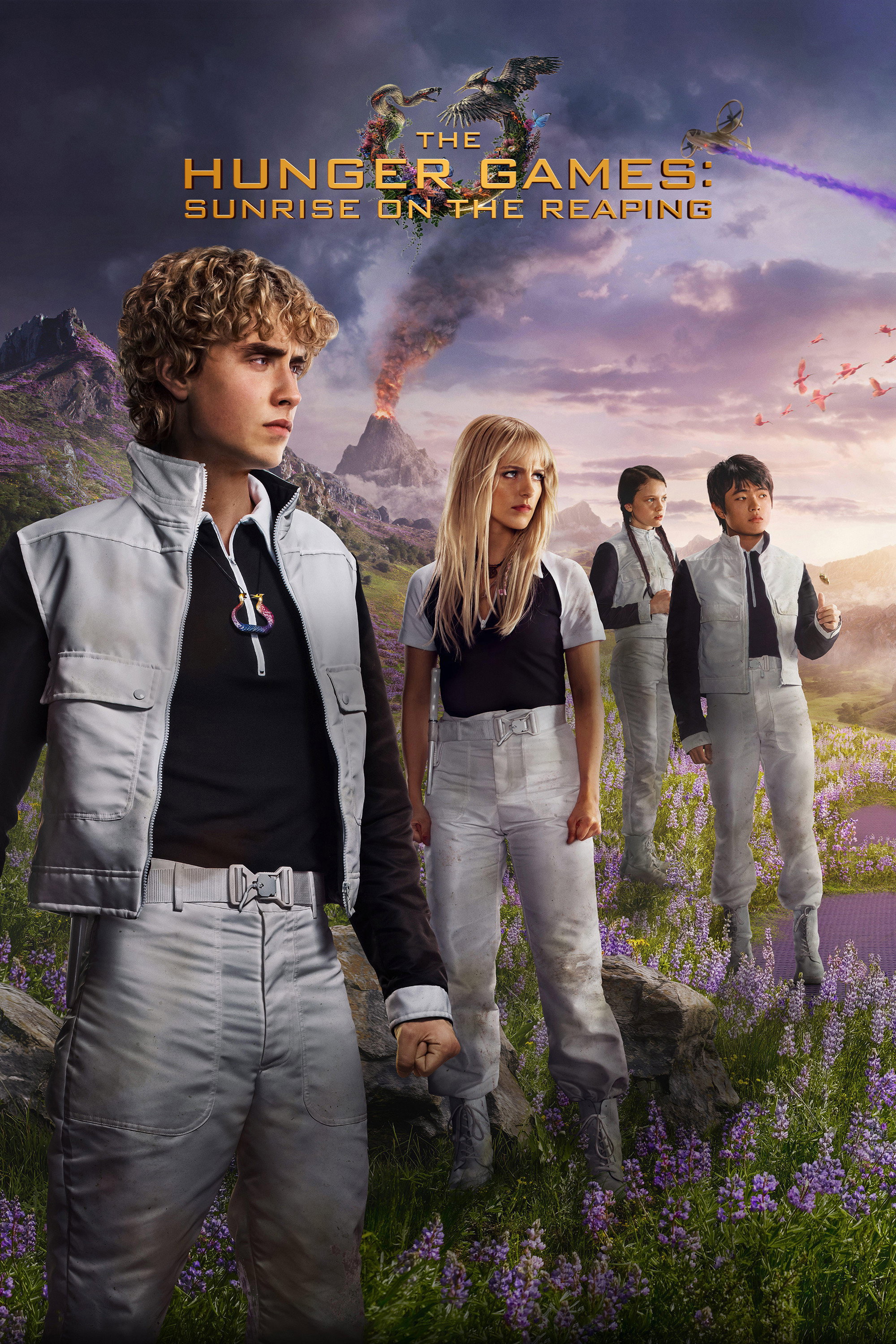 Box Office News Sunrise on the Reaping Box Office: $56M Friday, $120M Eyed The Hunger Games: Sunrise on the Reaping earned $56M on opening day and is tracking for about $120M, Lionsgate’s first $100M launch since 2015. Read the story →
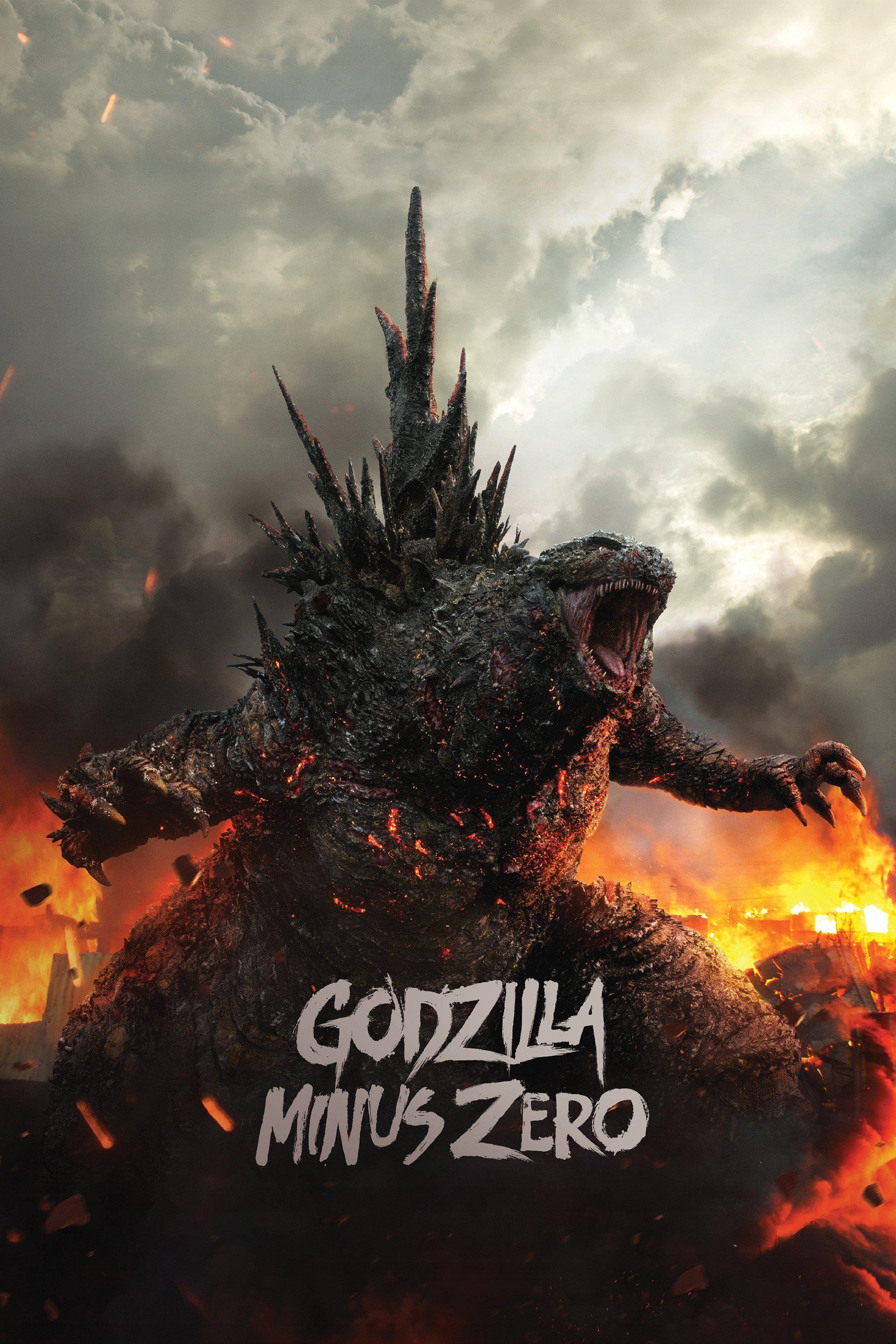 Box Office News Godzilla Minus Zero Breaks a 24-Year-Old Box Office Record Held by Harry Potter in Japan Godzilla Minus Zero broke Harry Potter and the Chamber of Secrets’ 24-year-old opening-day record in Japan and opened to an estimated $32M in North America. Read the story →
 Entertainment Spielberg, Honored at MoMA, Says He Has Never Stood Alone on a Set Steven Spielberg was honored at MoMA’s 18th Film Benefit with Tom Cruise, Martin Scorsese and Bruce Springsteen, and spent his speech crediting everyone else. Read the story →
Articles
Latest on Every Movie Plug
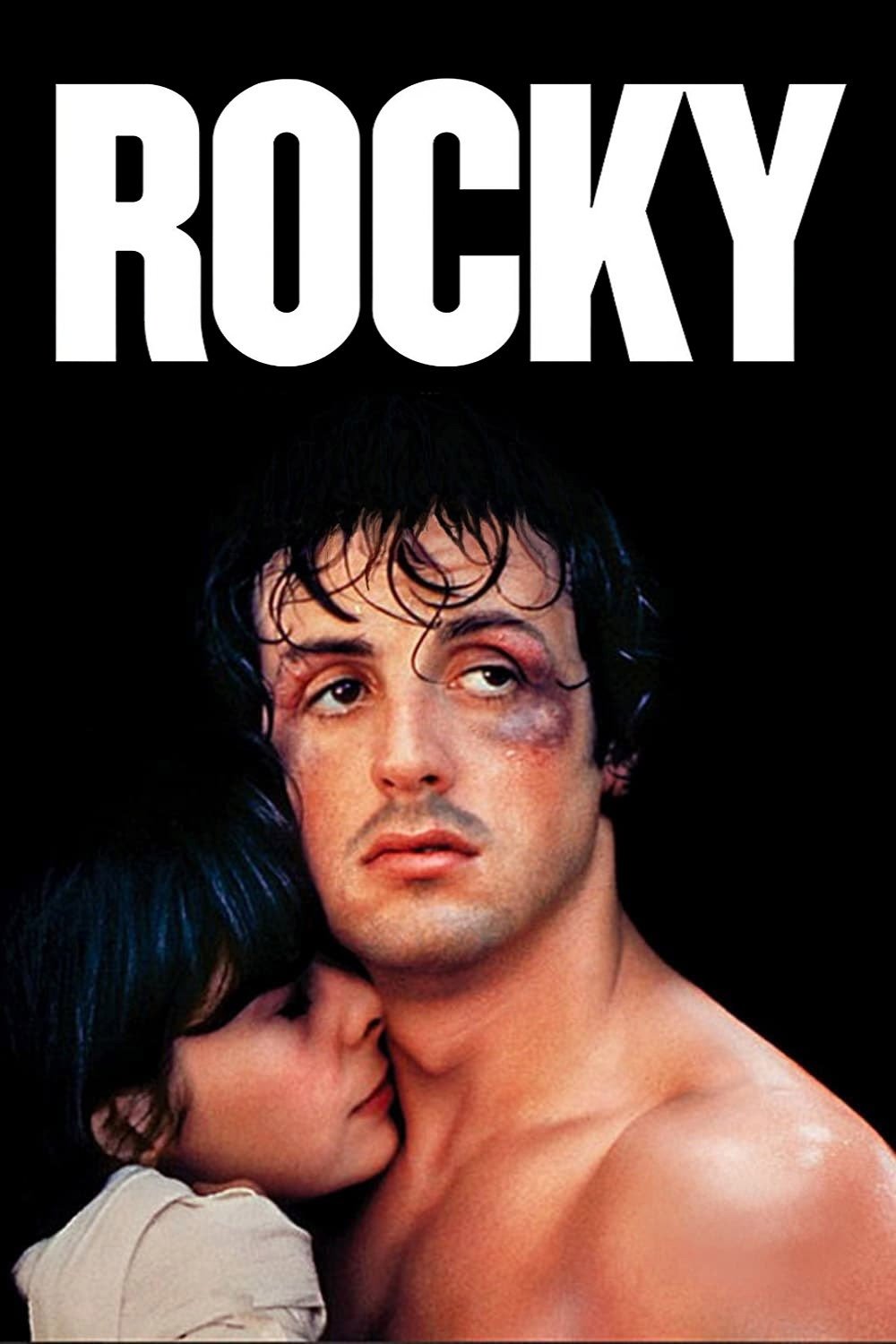 Today In Cinema Today in Cinema, November 21: Rocky at 50 and Still Standing A broke actor, a three-day screenplay, a million-dollar budget and a refusal to sell: how the little boxing movie nobody wanted became the one nobody forgets. Read the article →
 Today In Cinema Today in Cinema, November 5: The Matrix Revolutions Ends the Trilogy in 108 Territories at Once A record-setting global opening, a record-setting drop and an ending that critics and fans have argued about for 23 years. Read the article →
 Article Today in Cinema, November 15: Harry Potter and the Chamber of Secrets Opens in 2002, Told in Ten Numbers A 249-foot set, a nine-foot spider and an actress who was 37 playing 14. The second Potter film was built at speed, opened to a record and said goodbye to its Dumbledore. Read the article →