Today in Cinema looks at one major film from movie history that reached audiences on this date: how it was made, how it was received and why it still matters.
On November 10, 2006, a comedy star known for shouting his way through Anchorman opened a film in which he barely raised his voice. Stranger Than Fiction arrived in 2,264 theaters that Friday and took fourth place at the box office behind Borat, The Santa Clause 3 and Flushed Away. It was not a blockbuster, and it never tried to be. It was a quiet, inventive fantasy about an IRS auditor named Harold Crick who begins to hear a woman narrating his life and learns, from her narration, that he is about to die.
Twenty years later, the film has outlived much of the 2006 release calendar. It gave Will Ferrell his first leading dramatic role, gave Emma Thompson one of her most memorable comic-tragic parts and gave first-time screenwriter Zach Helm an unusually durable idea. This edition of Today in Cinema looks at where that idea came from, how a dry Chicago comedy was built around it, what the ending says about authorship and fate, and why a film that was often called “Charlie Kaufman-lite” has come to be loved on its own terms.
The film is twenty years old, so this article discusses its plot and ending openly.
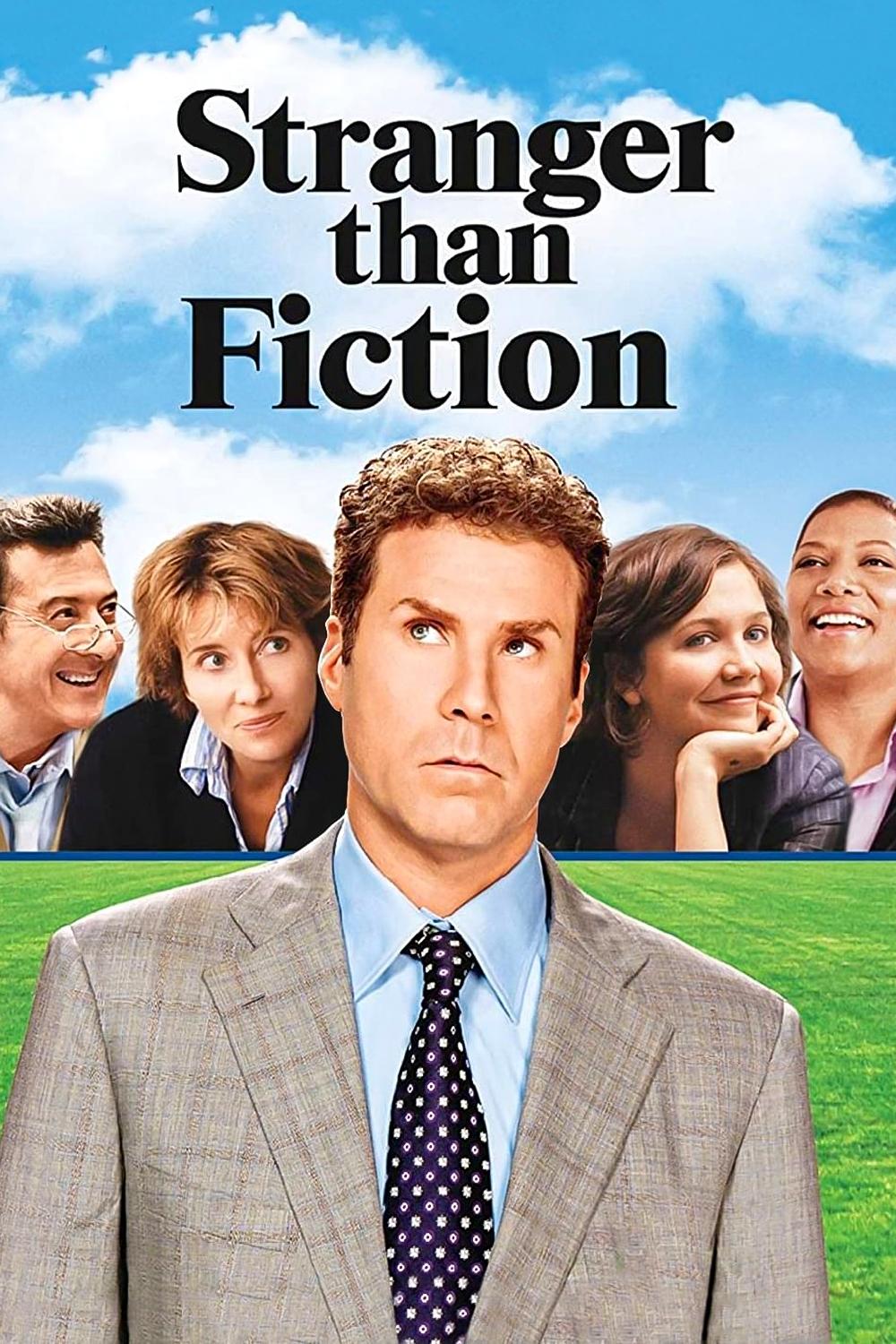
Stranger Than Fiction (2006) at a Glance
| US release | November 10, 2006 (wide release in 2,264 theaters) |
|---|---|
| Director | Marc Forster |
| Screenplay | Zach Helm |
| Producer | Lindsay Doran |
| Starring | Will Ferrell, Maggie Gyllenhaal, Dustin Hoffman, Queen Latifah, Emma Thompson, Tony Hale, Linda Hunt, Tom Hulce |
| Cinematography | Roberto Schaefer |
| Editor | Matt Chessé |
| Music | Britt Daniel and Brian Reitzell |
| Studios | Columbia Pictures, Mandate Pictures and Three Strange Angels |
| Running time | About 113 to 114 minutes |
| Rating | PG-13 |
| Budget | $30 million |
| Worldwide gross | $53.7 million ($40.7 million domestic) |
The Man Who Heard His Own Life Described
Harold Crick lives a life of strict routine in Chicago. He counts his toothbrush strokes, times his walk to the bus and audits tax returns for the Internal Revenue Service. One morning, while he is brushing his teeth, a woman’s voice begins describing exactly what he is doing, in the polished prose of a novel. Only he can hear it. When his wristwatch stops and he resets it by the time given by a bystander, the voice announces that this small act will lead to his death.
Harold’s first stop is a psychiatrist, who suggests that a literary expert might be more useful than a doctor. That leads him to Professor Jules Hilbert, who initially dismisses him but then recognizes the narration as the device of an omniscient narrator and sets out to help. Hilbert’s first task is a practical one: decide whether Harold’s story is a comedy or a tragedy, since that will determine whether he lives.
Meanwhile, Harold has been assigned to audit Ana Pascal, a baker who deliberately withholds a portion of her taxes as a protest. Their sparring over a plate of cookies, which Harold refuses because it might count as a bribe, becomes the film’s love story. The structure is simple, but Helm and Forster keep it moving by treating every ordinary object, from a wristwatch to a cookie, as a possible plot point.
The Narrator Project: How Zach Helm Found the Idea
The screenplay began in 2001, when writer Zach Helm was working with producer Lindsay Doran on a different project they called “The Disassociate.” Helm then came to Doran with a new idea about a man who is accompanied by a narrator that only he can hear. He decided early that the narrator should announce the man’s death. As he later explained, an understanding of one’s place in the universe is poetic, but it is far more dramatic when it arrives only days before life ends.
The pair began calling it “The Narrator Project” and developed the story through a simple process: Helm offered ideas and Doran asked questions. One of Helm’s central decisions was to make the film’s form as important as its content, so that the way the story is told is part of what it is about. A local newspaper profile of the writer later credited Doran with prodding him until the script emerged, a reminder of how often an early producer shapes a screenplay.
Helm filled the script with quiet jokes. He named the main characters after famous scientists and scientifically influential artists: Crick, Pascal, Eiffel, Escher and Hilbert. When Professor Hilbert tells Harold he has devised 23 questions to investigate the narrator, it is a nod to the mathematician David Hilbert’s famous list of 23 problems. The film’s title comes from a line in Lord Byron’s Don Juan, which says truth is always strange, stranger than fiction.
The film’s central theme, according to Helm, is interconnection. Each of the main characters ends up doing small things that save one another, and the things people take most for granted are often the ones that make life worth living and actually keep them alive. How a single idea becomes a produced film is the subject of Every Movie Plug’s How to Film, Direct and Produce Your Own Movie: A Complete Guide for First-Time Filmmakers, which follows a project from a one-sentence premise to a finished picture.
Chicago as a Character, With a Nod to Jacques Tati
The film was shot on location in Chicago from April 25 to July 20, 2005. The production used the city’s real buildings for much of its comedy. Harold’s IRS office is in the CNA Center in the Loop, Professor Hilbert’s office is a lecture hall at the University of Illinois Chicago, and Dave’s apartment, where Harold lands after his own home is partly demolished, is in the River City condominiums. Ana’s bakery is La Catedral Cafe & Restaurant in the Little Village neighborhood, and the movie theater is the Logan Theatre in Logan Square.
Visually, the film took part of its inspiration from Jacques Tati’s Playtime, a comedy about the geometry and alienation of modern city life. The cinematography and production design create a slightly claustrophobic world of glass, grids and schedules, which Harold escapes as the story progresses. Director Marc Forster, who had previously made Monster’s Ball and Finding Neverland, wanted the frame to feel carefully composed, a choice that fits a story about a man who suspects he is being arranged by someone else.

Will Ferrell’s Quiet Gamble
By 2006, Will Ferrell was one of the most successful comic stars in America, known for broad characters in films such as Anchorman. Stranger Than Fiction was his first leading dramatic role, and critics noticed immediately. Variety’s Todd McCarthy praised the nuance of the performance, noting that Ferrell begins as a tightly focused caricature of the company man and gradually shows more humanity and wit without becoming goofy. Roger Ebert placed him alongside Steve Martin and Robin Williams as a comedian with dramatic gifts equal to his comic ones.
Several reviews compared the role to earlier turns by comedians in serious projects, such as Jim Carrey in The Truman Show and Adam Sandler in Punch-Drunk Love. The comparison is apt because the performance depends on restraint. Forster held the performance steady through to the end, which allows Harold’s acceptance of his fate to read as quietly noble instead of comic.
Production anecdotes reported over the years add detail. Ferrell reportedly learned to play guitar for the scene in which Harold sings to Ana, and Emma Thompson’s narration was reportedly fed to him through an earpiece so that his reactions to the voice would be genuine. Both accounts come from fan and retrospective sources rather than the studio, but they fit the film’s tone, in which small, real gestures matter more than big effects.
The Company Around Him
The supporting cast is a deliberate mix of tones. Emma Thompson plays Karen Eiffel, a celebrated author known for killing the protagonists of her novels, who has been stuck with writer’s block because she cannot work out how to end Harold’s story. Thompson plays her as chain-smoking, anxious and hilariously unsentimental, and her performance earned a Critics’ Choice nomination for best supporting actress.
Dustin Hoffman plays Professor Hilbert, whose enthusiasm for literary theory turns out to be exactly the sort of help Harold needs. Hoffman’s earlier career is explored in Every Movie Plug’s The Ending of The Graduate Explained, which examines the film that made him a star. Maggie Gyllenhaal brings warmth and bite to Ana Pascal, the baker who decides to fall for a man who audits her. Gyllenhaal is the sister of Jake Gyllenhaal, whose own darker Los Angeles story is told in Today in Cinema, October 31: Nightcrawler Opens on Halloween 2014.
Queen Latifah plays Penny Escher, the assistant sent to help Karen finish her book, and the film shows how effectively a musician can move into screen comedy, a transition also covered in Today in Cinema, November 8: 8 Mile Opens in 2002. Tony Hale plays Harold’s coworker Dave, Linda Hunt plays the psychiatrist Dr. Mittag-Leffler, Tom Hulce plays Dr. Cayly, and Kristin Chenoweth appears as the host of a book channel. Casting director Francine Maisler won a Hollywood Film Award that year, for this film as well as for Babel and Miami Vice.
Comedy or Tragedy? The Plot Turns
The middle of the film turns on the question Harold cannot answer. After a series of improbable events, including a demolition crew that tears into the wrong building and wrecks his living room, Professor Hilbert concludes that Harold has lost control of his life and urges him to enjoy whatever time he has. Harold takes time off work, learns guitar, moves in with Dave and starts seeing Ana. When she begins to fall for him, he reconsiders his story as a comedy.
The turning point is a television interview. Harold recognizes the voice of author Karen Eiffel and realizes she is his narrator. Hilbert, an admirer of her work, points out that all her books are tragedies in which the protagonist dies. Harold telephones her, shocks her by accurately describing her unfinished novel, and eventually meets her in person. She has outlined the ending but has not typed it, and Penny suggests he read it.
Harold cannot bring himself to open the outline, so he gives it to Hilbert, who judges it her masterpiece and says that Harold’s death is essential to it. Harold finally reads it and returns it to Karen, telling her that the death she has written is beautiful and that he accepts it. He spends a last evening with Ana, then goes about his routine the next morning while Karen writes and narrates.
The Ending: Three Minutes Fast
The resolution depends on a detail from the opening. When Harold reset his watch, the bystander’s time was three minutes fast, so he reaches the bus stop early. A boy on a bicycle falls in front of the bus, and Harold runs into the street to save him and is hit instead. Karen, traumatized by the thought that she has unwittingly narrated real people to their deaths, cannot finish the sentence that would declare him dead.
Harold wakes in a hospital and learns that shrapnel from his destroyed wristwatch blocked his ulnar artery and kept him from bleeding to death. Hilbert thinks the new ending weakens the book. Karen answers that the book was about a man who did not know he would die, and that a man who knows his fate and accepts it is the kind who deserves to live. The film closes on Karen’s narration over a montage of Harold’s changed life, ending on the ruined watch that saved him.
The ending has divided viewers. Some feel that it pulls its punches, and others argue the “correction” is the entire point: the story is about an author learning that she is responsible for the people she writes. It makes an instructive contrast with another recent entry in this series, Today in Cinema, November 9: No Country for Old Men Opens in 28 Theaters in 2007, which also features a narrator, a coin and a meditation on fate, but refuses its audience the consolation of a rescue.

Spoon, Brian Reitzell and a Song About the Whole Wide World
The music mixes original score with indie rock. The score was written by Britt Daniel, the singer-songwriter of Spoon, working with Brian Reitzell, who also served as music supervisor and later scored Friday Night Lights, The Bling Ring and the television series Hannibal. The soundtrack also includes songs by Spoon and others.
The best-known musical moment is the scene in which Harold sits on Ana’s couch and tentatively plays “(I’d Go the) Whole Wide World,” the song by Wreckless Eric. A new recording of the song was made for the film, and the scene has become a favorite of critics and fans, one writer calling it a favorite cinema music cue of all time. It is the moment when Harold stops behaving like a character in a book and starts behaving like a person.
Opening Weekend: Fourth Place in a Crowded Field
Stranger Than Fiction opened on November 10, 2006 in 2,264 theaters and earned $13.4 million, landing in fourth place behind Borat: Cultural Learnings of America for Make Benefit Glorious Nation of Kazakhstan, The Santa Clause 3: The Escape Clause and Flushed Away. It stayed in the top ten for four consecutive weeks, ending with $40.7 million in the United States and Canada and $13.0 million elsewhere, for a worldwide total of $53.7 million against a $30 million budget.
Overseas, it opened in the United Kingdom on December 1, 2006, after being shown at the London Film Festival in October. It reached home video in the United States on February 27, 2007. Audiences polled by CinemaScore gave it a B-plus. The timing was difficult, because the film arrived one week after Borat took over the top of the chart, a weekend described in Every Movie Plug’s Today in Cinema: The Departed Turns 20, which covers another film then in the middle of its theatrical run.
What Critics Said
Reviews were generally positive. Rotten Tomatoes reports that 73 percent of 176 reviews are favorable, with an average rating of 6.9 out of 10, and a consensus describing a fun, whimsical story with a subdued performance from Ferrell. Metacritic gives it 67 out of 100 from 35 critics, a score indicating generally favorable reviews.
Roger Ebert gave the film three and a half stars out of four, writing that such an uncommonly intelligent film does not often get made, and he praised its quiet, sweet and worthy characters. Rolling Stone also gave it three stars and called it less self-reflexively clever and more intimate than its premise suggested. Variety praised its invention. A review in a Utah student newspaper called it a thinking man’s Click, a comparison that captured how the film walks a line between whimsy and seriousness.
The most common critical note was a comparison to Charlie Kaufman. Several reviewers said the film felt like a lighter relative of Being John Malkovich or Adaptation, with one critic arguing that Kaufman’s scripts anchor their wildest conceits in real anguish while this film layered whimsy on whimsy. Others, writing years later, pushed back, arguing that the label was unfair and that the film’s vulnerability stands comfortably alongside the best of Kaufman’s work, including Eternal Sunshine of the Spotless Mind.

Awards: A Screenplay Honored More Than Anything Else
The film did not become an Oscar contender, but it won recognition in several categories, with its screenplay at the center. Zach Helm won the National Board of Review award for Best Original Screenplay and the PEN America award for best screenplay, and he was nominated for a Writers Guild of America award for Best Original Screenplay and a Critics’ Choice award for best writer.
Will Ferrell was nominated for a Golden Globe for Best Actor in a Motion Picture, Musical or Comedy, and for a Satellite Award in the same category. Emma Thompson was nominated for a Critics’ Choice award and for the London Film Critics Circle’s British Supporting Actress of the Year, and the film received Saturn Award nominations for best fantasy film, for Ferrell, Gyllenhaal and Thompson in the acting categories and for Helm’s writing. Writers who build a film around a single bold idea are a recurring subject here, and Every Movie Plug’s Today in Cinema: The Social Network, the 2010 Film That Defined the Facebook Era looks at a very different screenplay with a very different voice.
Legacy: Helm, Forster and a Genre of Self-Aware Stories
The film opened doors for its creators. Helm was soon handed the director’s chair for Mr. Magorium’s Wonder Emporium (2007), and the success of his script gave him the kind of buzz usually reserved for far more experienced writers. Forster went on to direct a Bond film, Quantum of Solace, in 2008, which links him to a franchise Every Movie Plug follows closely, including the latest casting buzz in Robert Pattinson Reportedly Screen-Tested for James Bond as the 007 Casting Race Tightens and the history in Today in Cinema, November 6: Spectre Opens in America in 2015.
The film’s influence is easiest to see in stories where characters become aware of the structure around them. It sits in a lineage that includes The Truman Show, and later works such as the 2013 video game The Stanley Parable, which explores similar territory with a narrator who comments on a player’s choices. Ferrell’s turn is often grouped with other comedians’ dramatic detours, such as those of Jim Carrey and Adam Sandler.
Who Writes the Ending? Stories Still Asking the Same Question
The film’s central question, who gets to decide how a story ends, is one that studios, actors and fans ask constantly. In current news, Johnny Depp has said he would return as Jack Sparrow in a sixth Pirates of the Caribbean film to give the character a better send-off, a story reported in Johnny Depp Says He Would Return for Pirates of the Caribbean 6 to Give Jack Sparrow a Better Send-Off. Nicolas Cage has said he was relieved when Prime Video canceled Spider-Noir after one season, calling it a perfect season, as Nicolas Cage Says He Was Relieved When Prime Video Canceled Spider-Noir: “Whew, Thank You!” reports.
Behind the scenes, authorship is changing hands. James Gunn and Peter Safran are stepping down as DC Studios co-CEOs on December 1, as James Gunn Steps Down From DC Studios: Why He and Peter Safran Are Leaving and What Happens Next explains. And Marvel Studios posted a cryptic message in binary code on X before the VisionQuest finale, a puzzle-box teaser covered in Marvel Studios Posts a Cryptic Binary Message on X Before the VisionQuest Finale: What It Says and What It Means. Each is a reminder that audiences, like Harold, are always trying to work out who is holding the pen.
How to Watch Stranger Than Fiction Today
The film is available on DVD and Blu-ray, and it has appeared on streaming services and for digital rental over the years, though availability changes often, so check current listings before you plan a viewing. The DVD included six behind-the-scenes features and two deleted scenes, among them a featurette in which Lindsay Doran discusses the development of the script.
A useful way to watch it is in two halves. The first is a comedy about a man learning that his life has a shape, and the second is a drama about what he does once he knows. Pay attention to the small objects, the wristwatch, the cookies, the guitar and the typewriter, since the film treats each as a clue about who is really writing the story.
Frequently Asked Questions About Stranger Than Fiction
When was Stranger Than Fiction released?
It was released in United States theaters on November 10, 2006 by Columbia Pictures, opening in 2,264 theaters. The United Kingdom release followed on December 1, 2006.
Who wrote and directed Stranger Than Fiction?
Zach Helm wrote the screenplay and Marc Forster directed. Lindsay Doran produced the film, which she developed with Helm from an idea they called The Narrator Project.
How much money did Stranger Than Fiction make?
It earned $40.7 million in the United States and Canada and $53.7 million worldwide on a $30 million budget. It opened fourth at the box office and stayed in the top ten for four weeks.
What is the ending of Stranger Than Fiction?
Harold is hit by a bus while saving a boy, but the author cannot bring herself to finish the sentence that kills him. Shrapnel from his wristwatch blocks an artery and saves his life, and the author decides a man who accepts his fate deserves to live.
Where was Stranger Than Fiction filmed?
It was shot on location in Chicago from April 25 to July 20, 2005, using sites that include the CNA Center, the University of Illinois Chicago, the River City condominiums and the Logan Theatre.
Where does the title Stranger Than Fiction come from?
It comes from a line in Lord Byron’s Don Juan, which says truth is always strange, stranger than fiction.
Conclusion: The Story That Chose to Keep Its Hero
Stranger Than Fiction remains moving because it takes its absurd premise seriously and its characters even more seriously. It asks what a person owes the people in a story, and what a story owes them in return, and it answers with an ending that is gentler than the one its author planned. For Will Ferrell, it was proof that restraint could be as striking as bombast. For audiences, it was a reminder that the small, taken-for-granted things, a wristwatch, a cookie, a song, are often what keep a life going.
Today in Cinema returns with another film from movie history. Recent entries include No Country for Old Men, 8 Mile and Starship Troopers.
Image and Source Credits
- Lead image and three scene images: Columbia Pictures, Mandate Pictures and Three Strange Angels, via TMDB
- Related-story thumbnails: Every Movie Plug
References and Further Reading
- Development, production, release, reception and awards: Stranger than Fiction (2006 film), Wikipedia
- Box office and release data: Box Office Mojo; The Numbers; TCM Movie Database; Time Out
- Critical reception: Rotten Tomatoes; Metacritic; Roger Ebert; The Daily Utah Chronicle; Moria; Vague Visages
- Writing and music: Orlando Weekly on Zach Helm and Lindsay Doran; Entertainment Weekly on Whole Wide World; Professional Moron
- Every Movie Plug news referenced: Johnny Depp and Pirates 6; Nicolas Cage and Spider-Noir; James Gunn and DC Studios; Marvel and the VisionQuest finale; Robert Pattinson and 007
News
Latest on Every Movie Plug
 Film News Johnny Depp Says He Would Return for Pirates of the Caribbean 6 to Give Jack Sparrow a Better Send-Off Johnny Depp says he would return as Jack Sparrow in Pirates of the Caribbean 6 to send the franchise off on a better note. Here is where the film stands at Disney. Read the story →
 TV News Nicolas Cage Says He Was Relieved When Prime Video Canceled Spider-Noir: “Whew, Thank You!” Nicolas Cage says he was relieved when Prime Video canceled Spider-Noir after one season, calling it a perfect season. Here is what he said and why it ended. Read the story →
 Film News James Gunn Steps Down From DC Studios: Why He and Peter Safran Are Leaving and What Happens Next James Gunn and Peter Safran are stepping down as DC Studios co-CEOs on December 1. Here is why they are leaving, who replaces them and what it means for the DCU. Read the story →
Articles
Latest on Every Movie Plug
 Article The Ending of The Graduate Explained How Mike Nichols turned a wedding-crash rescue into one of cinema’s most debated final shots. Read the article →
 Today in Cinema Today in Cinema, November 9: No Country for Old Men Opens in 28 Theaters in 2007 and Walks Away With Best Picture A $25 million Western-noir with almost no music, a killer with a coin and a villain who nearly went to another actor became the Coen brothers’ biggest hit of its time. Read the article →
 Today in Cinema Today in Cinema, October 31: Nightcrawler Opens on Halloween 2014 On October 31, 2014, Dan Gilroy’s Nightcrawler opened in US theaters. The story behind Jake Gyllenhaal’s most unsettling role and its lasting legacy. Read the article →