By 2011, the strangest thing about the Muppets was that the world had more or less stopped asking for them. Kermit, Miss Piggy and the rest had spent a dozen years away from movie theaters. They had changed owners, been repackaged for a new century and settled into the soft glow of nostalgia, the kind of fame that survives on lunchboxes and reruns. Nobody was clamoring. Which is exactly why the film that opened on Wednesday, November 23, 2011, did something so unusual for a franchise revival: it made that indifference the plot.
Fifteen years later, The Muppets looks less like a comeback and more like a blueprint. It was the seventh theatrical film starring Jim Henson’s creations, a musical comedy about a fan, a frog and a ten-million-dollar deadline, and it was written by two men who loved the material and a director who had never made a feature. It grossed roughly four times its $45 million budget, won an Oscar for a song about an existential crisis, and gave a brand that had been coasting a reason to keep going. This is the story of how it got made, who objected, and why it still plays.
A Franchise Nobody Was Asking For
Disney acquired the Muppets in 2004, and for years afterward the characters lived in a sort of corporate half-light. They appeared in television movies and viral videos, but the big-screen event that fans had hoped for never arrived. The idea that eventually changed that came from Jason Segel and his writing partner Nicholas Stoller, who had made Forgetting Sarah Marshall together and pitched a new Muppet film to Disney in 2008. The studio offered them a deal to develop it, with Mandeville Films producing, and the news became public that March.
The scripts the pair produced had a refreshingly self-aware shape. Stoller described the early idea as an old-school Muppet movie in which the gang has to put on a show to save the studio. Along the way, the project went by titles that now read like a creative manifesto. For a stretch it was The Greatest Muppet Movie of All Time!!! and at another point it borrowed the name of an unused 1985 script by longtime Henson writer Jerry Juhl, The Cheapest Muppet Movie Ever Made! The finished film was neither of those things. It was something more modest and, as it turned out, more durable.
The production also looked outward for help. Reports in 2010 said the team met with creative leaders at Pixar to fine-tune the story. In January of that year, James Bobin, who had co-created Flight of the Conchords for television, was hired to direct, making his feature debut. By October, Amy Adams, Chris Cooper and Rashida Jones had joined Segel in the cast. Filming began in September 2010 and wrapped in February 2011.
The Missing Voices
Every comeback has a ghost, and this one had a few. The film was the first theatrical Muppet production without Frank Oz, who had performed Miss Piggy, Fozzie Bear and Animal for decades, and the first without Jerry Nelson, the voice behind Floyd Pepper and Sweetums, in his usual roles. Their characters passed to Eric Jacobson and Matt Vogel, both making their feature-film debuts in those parts. Nelson still turned up in an uncredited cameo as the telethon announcer, in what would be his last appearance in a Muppet production before his death the following year.
Oz had read an early version of the script and said publicly that he did not think it respected the characters. That was a serious complaint from someone who had helped build them, and it rattled some longtime fans who feared the project was more about a movie star than about Henson’s legacy. After the film opened, Oz softened. He called it sweet and fun, though in his view a little too safe and a little retro, and said that the important thing was that people had come back to the Muppets. It is a gracious answer, and an accurate one: the film played it safer than Henson ever did, and it worked.
The rest of the ensemble had the job of proving it. Steve Whitmire, who inherited Kermit from Henson himself, anchored the performance. Dave Goelz gave Gonzo and Bunsen their old chaos, and Bill Barretta, David Rudman and Peter Linz filled out the roster, with Linz performing the film’s new character, Walter. Archival recordings of Henson, Oz, Nelson and Richard Hunt can be heard in the opening flashbacks, a small act of respect tucked into the fabric of the movie.
A Love Letter in the Voice of a Skeptic
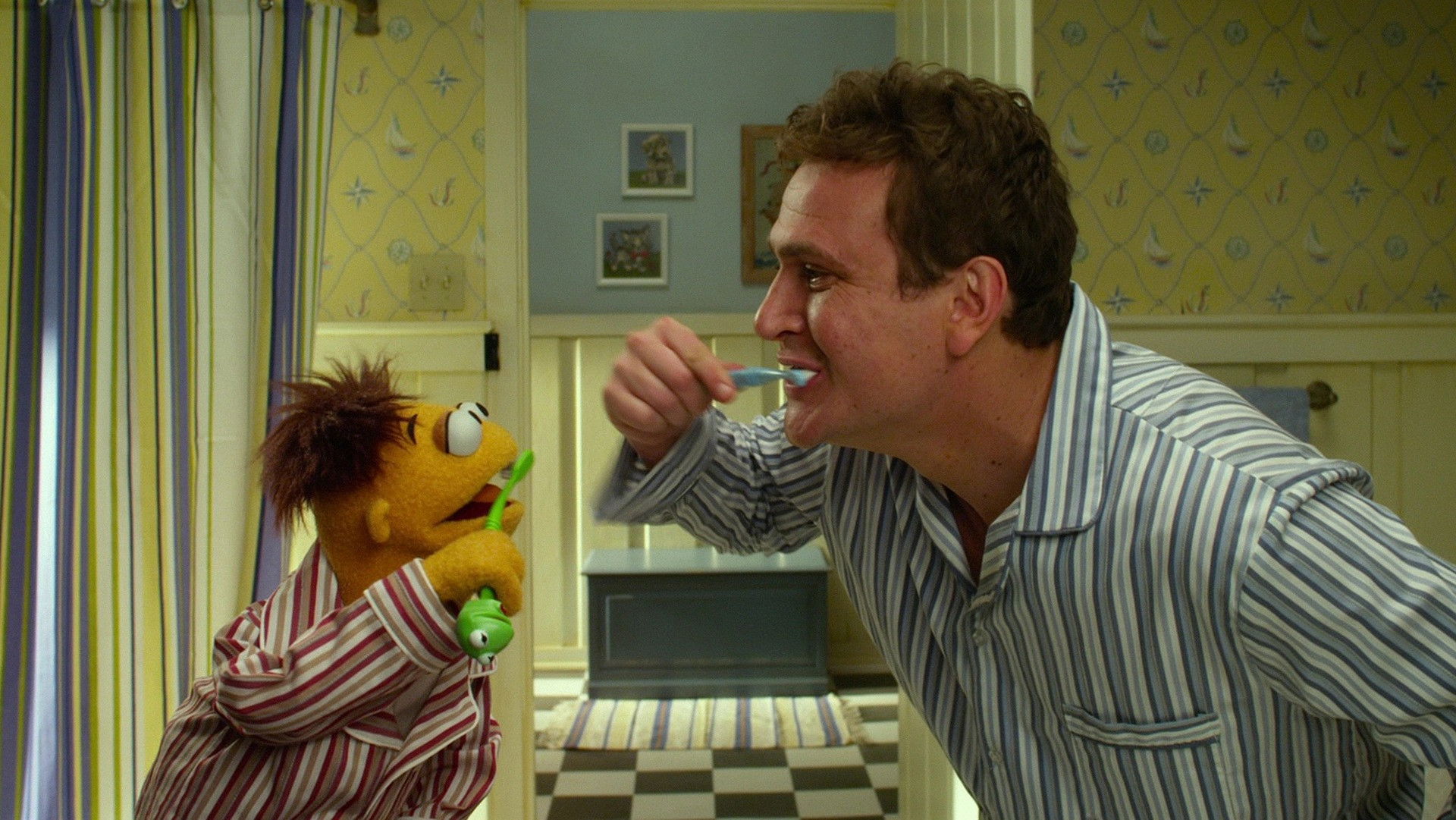
The central trick of the script is that it knows the Muppets are out of fashion and says so. Walter, a lifelong fan who happens to be a Muppet himself, grows up in a town called Smalltown, USA, in the shadow of his human brother Gary, played by Segel. When Gary plans a trip to Los Angeles with his girlfriend, Mary (Adams), Walter tags along for a tour of Muppet Studios, which turns out to be rundown and nearly empty. Inside Kermit’s office, he overhears the plan of an oil baron named Tex Richman to buy the old Muppet Theater and drill underneath it.
What follows is a classic let’s-put-on-a-show story with a reunion tour attached. Kermit, living alone in a mansion, agrees to track down his scattered friends. Fozzie is performing in Reno with a tribute act called the Moopets. Gonzo has become a plumbing magnate. Animal is at a celebrity anger-management clinic. Miss Piggy is an editor at Vogue Paris, which is exactly where she would end up. The gang needs ten million dollars, a broadcast slot and a celebrity host, and they have to earn all three.
The film was also the first in the series to directly acknowledge The Muppet Show and refer back to plot points from earlier movies, which turned the story into a conversation with its own history. Chris Cooper’s Tex is the perfect foil. He is a villain who cannot laugh and is happiest in a boardroom, so his one big number is a rap. The film’s thematic payoff is gentler than it first appears. It does not argue that the Muppets are cool again. It argues that they were always worth seeing, and lets the audience arrive at that conclusion on its own.
Songs From a Man Who Wasn’t Allowed to Say “Puppet”
The musical heart of the picture was Bret McKenzie, Bobin’s Conchords partner, who moved to Los Angeles in the summer of 2010 to serve as music supervisor. He wrote four of the film’s five original songs, and he was given an unusual set of rules. At the request of the performers and the writers, he had to remove any lyric in which the characters referred to themselves as puppets, because in the Muppet world, Kermit and Piggy are simply people. He also learned in recording sessions that some Muppets, such as chickens and penguins, do not speak at all.
The song that made him famous was “Man or Muppet,” a ballad sung by Segel and Walter at the moment each of them faces a question of identity. McKenzie has described the idea behind it as something everyone has experienced, trying to work out which one you are, and he set out to make it both funny and genuinely moving.
“Sincere but ridiculous.”
That balance won the Academy Award for Best Original Song at the ceremony on February 26, 2012, beating “Real in Rio” from Rio. It was the first Oscar ever won by a Muppet film, and the first time one had been nominated for Best Original Song since The Great Muppet Caper in 1981. “Life’s a Happy Song,” which opens the film, took the Critics’ Choice Award for Best Song, and “Pictures in My Head” also landed on the Academy’s shortlist. Christophe Beck’s score stitched everything together with a few unexpected colors, including banjo, an instrument he considered underused.
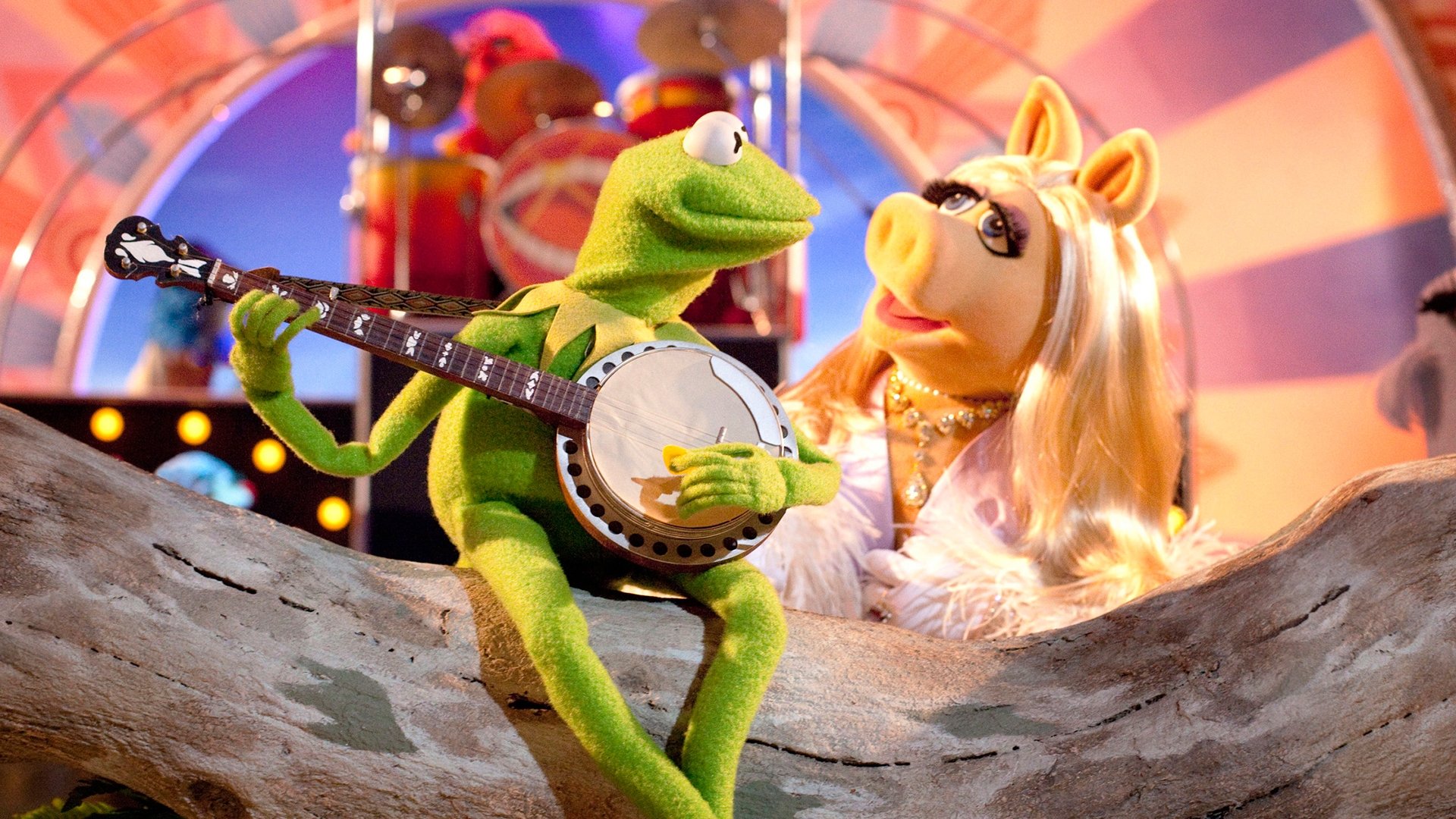
The film’s most emotional sequence belongs to the oldest song. Kermit sings “Rainbow Connection,” and he does it on the same banjo that he played in 1979’s The Muppet Movie. It is a tiny detail, and the kind of continuity that rewards people who have been paying attention for thirty years.
Building the Theater
The Muppet Theater itself was a patchwork. Disney’s El Capitan Theatre in Hollywood supplied the exterior, with a digitally altered marquee, while interiors were shot on Universal’s Soundstage 28, famous for housing the Paris Opera House set from the 1925 Phantom of the Opera. The backlot at Warner Bros. in Burbank became Smalltown for the opening number. For the film’s final, joyous song, Hollywood Boulevard was closed for two nights in January 2011 so that Segel, Adams and hundreds of extras could dance outside the El Capitan.

The craft behind the Muppets was as ambitious as the setting. Most of the characters were rebuilt from scratch for the film. When Walter races along the top of a dresser, the puppeteers wore blue suits and performed against blue screens, then were digitally erased, so the final shot shows a puppet running with no one beneath him. Legacy Effects designed the mechanics for the ’80s Robot. It is a reminder that the hard part of Muppet filmmaking has always been hiding the people, a lineage that Every Movie Plug traced in its look at the Jim Henson Creature Shop work behind The Flintstones, and one that feels newly relevant as the industry debates what machines can and cannot replace, a question taken up in How 2026 Became the Breakout Year for Artificial Intelligence in Cinema. A puppet is a human performance with fur on it, and few digital effects have managed to replace that.
Everyone Was in It, Except the People Who Weren’t
The film’s other great resource was its list of cameos, which were deployed with the confidence of a variety show. Jack Black plays himself, the reluctant, kidnapped host of the Muppet telethon. Emily Blunt spoofs her role from The Devil Wears Prada as Miss Piggy’s receptionist at Vogue Paris. Neil Patrick Harris, Whoopi Goldberg, Selena Gomez, John Krasinski and Judd Hirsch take telethon calls. Dave Grohl turns up as Animool, a member of the Moopets. Zach Galifianakis, Sarah Silverman, Alan Arkin, Donald Glover and Jim Parsons, whose appearance producers kept secret, all have moments.
The more interesting story is the cameos that never made it. Lady Gaga, Ben Stiller, Mila Kunis, Ed Helms, Wanda Sykes, Danny Trejo and others were completely cut for time. Craig Ferguson, who had been the first person to say yes to Segel, never got a role, and joked about it on his show. A scene featuring Elmo was written and then rejected by Disney’s lawyers and representatives from Sesame Workshop. The film’s lesson about star power is built into its construction: the Muppets are the stars, and everyone else is lucky to be asked.
A Thanksgiving Showdown
The film was originally slated for Christmas 2011. In December 2010, Disney moved it up to Thanksgiving, to open on the Wednesday before the holiday, a decision that put it in a crowded lane with Martin Scorsese’s Hugo and Aardman’s Arthur Christmas, and in the shadow of a vampire juggernaut. The week before, The Twilight Saga: Breaking Dawn – Part 1 had set records of its own, which we revisit in Today in Cinema, November 18. Its leading man, Robert Pattinson, has since been named the next James Bond. Yesterday’s anniversary piece on Back to the Future Part II covers an earlier example of the same Wednesday-before-Thanksgiving gambit.

Disney spent the year building anticipation. A spoof trailer styled as a romantic comedy, Green with Envy, ran in front of Pirates of the Caribbean: On Stranger Tides, and further parodies followed, including The Fuzzy Pack, The Pig with the Froggy Tattoo and Breaking Prawn. Kermit attended the Pirates premiere at Disneyland. Segel hosted Saturday Night Live on November 19, with the Muppets as guests, a promotional stop that still makes sense, since the show remains a place where the week’s conversation lands, as our report on Bowen Yang’s surprise return in last week’s cold open shows.
The numbers were solid rather than spectacular. The Muppets took $6.5 million on its opening day, finished second to Breaking Dawn – Part 1, and earned $29.2 million from Friday to Sunday, or $41.5 million across the five-day holiday, outgrossing every earlier Muppet film except The Muppet Movie. It closed with about $88.6 million in North America and roughly $172 million worldwide, making it the highest-grossing puppet film of all time, and it added about $58 million more in home media. Thanksgiving remains one of Hollywood’s biggest runways: this weekend, Lionsgate’s Sunrise on the Reaping took $56 million on its opening Friday.
What the Critics Saw
The reviews were unusually warm. The film holds a 95 percent approval rating on Rotten Tomatoes from 228 reviews, a 75 on Metacritic and an A from CinemaScore audiences, and Entertainment Weekly noted when it opened that it was the best-reviewed wide release of 2011. Roger Ebert gave it three out of four stars and praised the way it revived the Muppets’ individual personalities. Variety’s Justin Chang called it an unexpected treat, and Todd McCarthy of The Hollywood Reporter said it succeeded at pleasing old fans while winning new ones. The Los Angeles Times and Entertainment Weekly both singled out the self-referential humor and the cleverness of the cameos.
The film was also a rare example of a nostalgia project that treated nostalgia as a subject rather than a sales pitch. It asked what it means when beloved things fall out of fashion, and it answered in song. That approach has since become a studio staple, as in our analysis of James Bond and John Wick as legacy franchises, and The Muppets did it before most of its successors had learned the trick.
Update (Nov 23, 2026): The Muppets have continued to return in 2026: a new Muppet Show special starring Sabrina Carpenter streamed on Disney+ and aired on ABC on February 4, during the 50th anniversary year of the original series.
After the Curtain
Disney moved fast. By March 2012, it had secured a deal for a follow-up with Bobin directing and Stoller writing, though Segel said he would not be involved. Muppets Most Wanted arrived on March 21, 2014, and landed with a more modest reception. ABC’s The Muppets followed in 2015, and Muppets Now arrived on Disney+ in 2020, Muppets Haunted Mansion in 2021 and The Muppets Mayhem in 2023. None of them matched the goodwill of the 2011 film.
This year the franchise has had another moment. A half-hour Muppet Show special, with Sabrina Carpenter as guest and Seth Rogen as executive producer, appeared on February 4 as a possible backdoor pilot for a full revival, and a Muppets-themed version of the Rock ’n’ Roller Coaster was scheduled to open at Disney’s Hollywood Studios in the summer. The 2011 film is the reason those projects exist at all. It showed Disney, and the rest of the industry, that the characters could carry a movie when handled with affection and a sense of humor about their own age.
It also gave a generation of viewers a reason to look backward. The original Muppet Show, which ran from 1976 to 1981, is available in full on Disney+, and the 2011 film remains an excellent way in. Its argument is simple. A frog, a pig, a bear and a very large number of oddballs are still funnier and warmer than most of what is made at ten times the cost, and sometimes the best thing you can do for a forgotten classic is to put on a show and let the audience decide.
The Muppets is available on Disney+ and through rental and purchase services, so check current listings for your region.
- Wikipedia: The Muppets (2011 film)
- Wikipedia: Man or Muppet
- Rolling Stone: The Muppets review
- Roger Ebert: The Muppets review
- Variety: Justin Chang on The Muppets
- The Hollywood Reporter: Todd McCarthy on The Muppets
- The Hollywood Reporter: Kermit as mogul, how Disney’s Muppets movie has purists rattled
- The Hollywood Reporter: Disney picks Pixar brains for Muppets movie
- Deadline: Disney moves Muppets from Xmas to T-Day
- Entertainment Weekly: The Muppets opens as best-reviewed wide release of 2011
- Box Office Mojo: Weekend report, Twilight leads, Muppets succeeds over Thanksgiving
- Box Office Mojo: The Muppets (2011)
- The New York Times: On composing for Kermit the Frog
- Vulture: Frank Oz isn’t thrilled with the new Muppets movie
- Muppet Central: Disney moves Muppet movie to Thanksgiving 2011
- Animation World Network: Finessing the Muppets
- Rotten Tomatoes: The Muppets
- Metacritic: The Muppets
- ABC: The Muppet Show special event is now streaming on Disney+
- TVLine: The Muppet Show reboot in the works at Disney+
- Yahoo Entertainment: The Muppet Show returns with Sabrina Carpenter
- TheWrap: Where to watch Sabrina Carpenter in The Muppet Show 2026 special
- Image credit: Walt Disney Pictures and Mandeville Films, via TMDB
News
Latest on Every Movie Plug
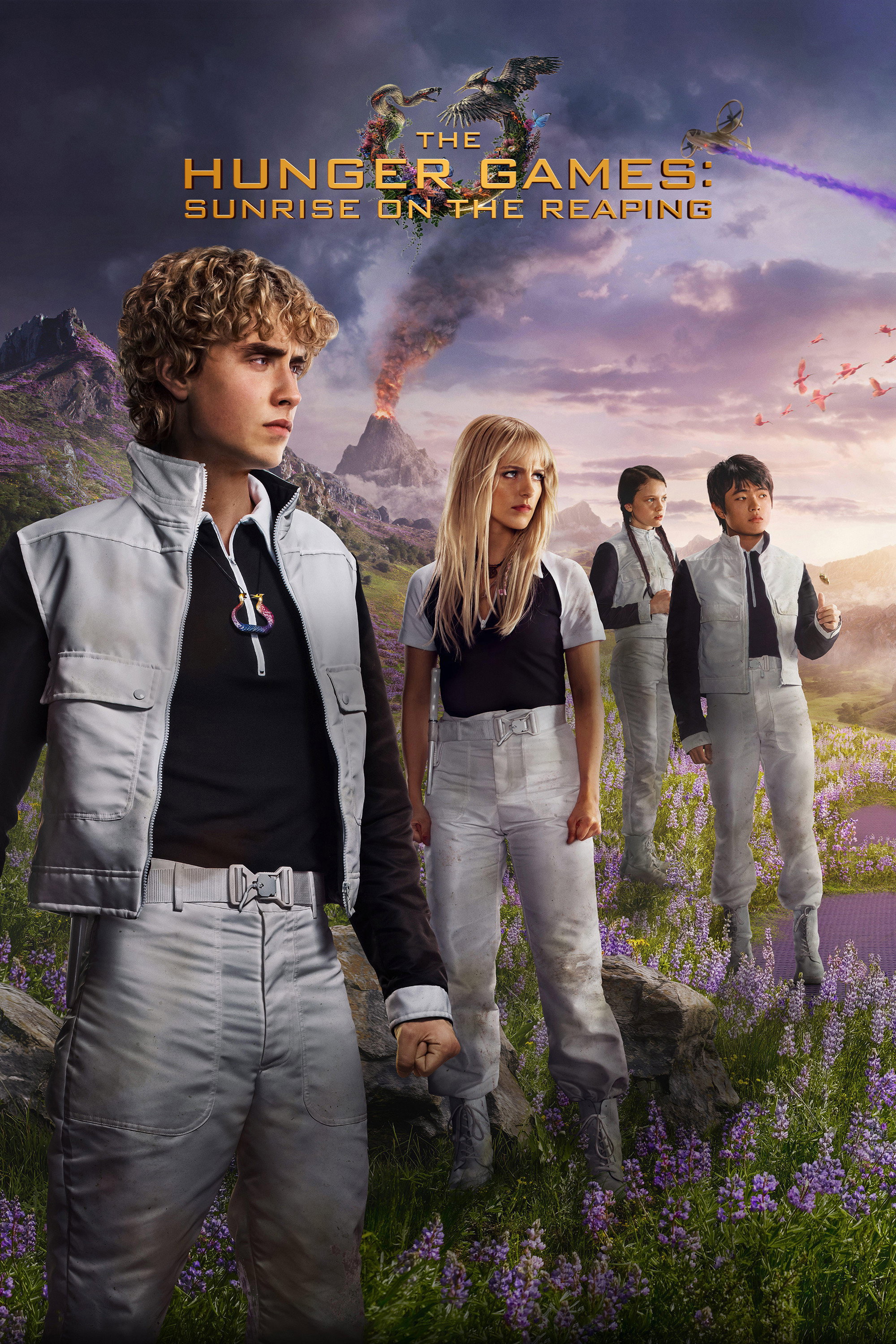 Box Office News Sunrise on the Reaping Box Office: $56M Friday, $120M Eyed The Hunger Games: Sunrise on the Reaping earned $56M on opening day and is tracking for about $120M, Lionsgate’s first $100M launch since 2015. Read the story →
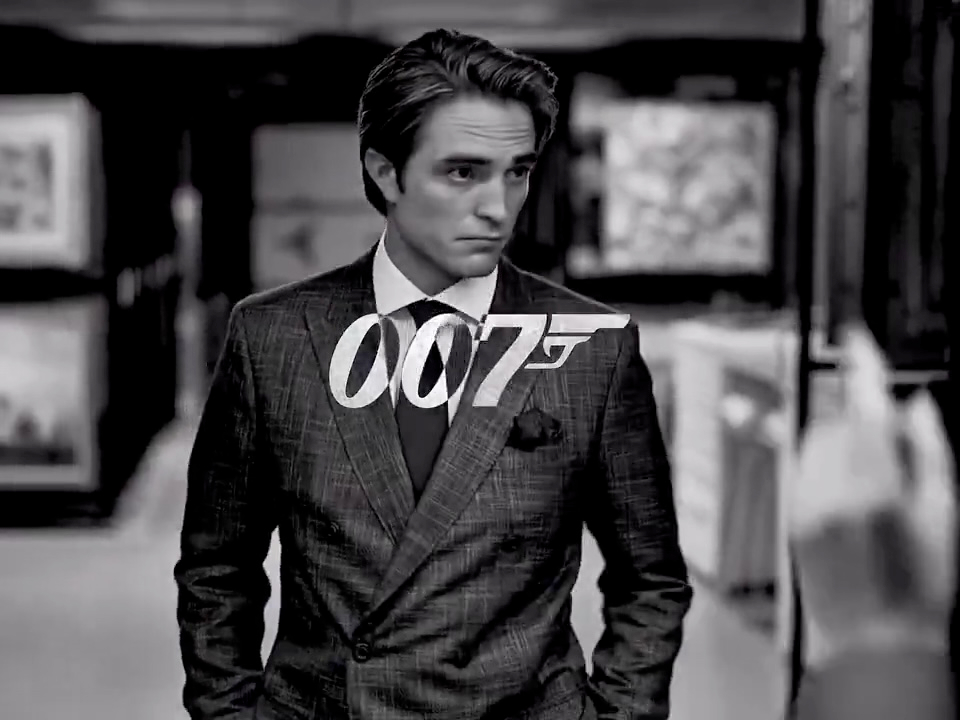 Film News Robert Pattinson Is the New James Bond, Amazon MGM Announces Amazon MGM Studios has named Robert Pattinson as the next James Bond, with Denis Villeneuve directing. What was announced, what it means and what is still unknown. Read the story →
Articles
Latest on Every Movie Plug
 Today In Cinema Today in Cinema, November 22: Back to the Future Part II at 37 A future built to be wrong, one actor in three roles, a lawsuit that reshaped actors’ rights and a cliffhanger sold at the end credits: the sequel that gambled with time. Read the article →
 Today In Cinema Today in Cinema, November 18: The Order of Service for Breaking Dawn – Part 1, 15 Years After the Wedding That Broke Records Breaking Dawn – Part 1 opened November 18, 2011. The wedding, the honeymoon, the PG-13 birth scene and the record opening, told as an order of service. Read the article →
 Article Today in Cinema, November 15: Harry Potter and the Chamber of Secrets Opens in 2002, Told in Ten Numbers A 249-foot set, a nine-foot spider and an actress who was 37 playing 14. The second Potter film was built at speed, opened to a record and said goodbye to its Dumbledore. Read the article →